

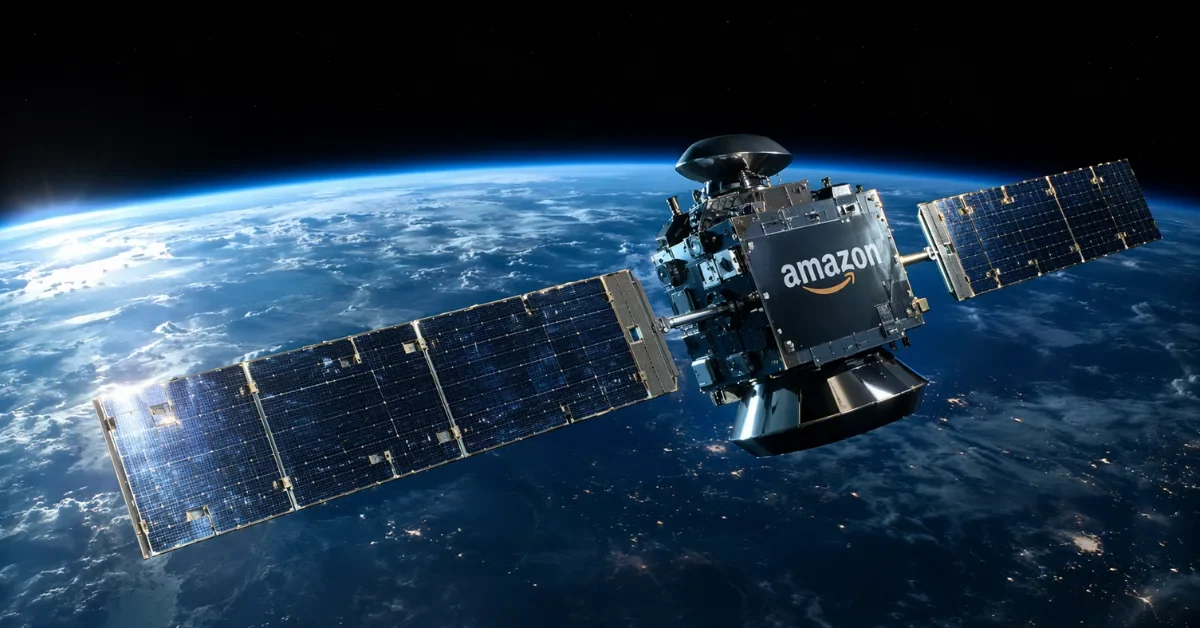
E-commerce and technology giant Amazon has announced an $11.57 billion agreement to purchase satellite communications company Globalstar. The Amazon Globalstar acquisition is designed to significantly strengthen Amazon’s fledgling satellite business and position the company as a stronger competitor to Elon Musk’s Starlink network. By securing Globalstar’s infrastructure, Amazon aims to expand its low Earth orbit satellite network and integrate direct-to-device services that connect mobile phones seamlessly without terrestrial towers.
The Amazon Globalstar acquisition intertwines the tech giant with Apple, which relies on Globalstar to power satellite-based safety features. Following negotiations among Amazon, Apple, and Globalstar, the finalized deal guarantees continued support for iPhone users while equipping Amazon with the necessary spectrum to launch advanced direct-to-device deployments.
Terms of the $11.57 Billion Agreement
Under the definitive merger agreement, Globalstar shareholders will have the option to receive either $90 in cash or 0.3210 shares of Amazon common stock for every share they own. This valuation represents a premium of more than 31% over Globalstar’s closing price on April 1, the day before reports of the deal discussions surfaced.
Following the announcement, shares of Louisiana-based Globalstar rose more than 9% in early premarket trading. The stock had already gained over 6% in the two weeks prior due to media speculation and had nearly doubled in value the previous year. Reports on Amazon’s stock movement varied slightly; according to the Deccan Herald, Amazon stock rose 2.5%, while Daily Sabah reported an increase of about 1% on Tuesday.
The acquisition is expected to close in 2027. The finalization remains subject to standard regulatory approvals and Globalstar achieving specific satellite deployment milestones.
Closing the Gap with SpaceX’s Starlink
Tech companies are investing billions to capture the lucrative market for satellite-based connectivity. Starlink is currently the clear market leader, operating approximately 10,000 satellites in orbit and serving more than nine million users globally. The SpaceX unit is also developing direct-to-device services through partnerships with telecommunications operators.
Amazon currently operates more than 200 satellites and is preparing to begin rolling out its internet services later this year. To comply with a July 2026 regulatory deadline, Amazon must have roughly half of its planned 3,200 satellites in place, with the full constellation deployed by 2029.
Through this transaction, Amazon immediately gains access to Globalstar’s existing network of about two dozen satellites, which are specifically engineered for reliable, low-data connections directly to mobile devices. The companies stated that the acquisition will help Amazon deploy direct-to-device services starting in 2028.
Armand Musey, president of Summit Ridge Group, noted the strategic importance of the move. “Amazon has been falling behind Starlink on satellite broadband. Acquiring Globalstar allows them to catch-up on their D2D spectrum position, and leap ahead on D2D deployment,” Musey said.
What the Deal Means for Apple and iPhone Users
The acquisition required careful navigation of Apple’s existing financial ties to Globalstar. In November 2024, Apple invested approximately $1.5 billion into Globalstar, which included about $400 million for a 20% equity stake alongside cash commitments for new satellites. With the buyout, Apple has the opportunity to cash out its investment, convert it into Amazon shares, or utilize a combination of both.
Despite the shift in ownership, iPhone and Apple Watch users are unlikely to notice any immediate disruptions. Globalstar serves as the backbone for Apple’s satellite features, which include Emergency SOS, messaging, Find My, and Roadside Assistance in areas lacking cellular coverage.
Amazon and Apple have signed an agreement to maintain these services. Amazon will continue supporting the current network and an upcoming constellation of 54 satellites being manufactured by MDA Space.
Greg Joswiak, Apple’s senior vice president of Worldwide Product Marketing, addressed the transition. “Apple and Amazon have a long and proven track record of working together through Amazon’s core infrastructure services, and we look forward to building on that collaboration with Amazon Leo. This ensures our users will continue to have access to the vital satellite features they have come to rely on, including Emergency SOS, Messages, Find My, and Roadside Assistance via satellite, so they can stay safe and connected while off the grid,” Joswiak stated.
Looking ahead, an expanded satellite backbone could offer stronger signals and better coverage for consumer devices. While current bandwidth constraints limit features to basic messaging and emergency use, Amazon’s integration of Globalstar could incrementally ease these limitations in the future.
