

OpenAI has reached a landmark agreement with semiconductor startup Cerebras, committing more than $20 billion over the next three years to rent servers powered by the company’s hardware. This OpenAI Cerebras chips deal represents a significant strategic shift for the artificial intelligence leader as it seeks to reduce its reliance on standard industry processors and secure dedicated infrastructure for its growing computing needs.
The partnership extends far beyond a traditional vendor relationship. By leveraging this massive financial commitment, the creator of ChatGPT stands to gain a substantial equity stake in the chip manufacturer. As the technology industry races to build more advanced reasoning models, the demand for specialized computing power has skyrocketed, prompting major players to secure long-term hardware pipelines to support heavy daily operations.
Financial Structure and Equity Warrants
Under the terms of the arrangement, OpenAI will receive warrants for a minority equity stake in the Sunnyvale-based chip designer. If OpenAI’s total expenditure reaches the projected $30 billion over the three years, its ownership could potentially scale up to approximately ten percent. This new commitment significantly expands upon a previous arrangement from January, in which the technology company agreed to purchase up to 750 megawatts of computing capacity in a deal initially valued at over $10 billion.
Additionally, the artificial intelligence company will provide about $1 billion to help fund the construction of dedicated data centers. The agreement features a unique financial structure described as a working capital deposit. Through this setup, the $1 billion data center financing is classified as an asset on OpenAI’s balance sheet. Furthermore, the company can record a portion of its chip-related payments as interest income. This innovative accounting approach allows the company to optimize its paper financial performance, effectively offsetting some of its massive external expenditures as it reportedly lays the groundwork for its own future initial public offering.
Preparing for a Major Public Offering
The massive influx of capital and guaranteed business arrives at a crucial moment for Cerebras. The chip designer is reportedly preparing to resubmit its filing for an initial public offering as early as this week. The company aims to raise about $3 billion next month, targeting a valuation of approximately $35 billion. This represents a roughly sixty percent premium over its private funding valuation of $22 billion achieved in February.
A previous attempt to go public in September 2024 was withdrawn a month later after financial disclosures revealed a heavily concentrated revenue stream. During that period, contracts with Group 42, a technology firm based in the United Arab Emirates, accounted for 83 percent of the chipmaker’s total revenue in 2023, rising to 87 percent in the first half of 2024. By securing major commitments from new clients, including this massive technology partnership and a recent agreement to provide hardware to Amazon Web Services customers, the company has successfully diversified its revenue base. Major financial institutions, including Morgan Stanley, Citi, and Barclays, are reportedly handling the underwriting process for the upcoming public offering.
Accelerating Processing and Reducing Dependency
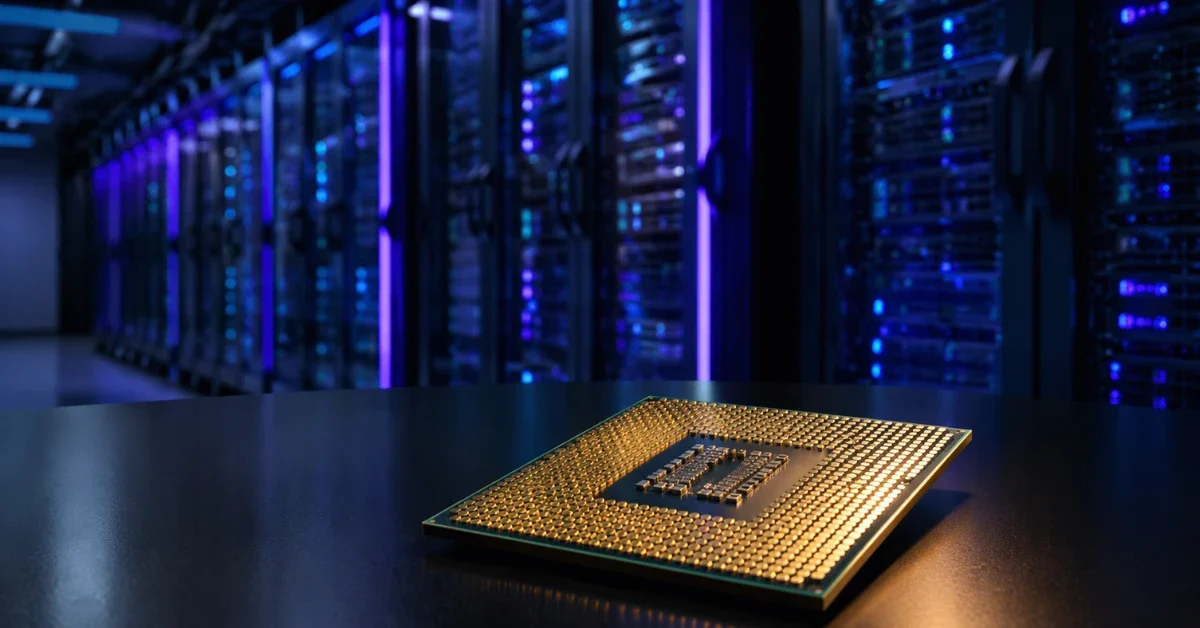
The technological core of this partnership centers on specialized hardware designed specifically for inference, which is the process artificial intelligence models use to generate real-time responses. Unlike standard processors that link thousands of small chips together, Cerebras manufactures a single processor roughly the size of a dinner plate to enable large-scale parallel data processing.
This massive hardware utilizes static random-access memory to store data directly on the device. This architecture significantly reduces the need to transfer data back and forth between the processor and external storage hardware, eliminating a common bottleneck found in standard computing systems. Currently, this hardware provides the computational backbone for a new, limited-release code model known as Codex-Spark.
While securing alternative hardware is a priority to accelerate a shift away from standard market-leading chips, the artificial intelligence leader still maintains a massive, broader computing budget. The company plans to spend $45 billion on computing power this year, with projections doubling to $90 billion next year. Over the next five years, cumulative computing expenditures are expected to exceed $650 billion.
Market Reactions to the Partnership
The strategic pivot has also generated ripples across associated digital asset prediction markets. Traders have reacted to the partnership as a direct hedge against global semiconductor supply chain bottlenecks. Predictions tracking the fully diluted valuation of related artificial intelligence market tokens saw a fifteen percent upward adjustment in probability metrics following the news. However, market analysts note that this shift in sentiment has not yet been matched by concrete trading volume, suggesting that some market participants are waiting for further regulatory clarity or strategic partnership announcements before committing significant capital.
