

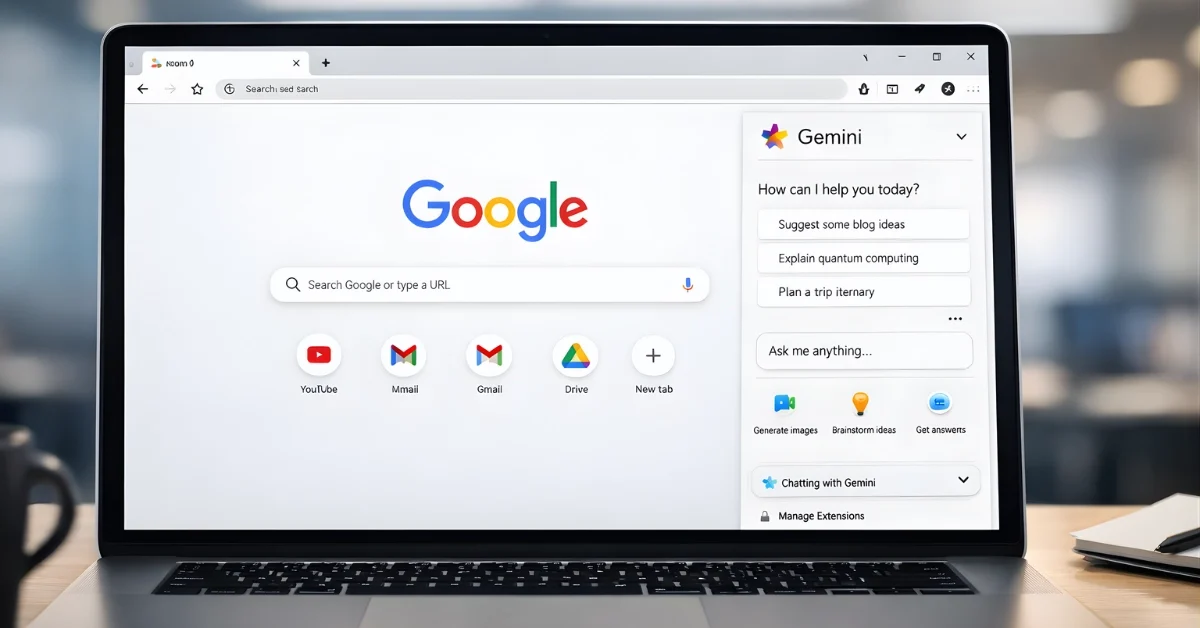
Google has reworked its Chrome browser to add a dedicated Gemini side panel and new features aimed at AI-assisted browsing, including an option to delegate multi-step tasks to Gemini as a software agent. The updates are positioned as a way to help users multitask and interact with websites more efficiently, while also pushing Chrome toward “agentic” browsing where the browser can take actions on a user’s behalf.
The new Gemini side panel builds on a Gemini button that Google introduced last September in the top-right corner of Chrome, and it now shrinks the website view to make room for a chat-style pane alongside the page. Parisa Tabriz, Google’s VP of Chrome, wrote that the setup can help people “save time and multitask without interruption” by keeping primary work open in a tab while using the side panel for a different task.
A Gemini side panel for multitasking
Google’s updated Chrome design puts Gemini in a sidebar so users can chat with the model while keeping their current web page visible. Tabriz suggested the side panel can support organization and decision-making tasks, such as comparing options across multiple tabs or summarizing product reviews from different websites.
The goal, according to the changes described, is to make AI assistance feel like part of browsing rather than a separate experience. Chrome is also described as moving closer to AI-driven “browsing and (perhaps) buying,” echoing a broader industry belief that many users may want AI systems to handle routine online work.
Gemini can take actions with “auto browse”
Alongside the side panel, Google is offering a capability it calls “Chrome auto browse,” which Tabriz described as a way for Chrome to act as a software agent that can complete tasks involving a series of steps. The feature is available to Google AI Pro and AI Ultra subscribers, according to the description.
In the example shown in Tabriz’s blog post, a user viewing an image of a photo booth could instruct Gemini to go to Etsy, find supplies to recreate it, add items to a cart, and keep the total under $75. The agent would attempt steps like navigating to Etsy, identifying supplies depicted in the image (such as fringe curtains), and adding items to the shopping cart up to the point where the user would have the option to purchase.
Tabriz also described other possible uses for auto browse, including vacation planning by researching hotel and flight costs across multiple date options to identify a more budget-friendly time to travel. She suggested Chrome could also help with tasks such as scheduling appointments, filling out forms, assembling tax documents, and soliciting bids from tradespeople.
More integrations, including Nano Banana images
The updated side panel is also integrated with Google Nano Banana for creating images directly or altering images in the browser window. Google has also expanded Chrome’s integration with “Connected Apps,” which the description says now include Google Workspace apps, various calendar and communications apps for Android, Spotify, YouTube Music, and Google Photos, Home, Maps, Shopping, and Flights.
These connected services could become accessible to Gemini if users grant the appropriate permissions. Google also said it plans to bring Gemini’s “Personal Intelligence” to Chrome in the coming months, which the description frames as a way for the AI-browser experience to retain past interactions with websites and applications to inform current context, if a user opts in.
Where it’s available—and what websites may do
The changes described apply to Chrome for macOS, Windows, and Chromebook Plus in the US. Chrome’s push into agentic browsing comes as it follows other browsers and AI products that are pursuing similar ideas, including Microsoft Edge, Perplexity, OpenAI Atlas, and Opera.
However, the description also notes potential friction with websites that may not welcome automated agents. It cites Amazon’s lawsuit against Perplexity, alleging automated site access without proper authorization, and it says eBay revised its user agreement to disallow orders placed without human review.
Google appears to be aiming for safeguards and standards to reduce concerns about autonomous actions online. The description says Chrome auto browse will ask for human confirmation when making purchases or posting to social media sites, and that Chrome will support Google’s Universal Commerce Protocol (UCP), described as an open standard for bot-driven commerce developed with Etsy, Shopify, Target, and Wayfair.
The broader market opportunity for this type of automated commerce is also highlighted with a projection cited from McKinsey: by 2030, agentic commerce for business-to-consumer retail operations could reach $1 trillion in the US. Whether websites accept more automated activity may depend on how well they can detect it and whether they believe the shift helps or hurts their business.
