

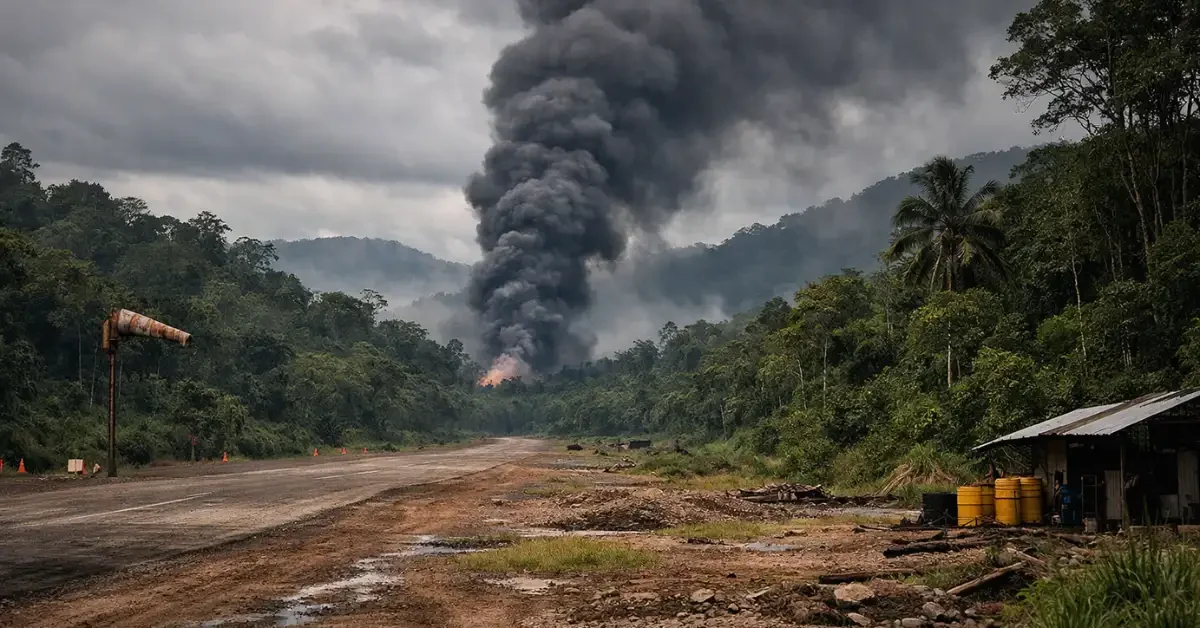
A Colombian military transport aircraft crashed shortly after takeoff in the southern Putumayo province, resulting in a devastating loss of life. The tragic Colombia military plane crash involved a Lockheed Martin Hercules C-130 carrying primarily soldiers. The aircraft, manufactured in the United States, is widely utilized for heavy troop transport. Varying official statements place the death toll between 66 and 69, making it one of the most severe aviation disasters in the country’s recent history.
Conflicting Reports on Casualties and Passengers
Exact figures regarding the number of people on board and the total casualties remain unresolved as different agencies release their assessments. According to a Tuesday statement from the Colombian armed forces, the death toll reached 69. However, earlier statements from military sources and several international news outlets reported 66 fatalities. Due to the chaotic nature of the remote crash site, differing initial estimates are common in the early hours of such emergencies.
Discrepancies also exist regarding the total number of individuals aboard the flight. Reports indicate the passenger count was 121, 125, 126, or as high as 128. General Hugo Alejandro Lopez Barreto noted that the aircraft carried 115 army personnel, 11 crew members, and two national police officers. While some sources state 57 individuals were injured and evacuated, others report that at least 77 people were rescued from the wreckage. Additionally, four military personnel were reported missing following the disaster.
Details of the Tragic Accident in the Amazon
The aircraft went down just minutes after departing from Puerto Leguízamo, a secluded municipality located in the Amazonian region near the borders of Ecuador and Peru. The flight was scheduled to transport troops to another city within the Putumayo province.
Although the precise cause of the accident remains undetermined, preliminary details suggest the plane experienced an issue approximately two kilometers from the airport. Reports indicate that the aircraft suffered an impact near the end of the runway during takeoff, causing one of its wings to plummet and strike a tree.
Following the impact, the aircraft’s fuselage was quickly engulfed in flames. Defense Minister Pedro Sánchez disclosed that a fire erupted on board, which subsequently caused munitions carried by the soldiers to detonate. Despite the catastrophic outcome, Sánchez clarified that the plane was fully airworthy prior to departure and was operated by an appropriately qualified crew. He also explicitly ruled out the possibility that the crash was the result of an attack by any of the armed factions active in the region. This clarification aimed to dispel immediate rumors of insurgent involvement, given the historical presence of illegal armed groups in the surrounding jungle territories.
Rescue Operations and Medical Response
In the immediate aftermath of the crash, local residents and emergency teams rushed to the remote site to assist survivors. Media footage depicted injured soldiers being rapidly evacuated from the burning wreckage on motorcycles operated by local residents.
To manage the massive influx of casualties, the Colombian Air Force initiated a large-scale medical evacuation. Air Force Chief Carlos Fernando Silva Rueda confirmed that two specialized planes, equipped with a total of 74 medical beds, were quickly dispatched to the Putumayo region. These aircraft transported the wounded to advanced medical facilities in the capital city of Bogotá and other specialized hospitals across the country. The rapid mobilization of these flying hospitals was crucial in stabilizing soldiers who sustained severe burns and trauma.
Government Reaction and Calls for Modernization
The disaster has prompted strong reactions from the highest levels of the Colombian government. President Gustavo Petro addressed the nation, describing the event as a tragic accident that should never have taken place. In a detailed statement, the president expressed his profound frustration over the state of the nation’s military aviation assets. The loss of so many servicemembers in a single day has cast a shadow over the armed forces and initiated intense public scrutiny.
Petro revealed that he has spent several years attempting to modernize Colombia’s aging military fleet but has consistently encountered severe bureaucratic obstacles. He sharply criticized civil and military administrators whom he deemed incapable of managing the modernization efforts, demanding their immediate removal from office.
The tragedy has also resonated deeply through the country’s broader political landscape. With the first round of presidential elections scheduled for late May—in which Petro is not seeking re-election—major candidates paused their campaigns to express condolences. Political leaders across the spectrum have united in calling for a thorough and transparent inquiry into the origins of the crash to prevent future aviation disasters.
