

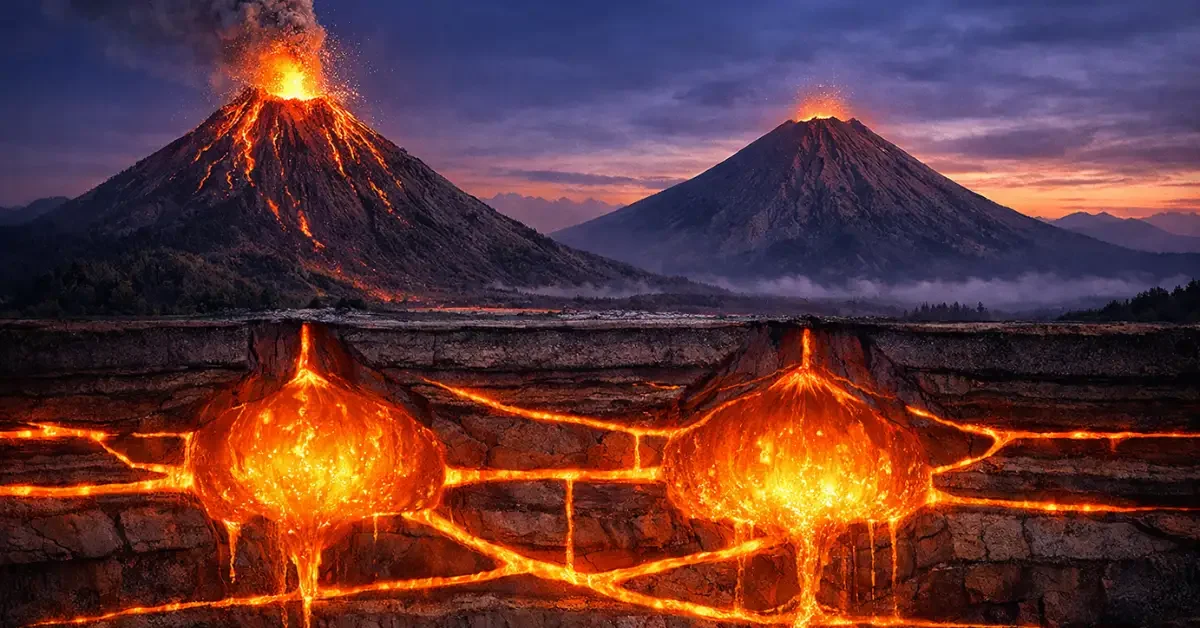
The surface of a sleeping volcano may appear perfectly still, but the subterranean world beneath it remains highly active. Scientific understanding of these geological giants continues to evolve, particularly regarding magma behavior beneath volcanoes during dormant phases. Instead of simply shutting down, these systems experience complex internal changes that set the stage for future activity. Concurrently, experts are discovering that these massive structures are not always isolated entities.
In some regions, neighboring volcanic systems are deeply interconnected, acting as coupled volcanoes. When these coupled volcanoes talk, researchers listen closely to understand how activity in one location might influence another. By studying subtle shifts in underground pressure and seismic signals, scientists can piece together a clearer picture of how these interconnected networks function long before any eruption occurs.
The Complex Reality of Dormant Phases
A dormant phase does not mean a volcano is entirely inactive. Beneath the surface, the magma chamber remains a dynamic environment. As molten rock sits within the Earth’s crust, it begins to cool gradually. This cooling triggers crystallization, where certain minerals solidify and separate from the liquid rock. As the magma’s physical state changes, its chemical composition evolves, often becoming thicker and more viscous over time.
This increasing viscosity significantly impacts how gases behave within the chamber. Volcanic gases, such as carbon dioxide and sulfur dioxide, struggle to escape from the thickening magma. Instead, they form bubbles that build immense pressure within the confined reservoir space. This ongoing pressurization means that even during long periods of surface silence, the volcanic system is actively storing energy.
How Coupled Volcanoes Interact
While individual magma chambers are fascinating, the interaction between neighboring systems presents a greater scientific puzzle. Coupled volcanoes exist when two or more distinct surface vents share an underlying geological connection. Rather than operating independently, these systems can communicate through shared structural pathways or stress changes in the Earth’s crust.
When magma moves or pressure builds beneath one volcano, it alters the surrounding rock. This shift transfers physical stress across the regional landscape, potentially impacting a neighboring dormant volcano. In some instances, an increase in activity at one site can effectively wake up a coupled partner, demonstrating that these features operate as a unified network rather than solitary peaks.
Listening to Underground Conversations
Since scientists cannot directly observe these deep networks, they must rely on advanced monitoring tools to listen to the conversations between coupled volcanoes. As magma pushes through narrow fractures and gases expand, they generate low-frequency seismic waves. These tiny earthquakes are imperceptible to humans but clearly register on sensitive equipment.
By tracking the origin and frequency of these seismic signals, researchers map the underground plumbing systems connecting different volcanoes. When a seismic swarm begins near one volcano and migrates toward another, it provides clear evidence of magma moving between the sites. This acoustic tracking allows experts to visualize the physical links joining the systems.
The Role of Shared Magma Plumbing
The physical connections between coupled volcanoes often take the form of extensive lateral dykes or deep crustal reservoirs. A lateral dyke is a massive sheet of magma traveling horizontally through cracks in the crust. If a shared deeper reservoir experiences an influx of hot magma from the mantle, it can force material outward into these lateral pathways, affecting multiple surface volcanoes.
Understanding these shared plumbing systems changes how experts view volcanic regions. A sudden change in one volcano’s behavior might not be an isolated event but a symptom of a larger regional process. Tracking how fluids migrate through these conduits provides essential clues about the overall stability of the entire network.
Enhancing Hazard Assessment
Recognizing intricate magma behavior beneath dormant volcanoes and the dynamic interactions of coupled systems fundamentally improves hazard assessments. If a region contains interconnected volcanoes, monitoring efforts must expand to cover the broader geological area. An eruption or pressure buildup at one site could serve as an early warning for its neighbor.
By acknowledging that dormant phases are active periods of pressure accumulation and that volcanoes influence one another, scientists are better equipped to interpret subtle warning signs. This comprehensive approach to monitoring ensures that communities living near these geological formations receive accurate and timely information regarding potential unrest.
