

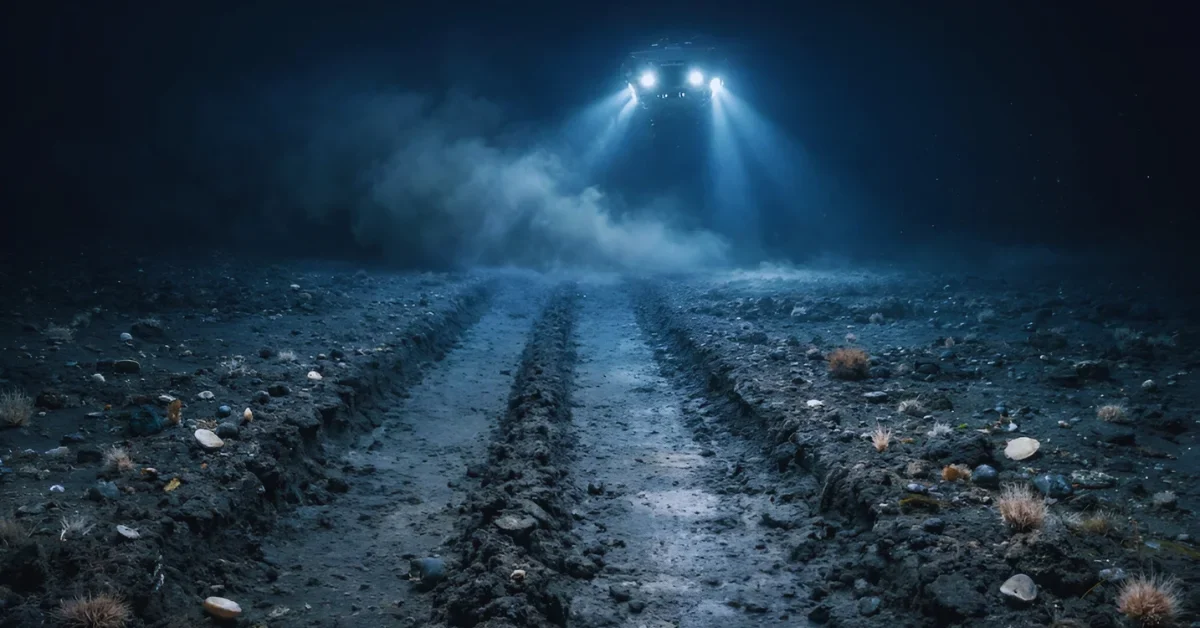
A landmark study exposes the toll of experimental deep-sea mining on ocean floor life. In the Clarion-Clipperton Zone of the Pacific, animal populations plunged 37 percent within tracks left by a mining machine. Species richness fell 32 percent in those same disturbed areas.
This research, one of the biggest ever on deep-sea mining impacts, also spotlighted a thriving yet fragile world far below the waves. Teams uncovered hundreds of previously unknown species amid growing pressure to harvest critical metals for green technologies.
Vast Expedition Uncovers Hidden Life
Over five years, scientists logged 160 days at sea to survey the abyss roughly 4,000 meters deep. This region between Mexico and Hawaii holds vast deposits of metals essential for batteries and renewables. The team scooped up 4,350 macrofaunal animals, each bigger than 0.3 millimeters from the sediment.
From these, experts pinned down 788 distinct species. Most were polychaete worms, crustaceans like isopods and amphipods, and mollusks such as snails and clams. Many of these creatures lacked prior descriptions, revealing how much remains unknown about abyssal habitats.
Life down there stays sparse compared to shallower seas. A North Sea sediment sample might hold 20,000 animals, while a similar deep Pacific one yields about 200 individuals across dozens of species. Food trickles down slowly, with sediment building just a thousandth of a millimeter yearly.
Mining Machine’s Direct Hit
The study tested a polymetallic nodule collector, mimicking commercial operations. Researchers sampled before the run and returned two months later. Using a remotely operated vehicle launched from 4 kilometers up, they targeted exact spots inside the tracks.
Directly hit areas saw macrofauna densities drop 37 percent versus stable or rising control sites. Species richness tumbled 32 percent too. Communities grew patchier and more variable, echoing patterns from land and shallow-water disturbances.
Sediment plumes from the machine, drifting about 400 meters, spared animal numbers but shifted dominance among some species. No abundance changes showed there.
Natural Shifts Complicate the Picture
Seafloor ecosystems fluctuate naturally. Scientists linked some variations to food supply swings from the surface, possibly tied to events like El Niño. This backdrop made teasing out mining effects tricky, but replicated controls clarified the machine’s role.
The project marked the largest species-level macrofaunal dataset for any abyssal plain. Institutions including London’s Natural History Museum, Sweden’s University of Gothenburg, and Britain’s National Oceanography Centre collaborated closely.
Researchers Sound the Alarm
Thomas Dahlgren, a University of Gothenburg marine biologist with over 13 years in the zone, called it the biggest effort yet. His team led worm identifications, leaning heavily on DNA since most species were new to science.
“Critical metals are needed for our green transition, and they are in short supply,” Dahlgren said. “Several of these metals are found in large quantities on the deep-sea floor, but until now, no one has shown how they can be extracted or what environmental impact this would have.”
Lead author Eva Stewart, a PhD student at the Natural History Museum and University of Southampton, praised the chance to study these remote spots. “Finally, we have good data on what the impacts of a modern commercial deep-sea mining machine might be,” she said. “We have also discovered many new species and shown how the abyssal ecosystem changes naturally over time.”
Tammy Horton of the National Oceanography Centre noted new crustaceans emerging from the work. Senior author Adrian Glover from the Natural History Museum urged surveys of the zone’s 30 percent protected areas. “At present, we have virtually no idea what lives there,” Glover added.
Path Forward for Regulation
Findings followed International Seabed Authority guidelines for baseline and impact checks. All data sits freely available for regulators, companies, and watchdogs. The results arm upcoming decisions as mining eyes shift from exploration to exploitation.
Another paper details a new solitaire coral from the site. Experts stress understanding species ranges and long-term recovery to predict broader biodiversity hits. With metal demands soaring, this baseline sets a high bar for future probes.
