

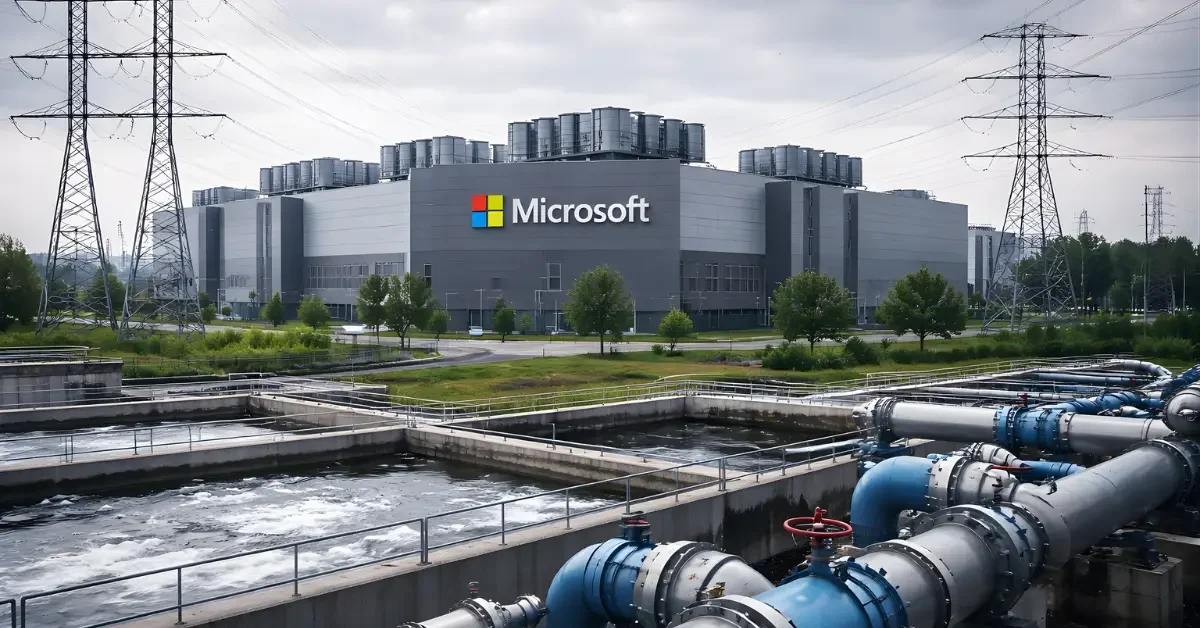
Microsoft has launched a new “community-first” initiative for its AI-era data centers, promising steps meant to keep local electricity bills from rising while also addressing water use concerns.
The plan arrives as the rapid growth of AI data centers drives public and political pressure over how these facilities affect utility costs, local resources, and nearby communities.
Microsoft said its approach includes paying electricity rates designed to cover the company’s full impact on the grid, working with utilities and state regulators, and funding power infrastructure upgrades tied to its data centers.
Microsoft’s pledge on electricity costs
Microsoft said it will pay utility rates high enough to cover its electricity costs and will work with local utilities to expand supply when needed for its data centers.
At an event in Great Falls, Virginia, Microsoft President and Vice Chair Brad Smith said the company’s commitment is to ensure its data centers do not lead to higher electricity prices for local communities.
Microsoft also said it will work closely with utility companies that set electricity prices and with state commissions that approve them, with the goal of making sure the electricity cost of serving Microsoft data centers is not passed on to residential customers.
CNN reported that Microsoft also plans to cover increased electricity costs in places where it builds data centers and to pay for necessary upgrades to the power grid so local utility customers are not stuck with those expenses.
Water use and reporting plans
Microsoft said it will replenish more water than its data centers consume and will begin releasing water-use information for each of its U.S. data center regions, along with updates on replenishment progress.
Techzine reported that Microsoft is committing to reduce water intensity by 40% across its entire data center fleet by 2030.
Techzine also described a Microsoft data center design with a closed cooling system that no longer requires drinking water for cooling, and said these next-generation designs have already been rolled out in Wisconsin and Georgia.
In Quincy, Washington, Techzine said Microsoft built the Quincy Water Reuse Utility to treat and reuse data center cooling water, and in Leesburg, Virginia, it said Microsoft is funding more than $25 million in water and sewer improvements.
Community commitments beyond utilities
Ars Technica reported that Microsoft’s “Community-First AI Infrastructure” program includes five commitments: covering full electricity costs, reducing water use while replenishing more than it withdraws, creating local jobs, paying the full amount of property taxes, and investing in AI training for communities hosting data centers.
CNBC also reported that Microsoft pledged to restore more water than it consumes and said it will not seek property tax reductions or abatements to attract its data centers.
Reuters reported that Microsoft did not provide details about the financial aspects of the initiative when asked.
What’s driving the pressure
Microsoft’s announcement comes as generative AI growth pushes major tech companies to expand data centers that require large amounts of electricity, while communities raise concerns about rising bills and resource strain.
CNBC reported that U.S. utility prices for consumers rose 6% in August compared with a year earlier, amid broader increases as tech companies build out AI-ready data centers.
CNN cited a Bloomberg News analysis that found electricity prices in areas around data centers rose by as much as 267% compared with five years earlier, highlighting why local backlash has intensified.
Reuters also reported that President Donald Trump said Microsoft would make “significant changes” to its AI infrastructure plans to lower data center energy expenses for Americans, while arguing that big tech companies should bear the costs tied to the facilities they build.
