

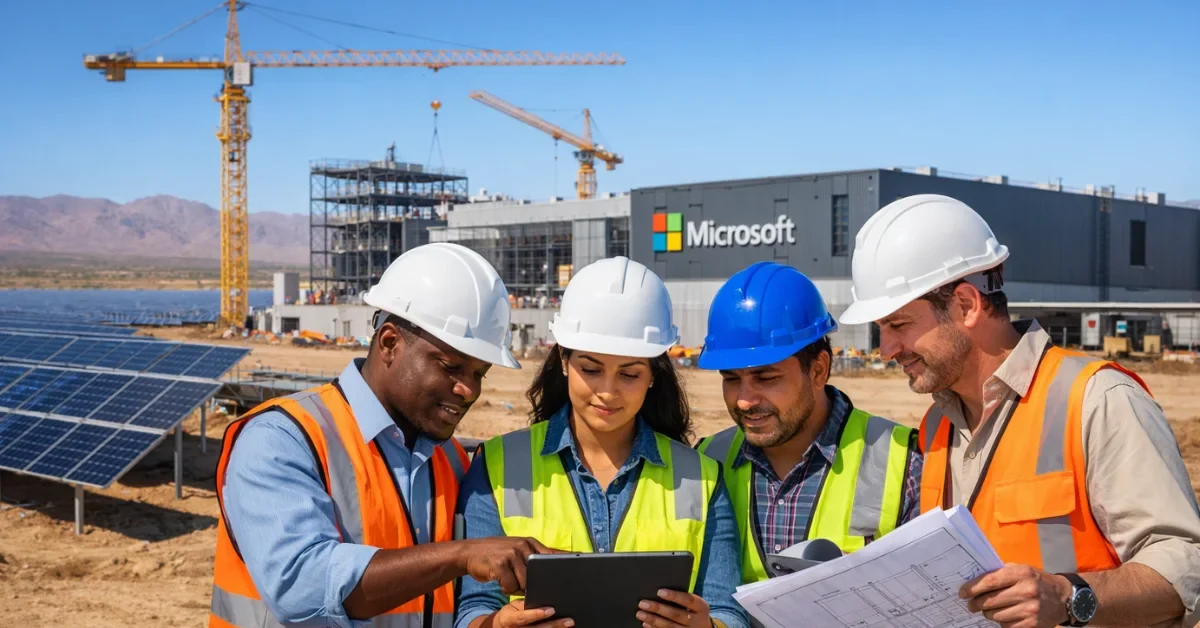
Microsoft has announced that it is on pace to invest approximately $50 billion in the Global South by the end of the decade. The technology giant aims to expand artificial intelligence (AI) infrastructure and access across developing regions, ensuring that nations in Latin America, Africa, and Asia are not left behind in the rapidly evolving digital economy. This massive capital commitment highlights the company’s strategy to bridge the widening technological gap between wealthy nations and the developing world.
Speaking at the company’s AI Impact Summit in Washington, Microsoft Vice Chair and President Brad Smith outlined the company’s progress and future commitments. The investment targets 19 countries across the Global South, focusing on the critical hardware and energy systems required to power advanced AI models. By prioritizing these regions, Microsoft intends to create a foundation for local economic growth and innovation, preventing a scenario where the benefits of AI are concentrated solely in the Global North.
Bridging the Widening AI Divide
A central theme of the announcement was the urgent need to address the “AI divide.” Microsoft executives expressed concern that without deliberate intervention, the rapid advancement of artificial intelligence could exacerbate existing economic inequalities. Historically, technological shifts have often favored wealthy nations with established infrastructure, leaving developing economies to catch up years or decades later. Brad Smith emphasized that the world must act with urgency to ensure this pattern does not repeat with AI.
The term “Global South” generally refers to developing nations in regions such as Africa, Latin America, the Caribbean, and parts of Asia and Oceania. These areas often face challenges related to internet connectivity, reliable power grids, and access to advanced computing resources. By directing significant capital toward these specific hurdles, Microsoft hopes to democratize access to AI tools. The goal is to ensure that populations in these regions can utilize AI for healthcare, education, and business development rather than just being consumers of technology created elsewhere.
Infrastructure and Energy Investments
The projected $50 billion investment is heavily weighted toward physical infrastructure. AI development requires immense computing power, which relies on large-scale data centers. However, building data centers is only half the battle; they must also be powered. Microsoft’s plan includes significant spending on energy infrastructure to support these facilities.
According to the company, the investment timeline extends through 2030. The strategy involves not only constructing new data centers but also upgrading existing grids and power systems to handle the intense energy demands of modern AI workloads. This dual focus on data and energy is critical, as unreliable electricity remains a major barrier to technological adoption in many parts of the Global South. By addressing both the digital and physical constraints simultaneously, the company aims to create a sustainable ecosystem for AI adoption.
A Roadmap for Global AI Opportunity
During the summit, Microsoft also introduced a new “Global South AI Opportunity Guide.” This resource is designed to help governments and policymakers in developing nations navigate the complexities of AI adoption. The guide offers recommendations on how to create favorable regulatory environments, build digital skills within the local workforce, and implement AI solutions that address specific national priorities.
Brad Smith noted that while private investment is essential, it must be paired with effective policy and skilled human capital. The guide serves as a blueprint for countries looking to integrate into the global AI economy. It encourages leaders to think strategically about how AI can be applied to local challenges, from improving agricultural yields to modernizing public services.
addressing Economic Inequality
The push to invest in the Global South comes amidst a broader conversation about the economic impact of artificial intelligence. Critics and analysts have warned that if AI development remains concentrated in the United States, China, and Europe, the economic disparity between the Global North and South could deepen. Microsoft’s initiative appears to be a direct response to these concerns, positioning the company as a proactive partner in global development.
By 2030, the company expects its footprint in these 19 target countries to be substantial enough to support robust local AI ecosystems. The success of this initiative will likely depend on continued collaboration between the private sector, local governments, and international organizations. For now, the commitment of $50 billion signals that the race for AI dominance is becoming a truly global endeavor, with significant resources flowing toward markets that have traditionally been underserved by the technology sector.
