

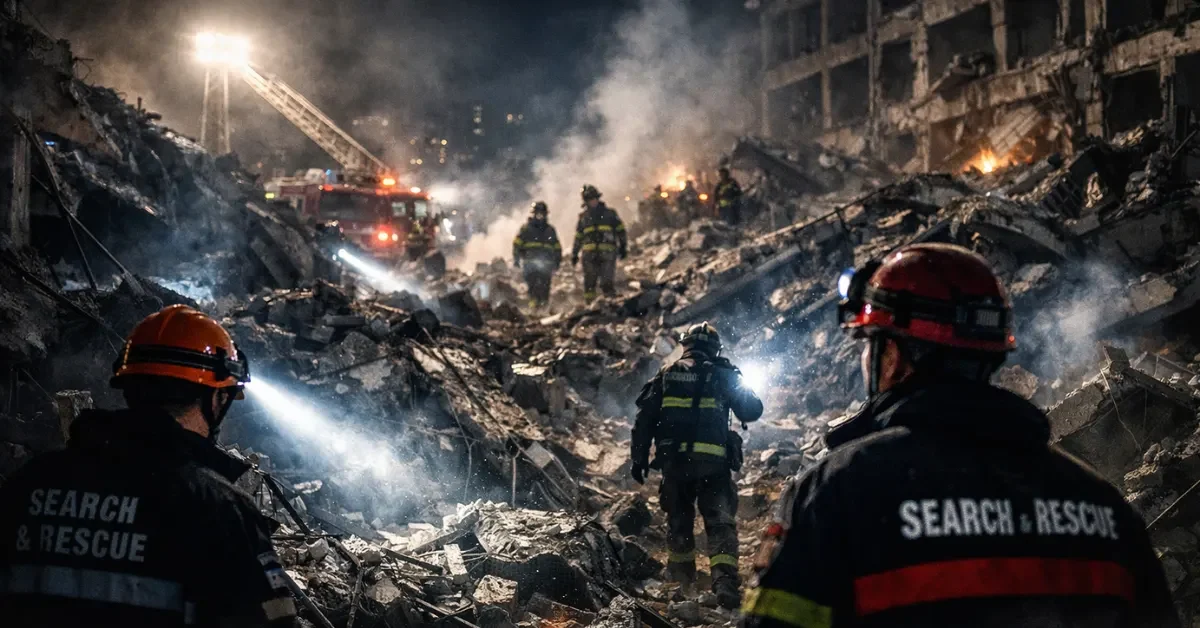
Late Monday night, a devastating airstrike struck a prominent drug rehabilitation center in Kabul, Afghanistan, leaving hundreds dead and sparking intense international outrage. Afghan officials quickly accused the Pakistani military of orchestrating the attack on the medical facility. According to local authorities, the bombing killed at least 400 people and left more than 250 others severely injured. Pakistan, however, firmly denies targeting any civilian areas, insisting its air force exclusively hit militant infrastructure.
Conflicting Accounts of the Kabul Attack
The strike targeted the Omid Addiction Treatment Hospital, a massive 2,000-bed facility located in the Afghan capital. Hamdullah Fitrat, a deputy spokesperson for the Afghan government, reported that the bombing occurred around 9 p.m. local time, reducing extensive portions of the hospital to rubble. Throughout the night, local television networks broadcasted chaotic scenes as firefighters battled roaring flames and security personnel used flashlights to desperately search the debris for survivors.
While Afghan authorities mourn a staggering loss of civilian life, Pakistan offers a starkly contradictory narrative. Pakistani Information Minister Attaullah Tarar announced that the country’s military executed highly precise airstrikes aimed solely at military installations. According to Tarar, the operation successfully destroyed technical support infrastructure and ammunition storage sites in both Kabul and the eastern Nangarhar province.
Pakistan’s Ministry of Information further dismissed the Afghan government’s casualty reports as entirely false and misleading. Pakistani officials argued that the Taliban administration is intentionally inflating civilian death tolls to incite public anger and distract from its ongoing support for cross-border terrorism. Islamabad maintains that all military targeting was meticulously planned and executed to prevent any collateral damage.
Tensions Reach a Dangerous Red Line
This tragic hospital bombing represents the most severe escalation in a border conflict that has been rapidly intensifying since late February. For weeks, the neighboring nations have engaged in deadly cross-border skirmishes and retaliatory attacks.
The diplomatic relationship fractured further after Afghan drones reportedly targeted multiple locations inside Pakistani territory. Following these incursions, Pakistani President Asif Ali Zardari issued a stern warning, declaring that the Taliban administration had crossed a red line by endangering innocent citizens. Although the Pakistani military intercepted the rudimentary, locally made drones, falling debris injured several children in the cities of Quetta, Kohat, and Rawalpindi.
In direct response to the drone threats, Pakistani forces launched a series of overnight operations in Afghanistan’s Kandahar province. State-run media in Pakistan reported the successful dismantling of a tunnel used by the Afghan Taliban and the Pakistani Taliban, a group Islamabad refers to as Fitna-Kharij. During these operations, Pakistani aircraft also struck a fuel depot near the Kandahar airport. While an airport official stated the depot supplied humanitarian organizations like the United Nations and the Red Cross, Pakistan maintains it was a hub for insurgent operations.
Amid the chaos, Afghanistan’s Ministry of Defence claimed its forces retaliated by seizing a Pakistani border post and killing 14 soldiers. Islamabad swiftly rejected this claim, accusing Afghan leaders of weaving fantasies instead of actively dismantling terrorist networks operating within their borders.
Global Outcry and Humanitarian Impact
The mounting death toll and the destruction of a major healthcare facility have triggered widespread condemnation and demands for accountability. Prominent figures within Afghan civil society are using their platforms to speak out against the violence.
Rashid Khan, a globally recognized Afghan cricket star and former national captain, strongly condemned the strikes. He expressed deep sorrow over the massive loss of life, particularly during the holy month of Ramadan, warning that such brutal actions will only deepen regional divisions. Khan urgently called on the United Nations and human rights organizations to launch an independent investigation into the civilian deaths. Fellow cricket veteran Mohammad Nabi echoed his grief, stating that the attack violently extinguished hope at a place dedicated to healing and recovery.
Neighboring countries are also expressing grave concern. The Indian government issued a formal statement unequivocally condemning the bombing of the Kabul hospital, characterizing the airstrike as a barbaric act of violence.
The humanitarian toll of this ongoing border conflict continues to reach catastrophic levels. Even prior to the hospital bombing, the United Nations recorded 185 civilian casualties across the region between February and early March, including 56 fatalities from indirect fire and aerial assaults. The relentless violence has already forced an estimated 115,000 people to flee their homes, exacerbating a severe displacement crisis. As the United Nations Security Council urges the Taliban to crack down on domestic terrorism, the escalating war of words and weapons between Pakistan and Afghanistan threatens to destabilize the entire region further.
