

The U.S. Supreme Court has struck down President Donald Trump’s extensive global tariffs, declaring the administration overstepped its legal authority. In a landmark 6-3 decision issued Friday, the justices ruled that the International Emergency Economic Powers Act (IEEPA) does not grant the president the power to impose such sweeping duties on imported goods. The ruling delivers a significant blow to the president’s economic agenda, upending a central pillar of his foreign policy strategy during his second term.
President Trump responded swiftly and aggressively to the court’s decision. Within hours of the ruling, he signed a new executive order imposing a blanket 10 percent global tariff on all foreign goods, citing a different legal statute to preserve his trade plans. The administration’s rapid counter-move signals continued volatility in global trade relations despite the judicial rebuke.
High Court Limits Presidential Authority
The court’s opinion, authored by Chief Justice John Roberts, focused on the specific language of the 1977 International Emergency Economic Powers Act. The administration had relied on this law to justify tariffs on nearly all nations, arguing it provided broad emergency powers. However, the majority of the court rejected this interpretation.
“Our responsibility today is solely to determine whether the authority to ‘regulate … importation,’ as conferred to the president in IEEPA, includes the authority to impose tariffs. It does not,” Chief Justice Roberts wrote in the majority opinion. He added that the president claimed “extraordinary power” to unilaterally impose duties of “unlimited amount, duration, and scope,” a reading the court found unsupported by the statute.
Chief Justice Roberts was joined in the majority by the court’s three liberal justices and two conservative colleagues, Justice Neil Gorsuch and Justice Amy Coney Barrett. The ruling affirmed a lower court’s decision that Trump’s application of the law surpassed his legal authority.
Justices Clarence Thomas, Samuel Alito, and Brett Kavanaugh dissented. The decision marks a rare and stinging defeat for the Trump administration before a Supreme Court that includes six conservative justices, three of whom were appointed by Trump himself.
Trump Slams Decision and Imposes New Levies
In a speech from the White House, President Trump denounced the ruling, calling it a “disgrace to our country.” He characterized the decision as “very unpatriotic and disloyal to the Constitution,” suggesting without evidence that the justices in the majority were influenced by foreign interests.
Refusing to accept the dismantling of his trade framework, Trump immediately pivoted to a different legal authority. On Friday evening, he signed a directive under Section 122 of the Trade Act of 1974. This provision allows the president to impose tariffs to address balance-of-payments deficits.
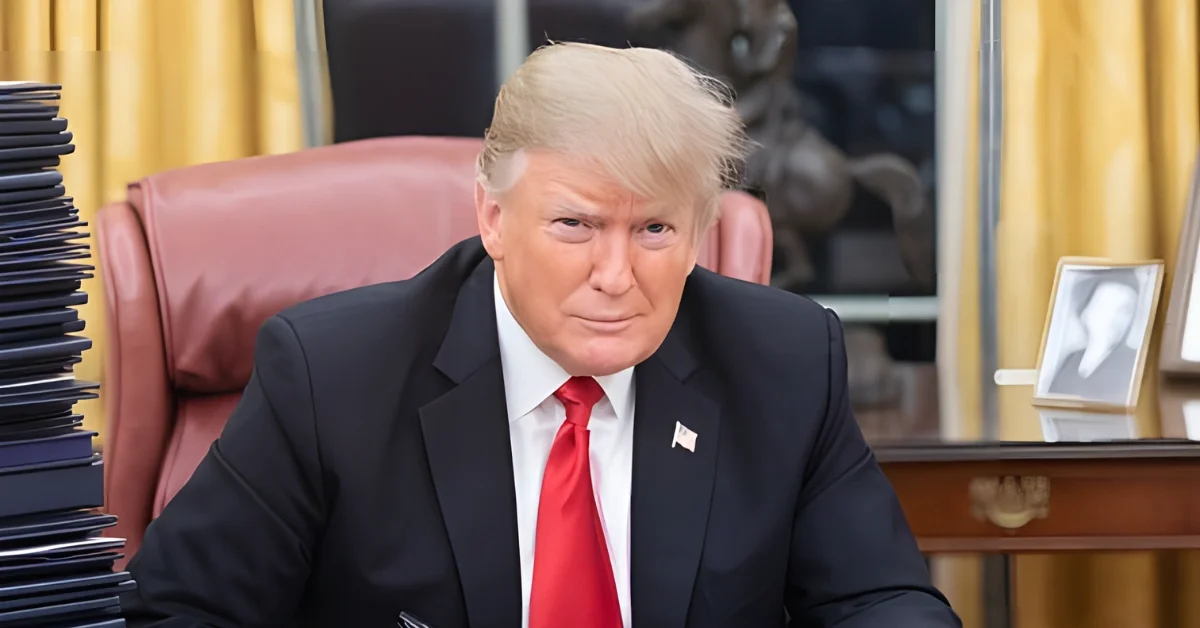
“It is my Great Honor to have just signed, from the Oval Office, a Global 10% Tariff on all Countries, which will be effective almost immediately. Thank you for your attention to this matter!” Trump announced in a social media post.
According to a White House fact sheet, the new 10 percent baseline duty is set to take effect on February 24 at 12:01 a.m. Washington time. However, legal experts note that Section 122 is an untested provision that comes with strict limitations, including a maximum duration of 150 days for the tariffs to remain in force unless Congress authorizes an extension.
In addition to the new flat tax, the president indicated he is considering further duties on foreign automobiles ranging from 15 percent to 30 percent. He also directed the Office of the U.S. Trade Representative to launch new investigations under Section 301 of the Trade Act, which could lead to additional targeted measures.
Economic Impact and Market Reaction
The Supreme Court’s decision was met with immediate relief from various business groups and importers who have struggled with the costs and unpredictability of the administration’s trade wars. Victor Schwartz, head of a New York-based spirits company, described the struck-down tariffs as “unpredictable and bad,” expressing satisfaction that the court recognized them as “unconstitutional government overreach.”
Financial markets initially surged following the announcement of the court’s ruling, reflecting investor optimism that the trade barriers would be removed. However, the subsequent announcement of the new 10 percent levy under the Trade Act of 1974 has reintroduced uncertainty into the global economy.
The administration has stated it seeks “continuity” with the new order. The timeline for the new tariffs coincides with the president’s upcoming State of the Union address, ensuring trade policy will remain a focal point of his message to Congress. While the Supreme Court’s decision eliminates the specific tariffs imposed under national emergency powers, the swift implementation of new duties suggests the administration intends to maintain its aggressive protectionist stance regardless of judicial pushback.
