

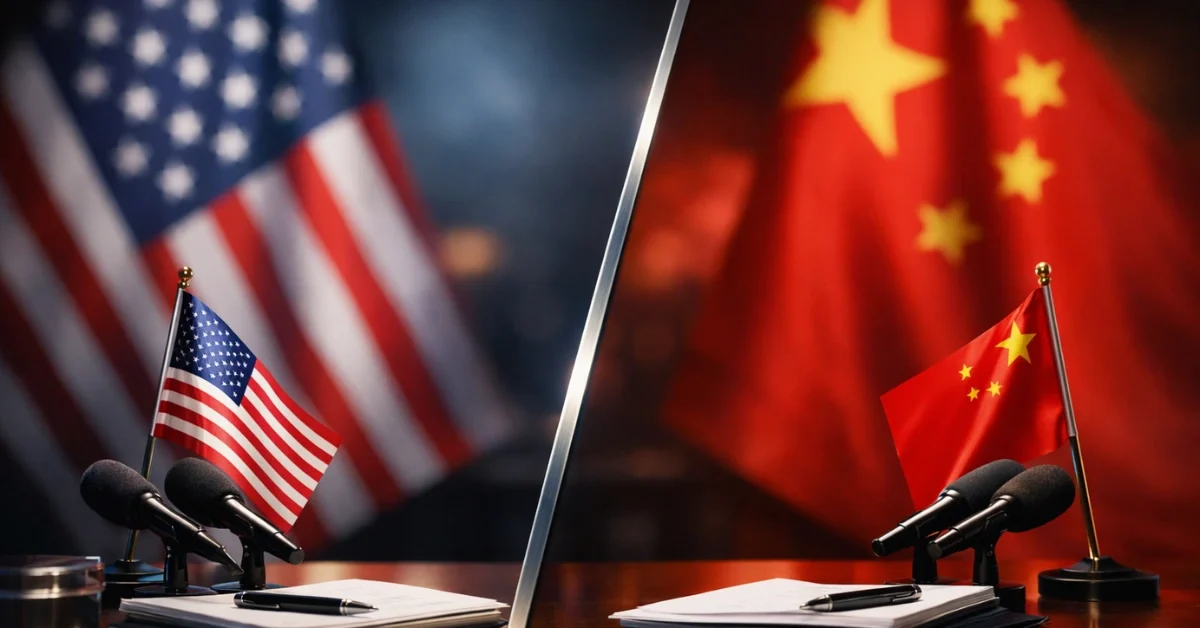
U.S. President Donald Trump will embark on a three-day official journey to Beijing from March 31 to April 2, a White House official confirmed on Friday. This upcoming Trump China visit, which features an anticipated meeting with Chinese President Xi Jinping, represents the president’s first trip to the country since 2017. The high-stakes diplomatic mission coincides with a major domestic legal defeat, as the U.S. Supreme Court formally invalidated the administration’s sweeping global tariffs just hours before the travel dates were announced.
The discussions between the leaders of the world’s two largest economies arrive at a critical juncture for international trade. Both presidents have recently acknowledged good communication between their nations, but their talks will tackle complex bilateral challenges. Speaking about the Trump China visit on Thursday, the president predicted the negotiations would be a “wild one.”
Supreme Court Strikes Down Signature Economic Policy
The diplomatic announcement was overshadowed by a 6-3 Supreme Court ruling that struck down a cornerstone of the administration’s economic framework. The court concluded that the president exceeded his legal authority by using the International Emergency Economic Powers Act to unilaterally levy widespread import duties.
Chief Justice John Roberts authored the majority opinion, stating that the underlying legislation does not empower the executive branch to implement such tariffs without explicit congressional authorization. The court emphasized that no previous president had utilized the statute to impose duties of such scale, warning that siding with the administration would result in a dramatic expansion of presidential power over trade. Justices Clarence Thomas, Samuel Alito, and Brett Kavanaugh dissented from the decision.
This legal defeat leaves significant financial questions unanswered. Prior to the ruling, the president defended the tariffs as a national bonanza, warning that overturning them would be disastrous. The total amount of tariff revenue collected remains a point of disagreement among various reports. According to a December estimate from the administration, the government had accrued approximately $129 billion. However, other sources cite a $133 billion total, while the firm PwC estimated collections at $108 billion by October, noting that China accounted for the largest share at $34 billion. The Supreme Court decision also did not clarify whether the federal government must reimburse the tariffs that importers have already paid.
New Tariffs and Political Fallout
In response to the judicial setback, Trump expressed deep disappointment and immediately announced a new 10 percent global tariff on imported goods, set to take effect on February 24. This new ad valorem duty is slated to remain in place for 150 days. The shift will have immediate global impacts; for example, goods from India that previously faced a 25 percent reciprocal tariff will now be subject to the new 10 percent rate.
Following the ruling, the president took to his social media platform to call for Republican unity. He urged party members to stick together while criticizing what he characterized as internal disloyalty within the political faction. Previously, administration officials had publicly projected confidence that the Supreme Court would uphold the policies.
Trade Tensions and the Beijing Agenda
As preparations continue for the extended trip, the future of international trade relations remains highly uncertain. A primary focus of the Beijing meetings will be the status of an existing trade truce that had previously prevented both nations from escalating tariffs. With the Supreme Court stripping the executive branch of its primary tariff authority, it is unclear what legal mechanisms the administration might use to negotiate import duties moving forward.
Discussions are expected to cover China’s retaliatory economic measures. In response to prior U.S. trade threats, Beijing notably ceased purchases of American soybeans, which had historically been the leading U.S. export to the Chinese market. Additionally, the broader geopolitical landscape will heavily influence the dialogue. The two leaders are anticipated to discuss international affairs, including the prolonged war in Ukraine, Iran’s nuclear ambitions, and fentanyl regulations.
Geopolitical Disagreements and Global Positioning
The bilateral talks will also address fundamental diplomatic disputes, most notably regarding Taiwan. The United States continues to provide military assistance and arms sales to Taiwan, a policy heavily opposed by Beijing, which seeks the unification of the island with mainland China.
The diplomatic environment in Beijing has seen increased activity from other Western nations in recent months. The Chinese government recently hosted Canadian officials, leading to new trade agreements and the lifting of Canada’s ban on Chinese-manufactured electric vehicles. This development highlights a growing divergence in energy policies, as China continues to surge in global electric vehicle exports through heavy investments in renewable technology, while the current U.S. administration remains focused on fossil fuel production.
Finally, the impending visit will be the president’s first return to China since the onset of the COVID-19 pandemic. During the health crisis, which claimed over a million American lives, the president frequently referred to the pathogen as the “Chinese virus,” adding another layer of historical complexity to the upcoming diplomatic engagement.
