

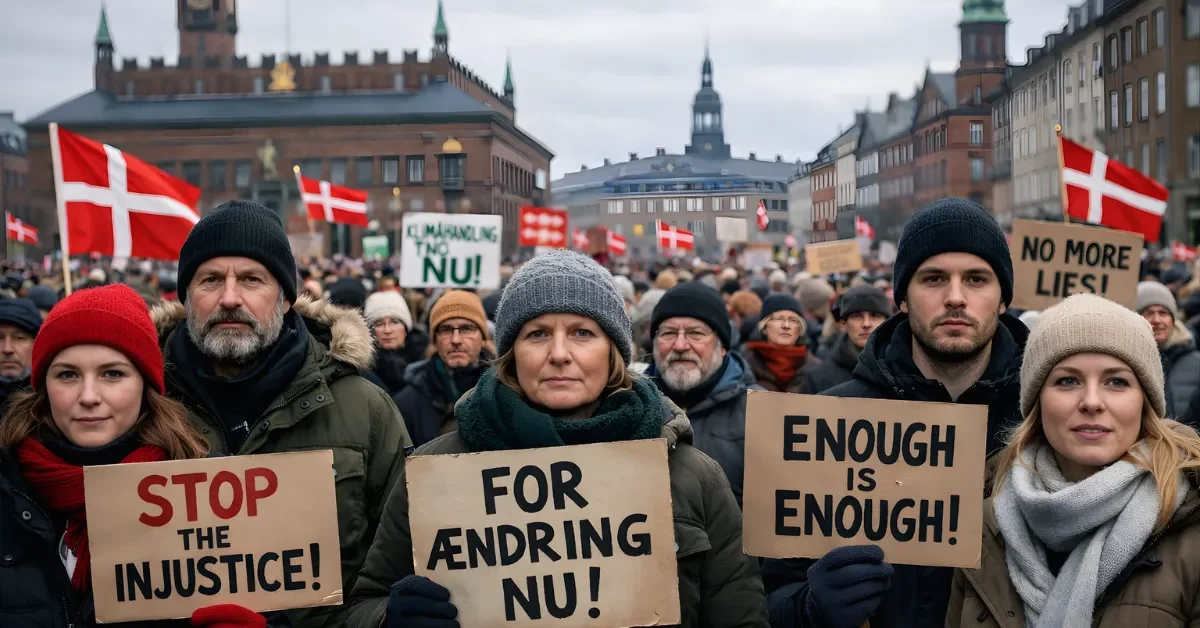
President Donald Trump has threatened new tariffs on eight European countries as he presses Denmark to allow the United States to buy Greenland, escalating a fast-moving dispute over the Arctic island. The tariff threat has drawn sharp criticism from European leaders and coincided with protests in Denmark and planned demonstrations in Greenland calling for respect for Greenlanders’ right to self-determination.
Trump said the tariffs would begin at 10% on Feb. 1 and would rise to 25% on June 1 if there is no agreement for a “complete and total purchase of Greenland,” according to posts he made on social media. The countries named in the statements include Denmark, Norway, Sweden, France, Germany, the Netherlands, Finland and the United Kingdom.
Tariff threat details
In a message described by Reuters, Trump said the additional 10% import tariffs would take effect Feb. 1 and remain in place until a deal is reached allowing the U.S. to buy Greenland. He also said the tariff level would increase to 25% on June 1 if no agreement is reached by then.
The New York Times reported that the United States already charges a 10% tariff on British imports and a 15% tariff on imports from the European Union, placing the new threat in the context of existing trade barriers. In his public messaging, Trump framed the tariff plan as leverage tied directly to Greenland’s status and the positions taken by European governments.
Europe and Denmark react
European leaders publicly rejected the tariff threat and said Europe would respond in a coordinated way. European Commission President Ursula von der Leyen, French President Emmanuel Macron, and German Chancellor Friedrich Merz were among those who emphasized staying “united, coordinated and committed” while defending Europe’s sovereignty.
A BBC report described the tariff threat linked to Greenland as “unacceptable,” reflecting the criticism coming from European leaders. European officials also warned the move could trigger a new trade war and strain the broader transatlantic relationship.
Protests in Denmark and Greenland
On Jan. 17, thousands of protesters gathered in Copenhagen and other places in Denmark in solidarity with Greenland. Protesters carried signs including “Hands Off” and “Greenland Greenlanders,” and organizers said the demonstrations were meant to back Greenland’s right to self-determination.
Additional actions were planned in Nuuk, Greenland’s capital, later the same day. The protests came as Trump’s comments and White House messaging fueled an unprecedented diplomatic rift between the United States and Denmark, both founding members of NATO.
Why Greenland is central
Trump has argued that Greenland is important to U.S. national security because of its strategic location and mineral resources. He has not ruled out using military action to acquire Greenland.
Greenland has about 57,000 residents and has had increasing autonomy since 1979, but it remains a territory in the Kingdom of Denmark, with Denmark retaining control over defense and foreign affairs. The island’s status and security role have become central points of friction as European nations have sent military personnel to Greenland at Denmark’s request.
