

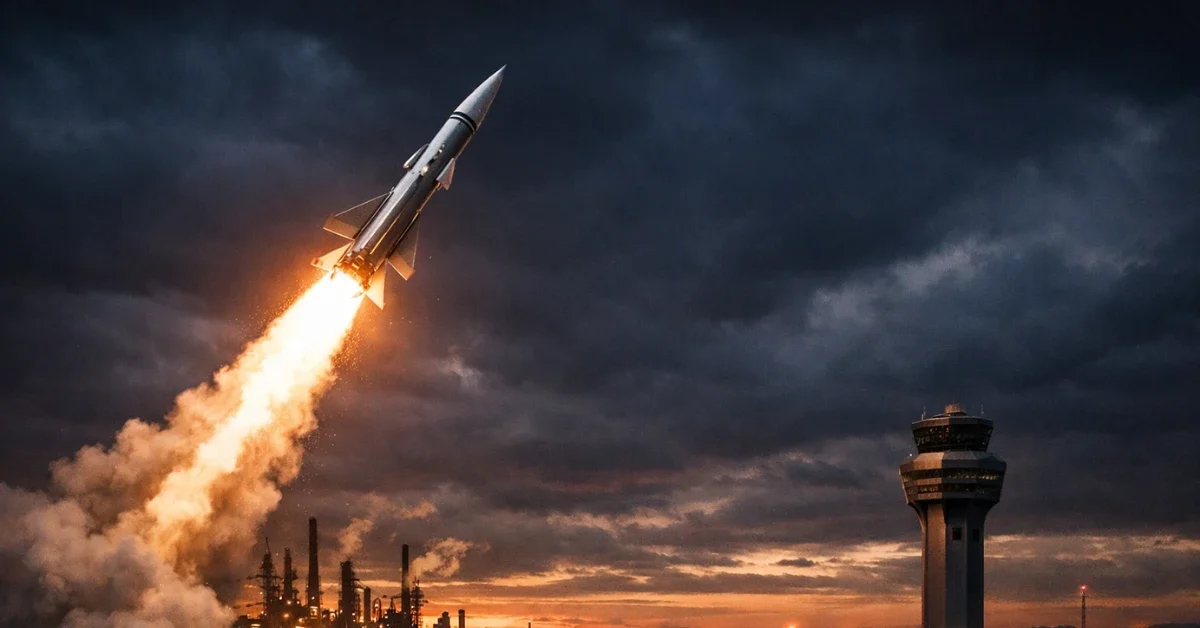
The ongoing US-Iran war has rapidly expanded into a broader regional conflict following a coordinated military campaign by the United States and Israel against Iran. The hostilities began over the weekend with a targeted daylight strike in central Tehran that killed Iranian Supreme Leader Ayatollah Ali Khamenei, along with other senior military and civilian leaders. In response, Iran unleashed thousands of ballistic missiles and drones across the Middle East, aiming to exhaust regional defenses and raise the stakes of the conflict.
The retaliatory strikes from Tehran targeted Israel, American military installations, and embassies. The violence has spilled across international borders, with Iranian weapons targeting energy facilities across six Gulf Arab states, striking Turkey, and falling on an airport in Azerbaijan.
The Targeted Strike and American Military Goals
The initial assault was driven by a major intelligence breakthrough. The CIA discovered Khamenei and top Iranian officials would gather at a residential compound in Tehran on Saturday morning. Shared with Israel, this intelligence prompted US President Donald Trump and Israeli Prime Minister Benjamin Netanyahu to launch a decapitation strike. This decision was viewed as a political victory for Netanyahu, who had urged abandoning diplomatic negotiations with Tehran.
President Trump outlined four primary objectives for the ongoing campaign: dismantle Iran’s missile capabilities, obliterate the Iranian navy, prevent the nation from acquiring nuclear weapons, and ensure it can no longer support allied armed groups. Trump recently secured a legislative victory in the House of Representatives, where almost all Republicans and a small coalition of Democrats voted down a proposal to halt military actions.
Despite political support, public opinion remains cautious. Polling indicates the American public is wary of a drawn-out conflict. Similarly, after more than two years of fighting in the Gaza Strip, the Israeli public shows little enthusiasm for another extended war.
Iran’s Retaliation and Regional Chaos
Following Khamenei’s death, Iran adopted a strategy of regionalizing the conflict to overwhelm adversary defense systems. The sheer volume of attacks has caused widespread disruption. In the South Caucasus, a source connected to the Azerbaijani government reported that missiles and drones from Iran struck the Nakhchivan International Airport. The facility is located about six miles from the Iranian border. The strike injured two people, caused a fire, and damaged the terminal. Azerbaijan’s foreign ministry lodged an official protest, demanding an immediate explanation while reserving the right to respond.
To counter the barrage, the United States and Israel focused on neutralizing threats and destroying launch platforms. US Defense Secretary Pete Hegseth stated that American forces have intercepted and vaporized thousands of Iranian missiles and drones. The Israeli military reported destroying numerous missile launchers, leading to a recent decrease in Iranian attacks.
Gulf States Weigh Their Options
Iran targeted energy facilities across the Persian Gulf to pressure US allies into forcing Washington to halt the war. All six targeted Gulf states host American military bases. However, Hasan Alhasan, a Middle East expert, noted that this strategy is backfiring. By striking economic lifelines, Tehran is pushing wary Gulf nations closer to the United States.
A Gulf insider noted these countries face a stark choice: risk further attacks on their soil or join the American war effort more openly. Gulf officials conveyed messages to Tehran warning of severe consequences if strikes continue. Analysts note uncertainty regarding Iran’s chain of command, as it remains unclear whether the attacks were ordered centrally or carried out autonomously by rogue units following a leadership fracture.
Global Spillover and Emergency Evacuations
The expanding conflict is severely impacting neighboring countries. In Lebanon, the Israeli military ordered residents of southern Beirut to evacuate immediately before launching fresh assaults, bringing chaos to the suburbs. Consequently, the US State Department doubled emergency evacuation flights for American citizens leaving Israel, ordered the departure of non-essential staff from the US Embassy in Lebanon, and issued heightened Middle East travel warnings.
Foreign policy experts fear the war will not be contained. Speaking at the Raisina Dialogue in New Delhi, analysts warned that the conflict is bleeding together with other international crises. Experts noted that conflicts in West Asia and Ukraine are increasingly interconnected, creating a complex crisis that could eventually spill over into the Indo-Pacific region.
