

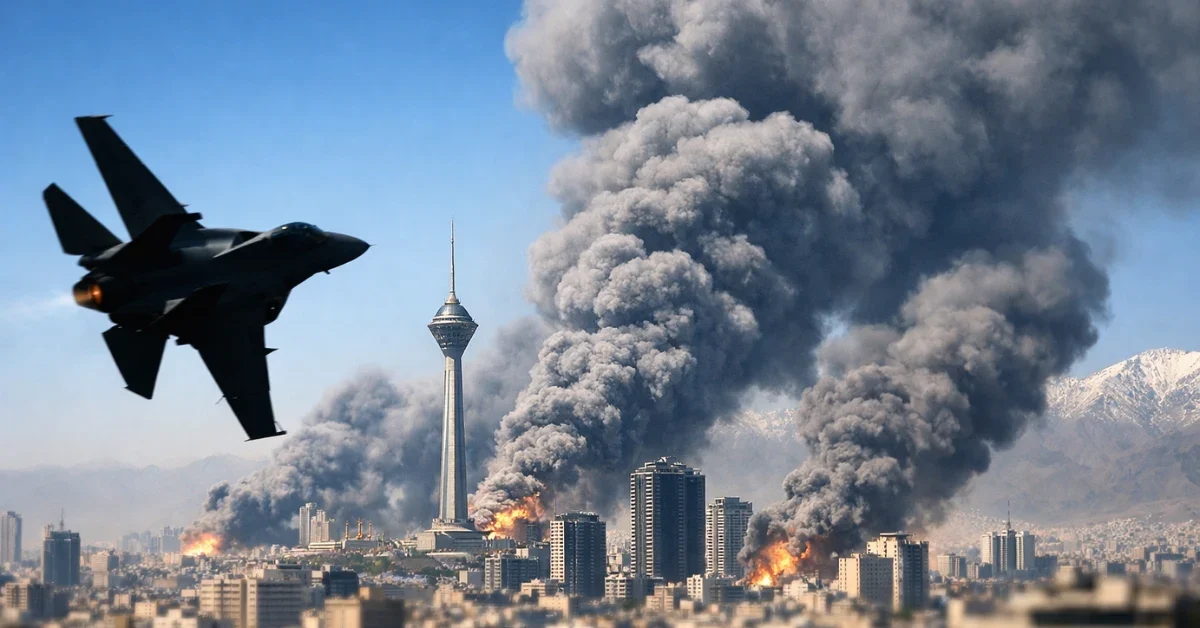
The Middle East faces a dramatic escalation after unprecedented US-Israel strikes on Iran killed Supreme Leader Ayatollah Ali Khamenei. The daylight military offensive, dubbed “Operation Epic Fury” by the United States and “Operation Roaring Lion” by Israel, targeted Iran’s political center and military infrastructure on Saturday morning. The 86-year-old cleric’s death has plunged the region into uncertainty, triggering widespread retaliatory attacks and international condemnation.
The sweeping US-Israel strikes on Iran mark a significant turning point in the decades-long standoff between Tehran and Western allies. U.S. President Donald Trump announced the start of major combat operations, stating the mission was designed to end a long-standing threat and prevent Iran from acquiring nuclear weapons. In response, Iran launched hundreds of drones and missiles across the Middle East, striking targets in Israel and damaging civilian infrastructure in neighboring Gulf countries.
Massive Daytime Offensive Targets Military Sites
The joint military assault began in broad daylight to catch Iranian air defenses during a shift change and maximize visual impact for the Iranian public. Over 200 fighter jets and a massive naval armada, including the USS Gerald R Ford and USS Abraham Lincoln, participated in the offensive. Military forces utilized precision munitions, Tomahawk cruise missiles, and low-cost one-way attack drones to hit critical sites across 17 provinces.
Accounts differ regarding the scope of the bombardment. The Israel Defense Forces stated the operation struck 500 Iranian targets, while an unspecified U.S. official reported that the combined forces conducted nearly 900 strikes within the first 12 hours. The bombardment hit the political heart of Tehran, specifically offices belonging to Khamenei. The attacks also successfully targeted Islamic Revolutionary Guard Corps command facilities, air defense systems, and missile launch sites. Notably, an IRGC missile depot at Mehrabad Airport and missile bases in Hormozgan and Bushehr provinces were struck.
Alongside the Supreme Leader, the offensive killed several of his family members, including his daughter and granddaughter, as well as at least seven senior Iranian military commanders. Following the confirmation of Khamenei’s death on state television, the Iranian government announced a 40-day mourning period.
Iran Retaliates Across the Region
Iran quickly responded to the assassination of its leader by launching a massive wave of missiles and drones. The retaliatory strikes targeted U.S. troops in the region, Israeli cities, and Arab nations allied with Washington.
In Israel, the first day of the conflict rattled citizens as sirens echoed across the country. The Old City of Jerusalem was eerily empty during Shabbat, with police closing the gates to everyone except residents. Missile impacts were confirmed in multiple locations, including Bnei Brak and the northern port city of Haifa, which was hit around 10 a.m. Authorities confirmed that one woman was killed and a man was seriously wounded in Tel Aviv.
The Iranian counterattack also hit civilian infrastructure in the Gulf. Drones struck the United Arab Emirates, Kuwait, and Bahrain. In Dubai, an attack on the Fairmont Hotel injured four people, and strikes on Kuwait International Airport caused minor injuries to workers. Residential buildings in Bahrain were also hit. Officials from the UAE, Kuwait, and Bahrain swiftly condemned the attacks on their sovereign territory.
Calls for Uprising and Regime Security Measures
Amid the military confrontation, both President Trump and Israeli Prime Minister Benjamin Netanyahu appealed directly to the Iranian public. The leaders urged citizens to rise up, overthrow their government, and take back their country. Israel’s intelligence agency, Mossad, even broadcasted a message in Farsi encouraging Iranians to share images of protests through secure channels.
In response to these calls for an uprising, the Iranian regime implemented severe internal security measures. A near-total internet blackout was enforced to prevent citizens from organizing demonstrations. The government also issued strict warnings against sharing targeting information with the enemy, threatening severe judicial repercussions. Parliament Speaker Mohammad Bagher Ghalibaf declared that the nation had prepared for all scenarios, warning that the U.S. and Israel had crossed red lines and would face severe consequences.
Global Fallout and Diplomatic Tensions
The military escalation has sparked significant global blowback. At the United Nations, Russia and China harshly criticized the offensive. Russia’s UN envoy argued that Iran had been stabbed in the back while actively negotiating with Washington. The UN Secretary-General expressed deep regret over the squandered diplomatic opportunities.
The fallout extended beyond the Middle East, sparking violent protests worldwide. In Pakistan, at least six people were killed in clashes with police after hundreds of protesters stormed the U.S. Consulate in anger over the Supreme Leader’s death. As the conflict intensifies, experts warn that the assassination of Khamenei may not lead to the immediate collapse of Iran’s entrenched clerical rule, setting the stage for a prolonged and devastating regional war.
