

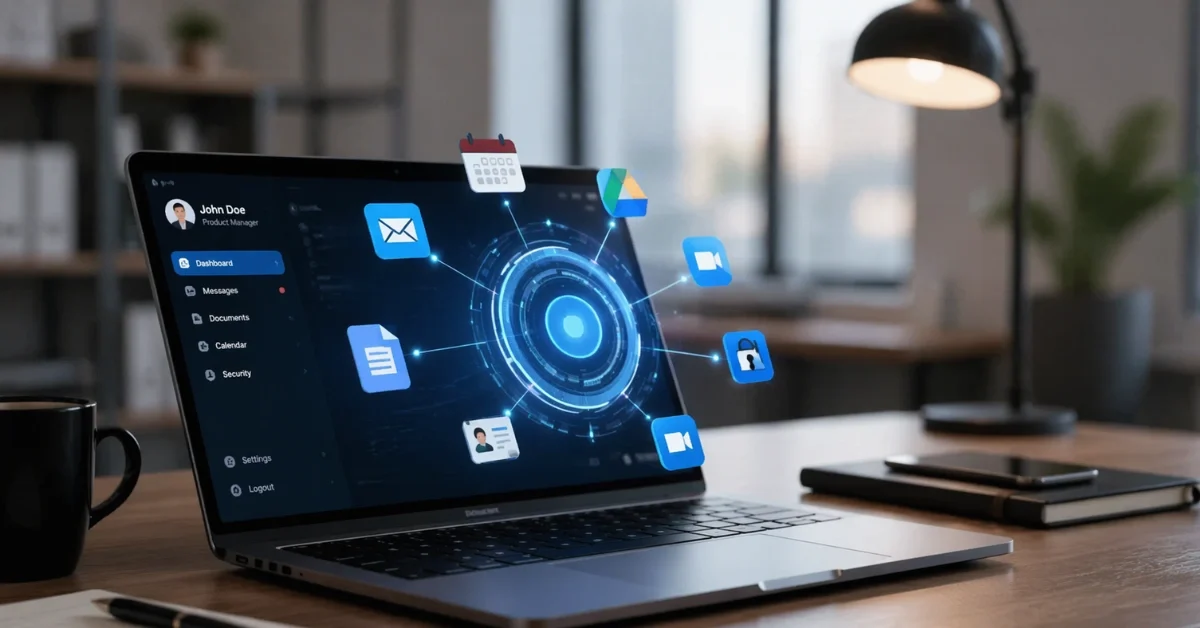
The technology industry is transitioning from basic artificial intelligence features to a new era of agentic AI. Rather than simply responding to user commands, these advanced systems are being designed to act autonomously on a user’s behalf. This shift is redefining how personal computers and mobile devices function, moving the heavy computational lifting from cloud servers directly to local hardware.
As technology giants push for smarter devices, the focus is expanding from dedicated hardware buttons to sophisticated assistants capable of managing complex workflows across multiple applications. However, the journey toward widespread consumer adoption faces hurdles, as everyday users continue to prioritize fundamental computer performance over abstract intelligent capabilities.
The Birth of the AI PC
The current hardware evolution began to accelerate rapidly after late 2022, prompting software companies to weave intelligent features directly into their core products. Microsoft led this hardware transformation by introducing dedicated artificial intelligence processors, known as Neural Processing Units (NPUs), into consumer laptops.
Working alongside manufacturing partners like Asus, Dell, and MSI, the industry established a new category of devices equipped with dedicated Copilot keys. These laptops were built specifically to handle local generative tasks, such as real-time language translation, background noise removal, and on-device image generation. By processing these workloads locally rather than relying on the cloud, manufacturers aimed to provide faster, more secure, and highly responsive user experiences.
Consumer Realities and Market Challenges
Despite the massive industry investment, consumer response has been mixed. During the CES 2026 technology trade show, Dell’s head of product publicly acknowledged that everyday buyers are not purchasing computers primarily for their artificial intelligence capabilities. In many cases, the heavy marketing of these features has caused more confusion than excitement among shoppers.
For the average consumer, core needs like battery life, overall performance, reliability, and value continue to drive purchasing decisions. While large enterprises, government organizations, and professional creators are actively spending money on intelligent hardware, casual users generally engage with these tools only when they are seamlessly integrated into everyday software. Manufacturers are realizing that the technology must become nearly invisible to be widely accepted.
How PC Manufacturers Are Adapting
To bridge the gap between abstract technology and practical utility, computer manufacturers are developing distinct strategies. Asus is taking an approach to integrate intelligent assistants across approximately 90 percent of its device lineup, while also developing native software hubs for specific tasks like media organization and image generation. The goal is to reduce user effort by streamlining how applications interact in the background.
Meanwhile, MSI has tailored its approach largely around the gaming community. For competitive players, local processing power is used to dynamically upscale visual graphics and reduce input latency. Additionally, these systems intelligently redistribute power between the central processor and the graphics card to manage heat and preserve battery life during intense gaming sessions.
Across the board, the long-term vision involves computing at the edge, where devices handle persistent, autonomous tasks locally without needing a constant internet connection.
Apple’s Shift Toward System-Level Agents
While PC manufacturers focus on hardware processing, Apple is reportedly transforming its voice assistant into a comprehensive system-level AI agent. Recent reports indicate that Siri is being upgraded to access personal context and execute multi-step tasks across various applications.
Instead of opening individual apps to complete chores, users may soon rely on the assistant to coordinate the entire process. For example, the system could extract details from an incoming email, update a digital note, and draft a reply all within a single user request. In this model, traditional applications act as background tools that the system calls upon when needed, which may drastically change how software developers design future interfaces.
Building Boundaries and Safety Limits
As digital assistants gain the ability to perform autonomous actions, the risks associated with data privacy and financial security increase. To manage these dangers, developers are implementing strict approval checkpoints and access limits.
Companies are utilizing a human-in-the-loop security model for sensitive actions. If a system-level agent prepares a financial transaction or an account modification, it must pause and require explicit user confirmation before proceeding. By restricting which applications the assistant can access and keeping personal data localized on the device, manufacturers are attempting to balance advanced autonomy with necessary privacy protections.
Rather than pursuing entirely independent systems, the technology industry is heavily focused on creating controlled environments. This measured approach ensures that as software shifts from simply assisting users to actively acting on their behalf, everyday consumers remain fully in control of their digital interactions.
