

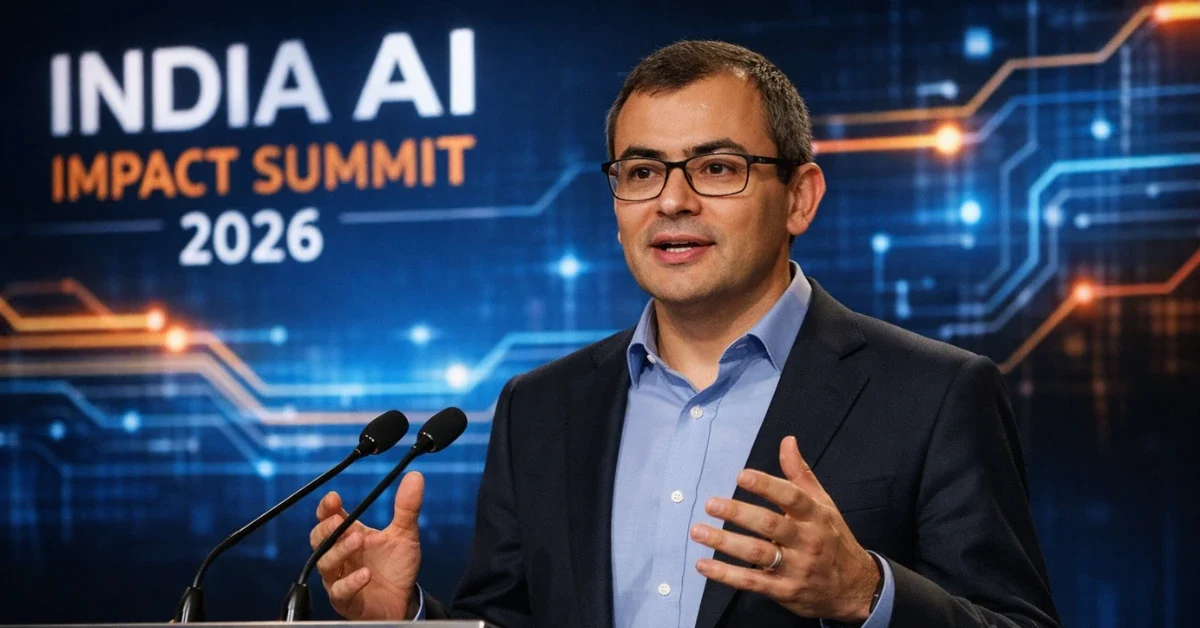
Demis Hassabis, the CEO of Google DeepMind, has offered a bold timeline for the arrival of Artificial General Intelligence (AGI). Speaking at the India AI Impact Summit 2026 in New Delhi, Hassabis suggested that AGI—AI systems capable of performing any intellectual task a human can do—could become a reality within just five to eight years. His comments came during a broader discussion about the rapid acceleration of technology and its potential to reshape the world.
Hassabis described the current moment as the dawn of a “golden era of science.” He emphasized that artificial intelligence is acting as a powerful multiplier for human ingenuity, particularly in fields like biology and material science. While acknowledging the immense benefits, he also cautioned that the path forward requires careful navigation of significant safety risks and technical hurdles.
A Golden Era of Scientific Discovery
A central theme of Hassabis’s address was the transformative power of AI in scientific research. He argued that the world is entering a period where scientific discovery will accelerate at an unprecedented pace. According to Hassabis, AI is not just a commercial tool but a fundamental mechanism to unlock mysteries in the natural world.
He highlighted how deep learning systems are already solving complex problems that have baffled scientists for decades. The Google DeepMind chief pointed to breakthroughs like AlphaFold, which predicts protein structures, as early examples of this potential. By applying AI to these hard scientific problems, researchers can compress years of work into a much shorter timeframe. Hassabis expressed optimism that these tools will eventually help cure diseases, develop new materials, and address climate change challenges.
Bridging the Gap Between IQ and AQ
Despite his optimism, Hassabis provided a realistic assessment of where AI technology stands today. He noted that while current Large Language Models (LLMs) possess incredibly high “IQ” in terms of processing information and language, they suffer from a low “AQ,” or Agency Quotient. This distinction highlights a major limitation: current systems can answer questions but lack the ability to act autonomously or plan effectively over long periods.
Hassabis explained that today’s chatbots and models are largely passive. They do not have true agency, meaning they cannot independently formulate a plan, execute it, and adapt to changes without human intervention. He pointed out that these systems still struggle with logic, spatial reasoning, and memory. They are also prone to “hallucinations,” or confidently stating incorrect information.
To reach AGI, Hassabis stated that researchers must solve these problems. Future systems will need to move beyond simple pattern matching to develop grounded reasoning and reliable long-term planning capabilities. He indicated that bridging this gap is the primary focus of research labs worldwide as they race toward the five-to-eight-year timeline he predicted.
Warning of Bio and Cyber Risks
The DeepMind CEO also used the platform to issue a stark warning about the darker side of advanced AI. He identified two primary categories of risk that demand immediate attention: bio-risks and cyber-risks.
Hassabis explained that as AI models become more capable, they could potentially be misused by bad actors to design harmful biological agents or pathogens. This “bio-risk” represents one of the most concerning safety challenges for the industry. Similarly, he highlighted the danger of AI being used to automate sophisticated cyberattacks, making digital infrastructure more vulnerable.
He urged the global community to treat these risks with the same seriousness as the climate crisis. Hassabis called for international cooperation to establish safety guardrails. He stressed that no single country or company can manage these dangers alone. Instead, a coordinated global effort is required to ensure that the benefits of AI are democratized while the potential for harm is strictly contained.
India’s Role in the AI Future
The summit also provided an opportunity for Hassabis to discuss India’s position in the evolving global technology landscape. He described India as being uniquely well-positioned to become a leader in the AI revolution.
Hassabis praised the country’s deep pool of engineering talent and its vibrant startup ecosystem. He noted that India’s ability to deploy technology at scale could allow it to harness AI solutions effectively for societal problems. By leveraging its human capital and embracing innovation, Hassabis suggested that India could play a pivotal role in shaping how AI is developed and used in the coming decade.
