

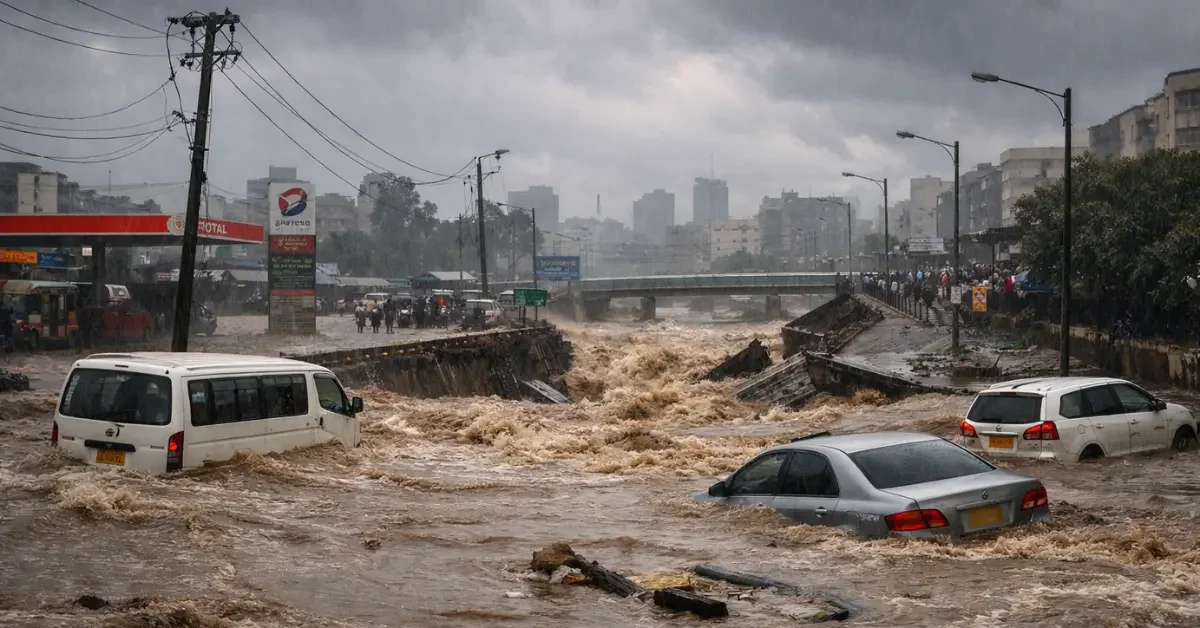
Severe Kenya flooding triggered by relentless heavy rains has claimed dozens of lives across the country, with the nation’s capital, Nairobi, bearing the brunt of the devastation. The exact death toll remains heavily disputed among officials and reporting outlets. According to police statements released on the social media platform X, a total of 62 people, including eight children, have died since the torrential downpours began late last week. Conversely, other reports indicate that the number of fatalities has reached at least 66 following the recent discovery of four additional victims. Prior to these updates, a tally issued last Sunday had originally placed the death toll at 42.
As the heavy rains continue to batter the East African nation, emergency response teams and local residents are grappling with widespread destruction. The severe weather has forced more than 2,000 families and individuals to evacuate their homes and seek shelter on safer, higher ground. The Kenyan Interior Ministry issued a warning on Sunday, cautioning that various parts of the country are still experiencing intense rainfall. This ongoing weather pattern significantly increases the risk of further flooding and has already rendered numerous roads and bridges completely impassable.
Nairobi Hit Hard by Flash Floods
Nairobi has emerged as the worst-hit region during this crisis, accounting for 33 of the confirmed fatalities. Flash floods swept through the city overnight, submerging neighborhoods and causing severe infrastructure damage. The rushing waters damaged vital power and water lines, while Saturday’s intense downpour left several local schools completely flooded.
The sudden rise in water levels prompted dramatic rescue operations throughout the capital. The Kenya Red Cross reported that emergency workers successfully rescued 11 people after their minibus taxi, known locally as a matatu, became stranded in the rising floodwaters. In a separate incident, responders managed to save two children who were trapped inside a flooded residential house. Aid workers also began the grim task of pulling bodies from the floodwaters across Nairobi after overnight flash floods swept away dozens of vehicles and disrupted flight operations at East Africa’s largest airport.
Poor Drainage and Unregulated Development
Residents and officials alike point to inadequate urban planning as a major catalyst for the devastation in Nairobi. The obstruction of natural rivers and waterways, largely driven by unregulated construction and development, has severely compromised the city’s ability to manage heavy rainfall. Recognizing this persistent issue, Member of Parliament Mbui has publicly stated that the government must take immediate action to improve poor drainage systems to curb future flood disasters.
The firsthand accounts of local residents highlight the terrifying speed and scale of the flooding. Kareem Hassan Ali, a businessman residing in the Parklands area of Nairobi, described seeing approximately two meters, or 6.5 feet, of water outside his apartment block on Saturday night. While the water levels have since subsided and his personal flat was spared, Ali noted that vehicles parked in the building’s underground parking area were completely submerged.
Another Parklands resident, Deenesh Patel, works as an auditor and chose to evacuate. After seeing the severe weather warnings, Patel spent the night at a friend’s house to avoid taking any risks. Both men have strongly urged government officials to halt construction projects that block critical rivers and to invest in better drainage infrastructure.
“The rain was heavy but this happens each year,” Patel stated. “Other low-lying areas were not affected because they have the proper infrastructure.”
Government Response and Rescue Operations
In the wake of the disaster, police have confirmed that search-and-rescue operations are continuing nationwide to address the torrential rain and subsequent devastating flooding affecting various parts of the country. On Sunday, President William Ruto addressed the nation, stating that government authorities are actively working to clear blocked drainage systems. Furthermore, Ruto announced that emergency food supplies and medical assistance are currently being delivered to the citizens most affected by the crisis.
Despite these assurances from the president, some local communities have reported a lack of official support on the ground. According to Ali, residents in his neighborhood did not see any government workers responding to the damage. Instead, members of the Parklands Residents Association were forced to take matters into their own hands and clear the storm debris themselves.
Climate Change and Regional Impact
The catastrophic flooding is not an isolated event limited strictly to Kenya. The severe weather system has also inflicted massive casualties in neighboring Ethiopia. Reports indicate that more than 100 people have been killed in the southern regions of Ethiopia following a combination of heavy floods and devastating landslides.
Environmental experts stress that a multitude of factors contribute to these types of severe flooding events. However, a warming atmosphere directly caused by global climate change makes extreme rainfall much more likely to occur. The planet has already warmed by approximately 1.1 degrees Celsius since the beginning of the industrial era. Scientists warn that global temperatures will continue to rise, bringing more frequent and intense weather disasters, unless governments around the world commit to making steep cuts to greenhouse gas emissions.
