

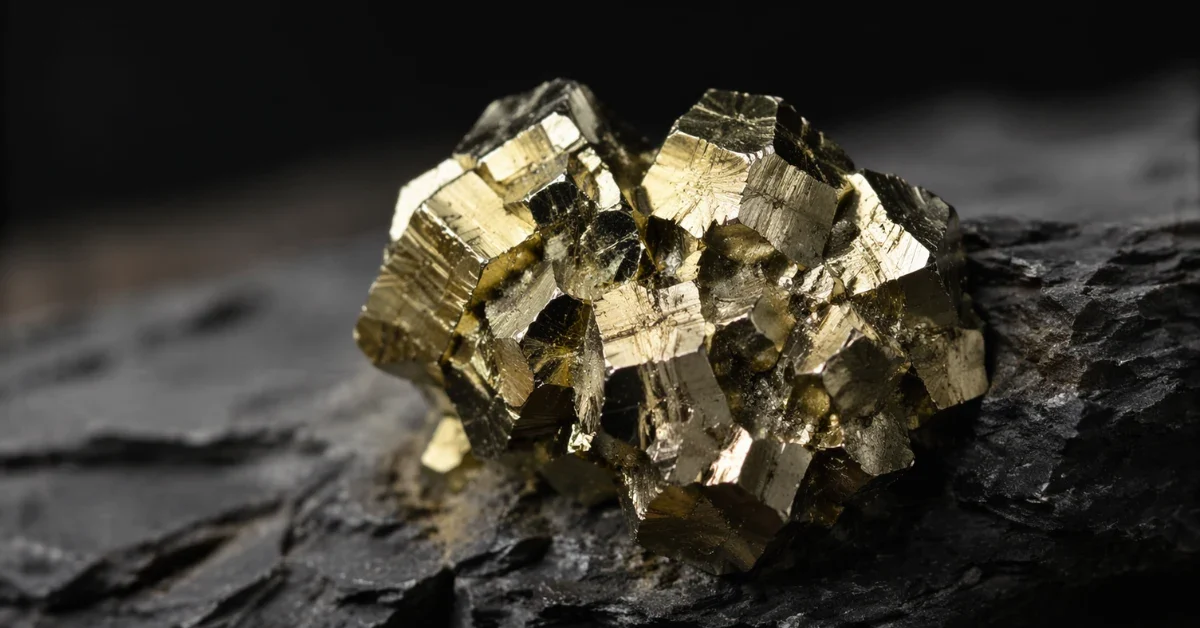
Scientists have made a surprising discovery that could change how the world sources one of its most critical materials. Researchers from West Virginia University have detected significant amounts of lithium inside pyrite — the iron sulfide mineral widely known as “fool’s gold” — found within ancient shale rocks from the Appalachian Basin. The find is being described as “unheard of” and could open a new path to securing lithium supplies without expanding traditional mining operations.
Lithium is the backbone of the clean energy revolution. It powers the batteries inside electric vehicles, smartphones, and laptops, and it plays a crucial role in storing electricity generated by solar panels and wind turbines. As the global push toward electrification accelerates, demand for lithium has surged well beyond what conventional supply chains were built to handle.
A Discovery Hidden in Ancient Shale
The research team analyzed 15 samples of middle-Devonian shale from the Appalachian Basin — rocks that formed approximately 380 million years ago, when the region lay beneath ancient seas. These fine-grained rocks are known to contain organic material and minerals like pyrite, but the presence of significant lithium concentrations within the pyrite itself came as a shock to the researchers.
Shailee Bhattacharya, a sedimentary geochemist and doctoral student working under Professor Shikha Sharma in the IsoBioGeM Lab at West Virginia University, led the investigation. The team used a targeted leaching process to separate the pyrite fraction from the rest of the rock and measure its lithium content. What they found was striking — in one case, up to 54 percent of the total lithium in a sample came from the pyrite fraction alone.
Statistical analysis of the samples revealed a strong positive correlation between pyrite abundance and the amount of lithium that could be recovered from it. In samples with higher pyrite content, more lithium was available for extraction.
Why This Find Matters for Clean Energy
Traditional lithium comes from pegmatites — coarse-grained igneous rocks — and volcanic clays, sources that are well understood but increasingly strained by demand. What makes this pyrite discovery particularly valuable is the idea that lithium could be recovered from materials that are already considered waste, such as mine tailings and drill cuttings left behind by oil and gas operations.
Rather than opening new mines and generating new environmental disruption, this approach would allow industry to tap into existing waste streams for a critical resource. As Bhattacharya put it, the goal is to be able to discuss sustainable energy “without using a lot of energy resources.”
There is also a forward-looking dimension to the research. Pyrite is rich in sulfur, and scientists in materials engineering have already been exploring lithium-sulfur batteries as a potential next-generation alternative to lithium-ion batteries. If commercially viable, lithium-sulfur batteries could require fewer raw materials to produce and carry a smaller environmental footprint. The WVU team’s geological findings could dovetail neatly with that emerging technology.
Still an Early-Stage Study
Despite the excitement, the researchers are careful to keep expectations measured. Bhattacharya noted that this is “a well-specific study,” meaning the current results are based on samples from a particular location and cannot yet be assumed to apply broadly. Whether similar lithium enrichment exists in pyrite deposits across other shale formations remains an open question.
The commercial viability of extracting lithium from pyrite at scale is also not yet established. The interaction between lithium and sulfur-rich minerals is still poorly understood in geological science, and more research is needed before any extraction process could move toward industrial use.
That said, the work signals a meaningful shift in how scientists think about lithium distribution in sedimentary rocks. Previous research had largely overlooked pyrite as a potential lithium host, focusing instead on well-known deposit types. This study, presented at the European Geosciences Union General Assembly, challenges that assumption and invites a broader search.
What Comes Next
The WVU team’s findings are part of a wider effort to identify unconventional lithium sources that could supplement or even partially replace traditional mining. Shale formations are abundant across the United States, meaning that if the lithium-pyrite connection proves replicable, the potential resource base could be substantial.
For now, Bhattacharya’s primary focus is on understanding the fundamental science — specifically, why and how lithium and pyrite end up bonded together in organic-rich shale environments. Answering that question will be the necessary first step before any practical extraction strategy can be developed.
The possibility of powering tomorrow’s electric cars and clean energy grids with lithium drawn from what was once considered worthless waste is a compelling one — and this research suggests it may not be as far-fetched as it sounds.
