

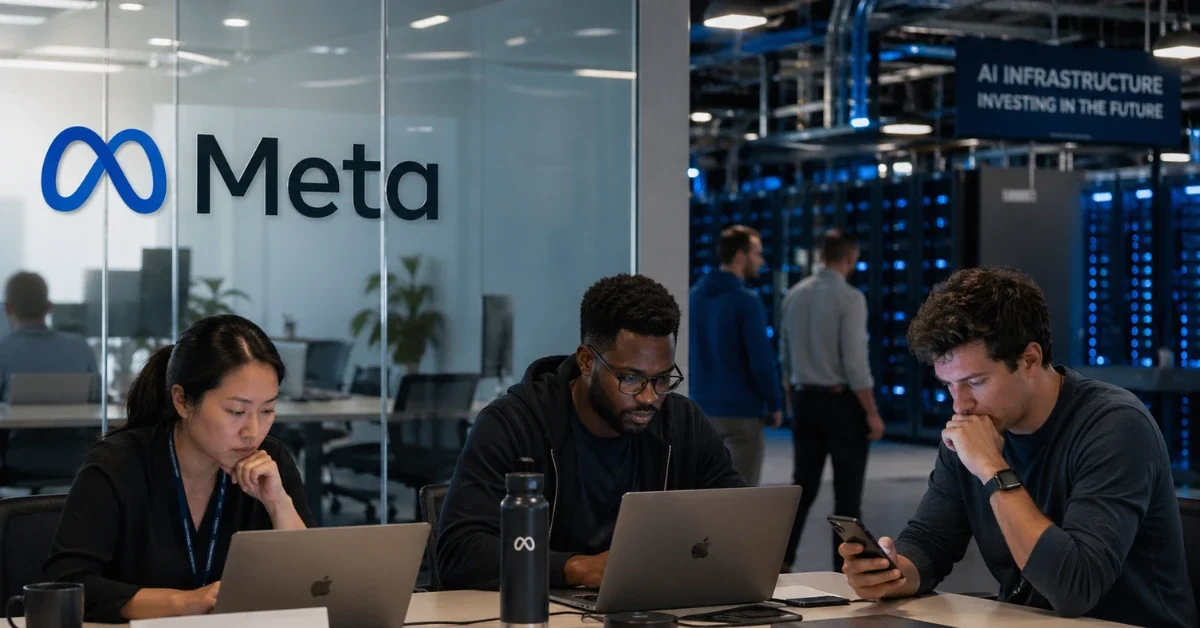
Meta layoffs 2026 moved into sharper focus this week after the company told employees it plans to cut about 10% of its workforce, or roughly 8,000 jobs, starting May 20. The company also said it will leave around 6,000 open roles unfilled as it continues to spend heavily on artificial intelligence.
The move places Meta at the center of a wider tech industry shift in which large companies are trimming staff while putting more money into AI infrastructure and specialized talent. Microsoft is also reducing headcount, though through voluntary retirement and buyout offers that reports said cover about 7% of its U.S. workforce, with more than 8,000 employees qualifying for some packages.
May 20 timeline set
Meta said in a memo to employees that the layoffs are scheduled for May 20. Reports said the message came from Chief People Officer Janelle Gale, who linked the cuts to the company’s push to control costs while continuing to invest in other priorities.
In that communication, Gale said the goal was to “run the company more efficiently” while balancing major investments elsewhere in the business. Reports also said Meta chose to confirm the plan early, even though doing so would leave employees in an uneasy period before the layoffs take effect.
The company began the year with nearly 79,000 employees, according to one report. With roughly 8,000 jobs set to be cut and 6,000 planned openings left unfilled, the restructuring is one of Meta’s largest workforce actions in recent years.
AI spending at center
Several reports tied the layoffs directly to Meta’s spending on artificial intelligence. One report said Meta told staff it intends to spend about $135 billion on AI projects this year, a figure described there as roughly equal to the company’s total AI investment over the previous three years combined.
Reports also said Meta has outlined record capital spending for the year and has signed several large AI-related partnerships in recent months. Employees have been encouraged to use internal AI tools to help with tasks such as coding. At the same time, the company increases spending on AI infrastructure, large language models, chatbots, and high-cost technical talent.
That spending push has become a key part of Meta’s strategy under CEO Mark Zuckerberg. Some reports framed the layoffs as a trade-off between jobs and computing power, while others described them more narrowly as an efficiency effort designed to free up money for new investments.
Reports show different pictures
While the latest company memo pointed to layoffs of about 10%, earlier reporting from Reuters described a larger possible reduction. In March, Reuters reported that Meta was planning layoffs of 20% or more as AI costs mounted and the company bet on productivity gains from the technology.
A follow-up Reuters report said Meta shares rose nearly 3% after that earlier report on possible layoffs of 20% or more. Later, another Reuters report said the first wave was expected to cut about 10% of the workforce, while additional cuts were planned for later in 2026, though details were not finalized.
Taken together, those reports suggest Meta’s layoff plans developed over time and were described differently at different stages. The confirmed company memo sets the immediate action at about 10% beginning May 20, while Reuters reported that more cuts could still come later in the year.
Support for affected staff
Meta has outlined severance support for affected U.S. employees. According to one report, that package includes 16 weeks of base pay, extra compensation tied to years of service, and extended health coverage for up to 18 months.
Similar arrangements are expected in other countries, adjusted to local rules. Those details offer some clarity for workers, but they do not change the broader picture of a company slowing hiring and shrinking parts of its workforce while expanding AI investment.
Wider tech reset
Microsoft’s buyout program adds to the sense that this is not an isolated event. Reports said the company is offering voluntary retirement and buyouts to thousands of workers with longer tenure, making it another major tech employer reshaping its workforce as AI spending rises.
Across the sector, the message from these announcements is consistent: big technology companies are redirecting money toward AI even as they reduce headcount in parts of their businesses. For Meta, the near-term story is now clear: layoffs affecting about 8,000 employees are set for May 20, with hiring slowed by 6,000 unfilled roles and AI spending taking a central role in the company’s next phase.
