

Nvidia Hits a Historic Valuation
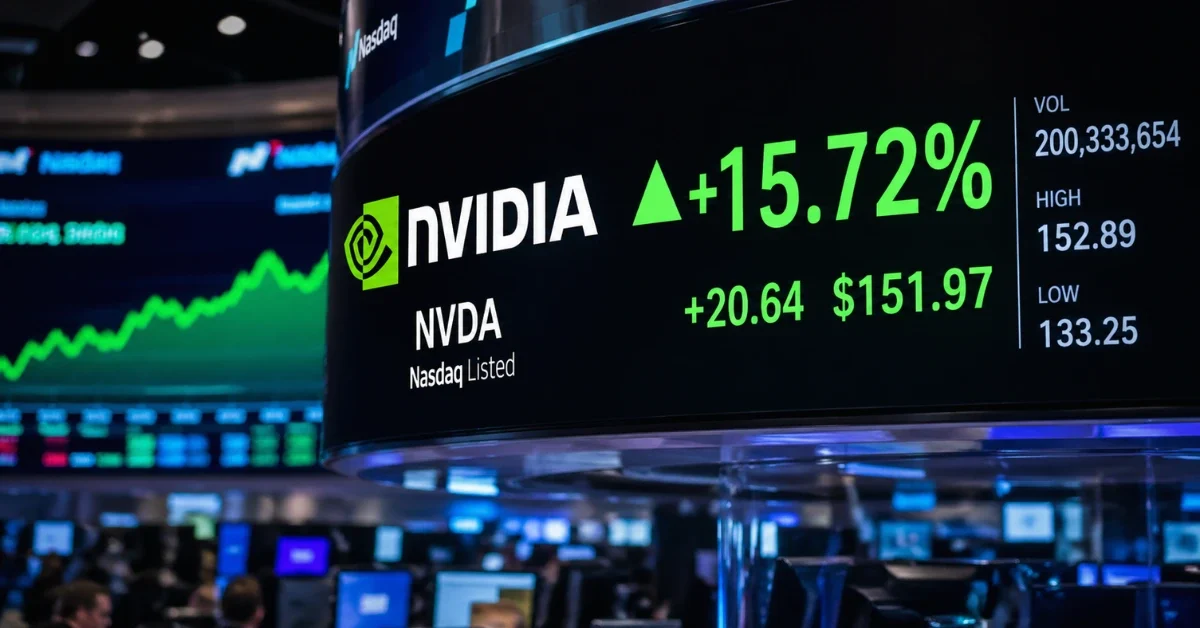
NVIDIA has successfully crossed the highly anticipated $5 trillion market capitalization threshold. On Friday, April 24, 2026, the artificial intelligence giant saw its stock price surge by 4.3 percent, closing at a record high of $208.27. This remarkable achievement allowed the company to regain a valuation it had not seen since October of the previous year. Market data indicated that Nvidia added over $200 billion in value during a single trading session, briefly touching an astonishing peak of $5.12 trillion.
The journey to this Nvidia 5 trillion market cap milestone has been defined by explosive growth. Since the end of 2022, Nvidia’s stock has increased by more than 14-fold, representing a 1,400 percent gain. Over this short period, the company added more than $4.5 trillion to its total market capitalization. This rise is fueled by relentless global demand for artificial intelligence infrastructure. NVIDIA’s advanced processors currently power complex systems for major technology companies, including Google, Microsoft, Meta, and Amazon, along with leading organizations like OpenAI and Anthropic.
Intel Earnings Spark a Sector-Wide Surge
The latest push that secured the Nvidia 5 trillion market cap was triggered by another semiconductor major. Intel shocked the market by reporting first-quarter revenue of $13.58 billion. This comfortably exceeded analyst expectations and represented a 7.2 percent increase from the $12.67 billion reported during the same period a year earlier. Furthermore, Intel reported strong sales of its Xeon server CPUs, indicating that demand for processing is expanding beyond the specialized graphics processors that Nvidia dominates.
In response to this strong report, Intel’s stock soared by 24 percent. This massive jump marked the company’s best single-day market performance since 1987. The unexpectedly positive results from Intel sparked a broad reevaluation of semiconductor stocks and generated renewed momentum across the technology sector.
Rival Chipmakers Join the Historic Rally
The market momentum extended far beyond Nvidia and Intel. Advanced Micro Devices (AMD) saw its shares jump by more than 14 percent to $349.54. This increase was partially fueled by an analyst upgrade that raised AMD’s price target by 70 percent. Additionally, AMD recently joined Arm and Qualcomm to participate in a $60 million funding round for Wayve, a company focused on autonomous driving.
Qualcomm also experienced a significant boost during this historic rally. However, sources conflict slightly regarding the exact percentage of the gain. According to a specialized technology publication, Qualcomm gained over 8 percent to reach a share price of $144.85, while a major international news outlet reported an 11 percent gain. Regardless of the exact figure, Qualcomm benefited heavily as artificial intelligence workloads migrate to edge devices like smartphones.
Overall, the Philadelphia Semiconductor Index rallied by more than 4 percent, reaching a new all-time high. The iShares Semiconductor ETF also gained 4.67 percent during the session, bringing its total monthly return to an impressive 40.4 percent through late April.
Broader Market Hits New Heights
The powerful semiconductor rally propelled major United States stock indexes into record territory. The technology-heavy Nasdaq Composite surged by 1.8 percent to set a new record. The index is now up 15 percent in April, putting it on track for its best monthly performance since 2020.
Meanwhile, the S&P 500 climbed 0.6 percent to close at its own all-time high. Broader market optimism was supported by technical improvements, including a moderating United States dollar and stabilizing oil prices connected to potential negotiations to end conflicts between the United States and Iran. However, the Dow Jones Industrial Average fell by 0.3 percent during the session, dragged down by weakness in energy stocks.
Future Outlook and Looming Competition
While the Nvidia 5 trillion market cap highlights current dominance, the competitive landscape is rapidly evolving. The global semiconductor industry is projected to approach a $1 trillion scale by the end of 2026. This growth represents a third consecutive year of double-digit expansion for the sector.
Despite the positive outlook, Nvidia faces rising competition. Alphabet recently announced plans to roll out its own custom chips to cloud customers later this year, potentially challenging Nvidia’s massive market share. The industry must also navigate complex global challenges, including geopolitical tensions, strict technology export controls, and a severe shortage of electricity, copper, and critical manufacturing gases that could constrain future supply.
