

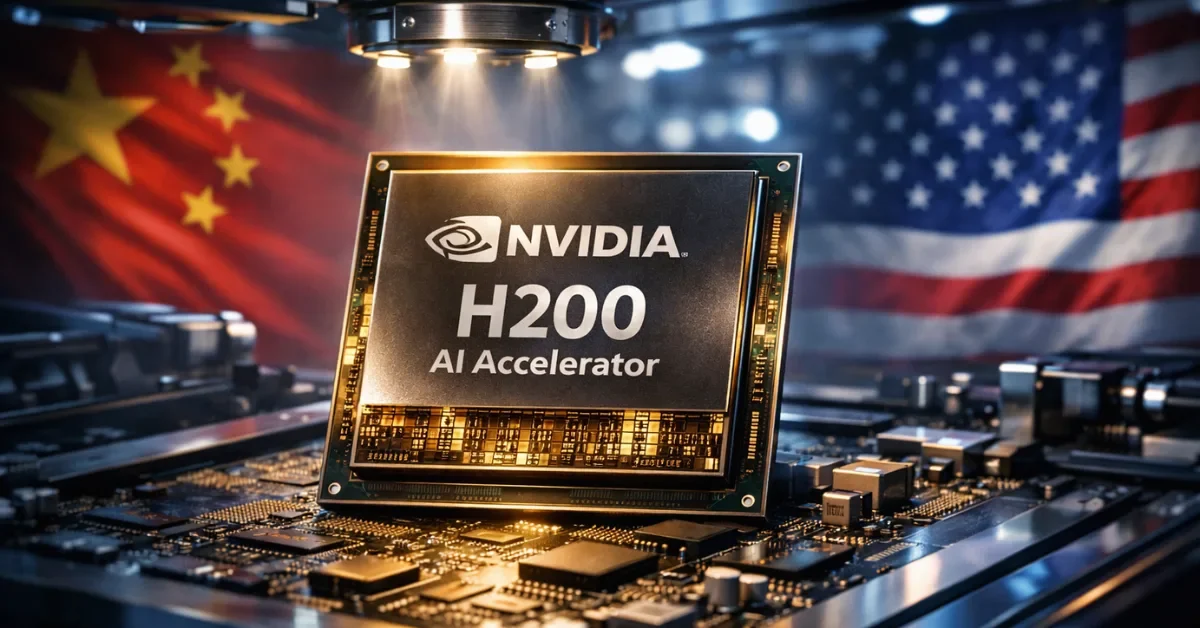
None of Nvidia’s powerful H200 artificial intelligence chips have been delivered to Chinese companies yet, a senior U.S. export enforcement official told lawmakers, underscoring lingering delays in shipments nearly two months after Washington formally approved limited exports under strict conditions. The stalled deliveries come amid heightened U.S.–China tensions over advanced technology and national security.
At a congressional hearing, David Peters, assistant secretary for export enforcement at the U.S. Commerce Department, said the second-most advanced chips from Nvidia have not been sold to Chinese customers so far, despite official authorization to do so. When asked directly about China’s receipt of the high-performance processors, Peters responded that, to his knowledge, none have been delivered.
The lack of deliveries comes after the Trump administration, in December, announced it would allow conditional exports of the H200 chips — a significant shift in U.S. technology export policy aimed at balancing commercial interests with security concerns. However, the process appears to be slowed by regulatory “guardrails” built into the review and approval system for shipments.
H200 Approval vs. Reality: Why Shipments Are Stalled
Although the U.S. government cleared the way for Nvidia to sell H200 chips to China and imposed conditions intended to prevent misuse, actual deliveries have yet to materialize. White House AI czar David Sacks has argued that permitting controlled sales would discourage Chinese firms from trying to catch up with Western chip design, but critics in Washington’s national security community remain wary.
One major sticking point appears to be the detailed export controls themselves. They include safeguards that slow the license approval process, and have not yet resulted in cleared shipments. Chinese customers, for their part, have been hesitant to place orders until the regulatory picture becomes clearer.
In addition to regulatory barriers, there have been reports that Chinese customs officials have blocked H200 imports, further complicating efforts to get the chips into the country, though such developments have not been confirmed by authorities on either side.
U.S. Concerns Over Security and Smuggling
During the congressional hearing, Peters acknowledged ongoing concerns about semiconductor smuggling into China. He cited a Reuters report alleging that a Chinese AI startup, DeepSeek, used Nvidia’s most advanced AI chips — known as Blackwell chips and not approved for export — to train its latest AI model. Peters described countering smuggling as a top enforcement priority.
The issue reflects broader tensions within U.S. policy circles over how far to open high-end technology markets to China. While some U.S. officials believe that controlled chip exports can help maintain American leadership in global technology markets, others warn that advanced AI chips could be repurposed for military or strategic applications by Chinese entities.
What’s Next for Nvidia and China?
Nvidia, one of the world’s largest producers of AI hardware, has not publicly commented on the precise status of shipments to China. Likewise, the Chinese Embassy in Washington has not responded to recent inquiries about when orders might be fulfilled.
Nvidia’s ability to enter the Chinese market with its H200 chips could have significant commercial implications, given China’s vast technology sector and appetite for high-performance computing hardware. But for now, the chips remain in limbo as exporters and regulators work through conditions and controls meant to balance economic opportunity with national security considerations.
