

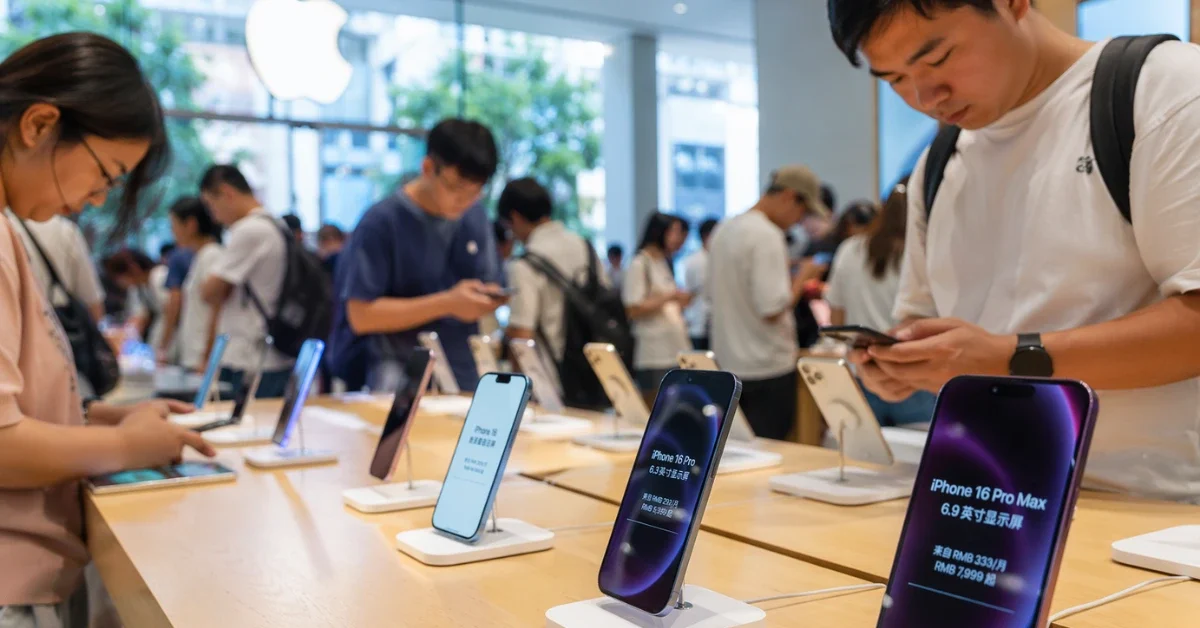
Apple China smartphone sales are showing remarkable resilience at the start of 2026. While the broader domestic smartphone industry faces significant headwinds, the American technology giant is bucking the downward trend. Surging memory chip prices and ongoing supply chain disruptions have severely impacted consumer demand and manufacturing costs. Despite these industry-wide challenges, Apple has accelerated its growth and secured a dominant position in the highly competitive Chinese landscape.
The overall Chinese smartphone market experienced a 4 percent year-on-year decline during the first quarter of 2026. Government subsidies introduced early in the year failed to stimulate sluggish consumer interest. However, Apple China’s smartphone sales highlight the company’s ability to navigate volatile market conditions by leveraging its high-end product portfolio and exceptional supply chain management.
Analyzing Apple’s Impressive 2026 Performance
Reports on Apple’s exact growth figures present two slightly different perspectives. Counterpoint Research data cited by TradingKey states Apple achieved a 20 percent year-on-year increase in shipments for the first quarter of 2026. Conversely, Counterpoint data referenced by The Economic Times indicates Apple posted a 23 percent surge in sales during the first nine weeks of the year. Both reports agree that this strong momentum allowed Apple to capture a 19 percent market share, securing second place.
Apple’s success stems from a strategic decision to absorb rising component costs internally. While many Android competitors increased retail prices, Apple held the line on pricing and implemented targeted promotional cuts. This approach, alongside the strong performance of the latest iPhone 17 series, helped rapidly expand its market footprint. Furthermore, Chinese consumers increasingly view the iPhone as a high-value investment, widely recognizing its durability for at least three years of use.
This recent surge is part of a broader structural recovery. The turnaround began in the second quarter of 2025 when iPhone sales ended an eight-quarter decline by registering an 8 percent growth rate. By October 2025, Apple devices accounted for one-fourth of all smartphone sales in the country. Analysts note that Apple is uniquely positioned to weather the current global memory chip shortage by managing margin pressures internally.
Huawei Reclaims the Top Position
Despite Apple’s impressive gains, Huawei successfully regained the number one spot. The domestic manufacturer captured a 20 percent market share, representing its highest quarterly share since late 2020. Huawei achieved a steady 2 percent year-on-year growth rate during the first quarter. This momentum was driven by improved supply chains for its flagship Mate 80 series and the integration of core technologies like HarmonyOS 5.0 and NearLink.
Huawei also capitalized on the budget-friendly segment during Lunar New Year promotions with its Enjoy 90 series. A crucial advantage for Huawei is its heavy reliance on local supply chains. Domestic suppliers typically charge less than international memory chipmakers, providing a natural cost buffer. This localized strategy allows the company to maintain price stability while global competitors struggle with volatile component costs.
Small and Medium Manufacturers Face Mounting Pressure
The rising cost of memory chips has created a harsh environment for other major brands. Xiaomi faced a severe setback, with first-quarter shipments plunging 35 percent year-on-year, pushing the company down to sixth place. Analysts attribute this decline to a cautious pricing strategy that weakened product competitiveness, compounded by a difficult year-on-year comparison following massive price cuts and subsidies last year.
OPPO experienced a mixed quarter, with overall shipments dropping by 5 percent. The company prioritized a profit-first strategy, leading to early price hikes on older models that suppressed market demand. However, OPPO’s sub-brand OnePlus provided a bright spot, achieving a 53 percent growth rate driven by the Ace 6 and Turbo 6 series. Meanwhile, Vivo bucked the broader market chill with a 2 percent increase in shipments. This growth was fueled by strong Lunar New Year sales of its mid-range Y50 and S50 series. Recently, both OPPO and vivo announced upcoming price increases on existing models to test consumer reactions ahead of new product launches.
Future Market Outlook and Continuing Challenges
Industry experts warn that elevated memory chip costs will persist throughout 2026. Smartphone manufacturers will be forced to make difficult trade-offs between protecting profit margins and meeting shipment targets. Rising component costs are pushing up retail prices for existing models and new device launches. Consequently, the consumer replacement cycle is expected to lengthen as buyers hesitate to upgrade.
Analysts anticipate the Chinese smartphone market will remain under significant downward pressure from March through May. While the premium segment shows resilience through innovations like AI smart assistants, foldable screens, and advanced imaging hardware, the broader industry faces a persistent chill. A brief wave of promotional activity during the mid-year 618 shopping festival in early June may provide temporary relief, but it is unlikely to reverse the negative trajectory. Full-year smartphone shipments are projected to decline by 9 percent year-on-year.
