

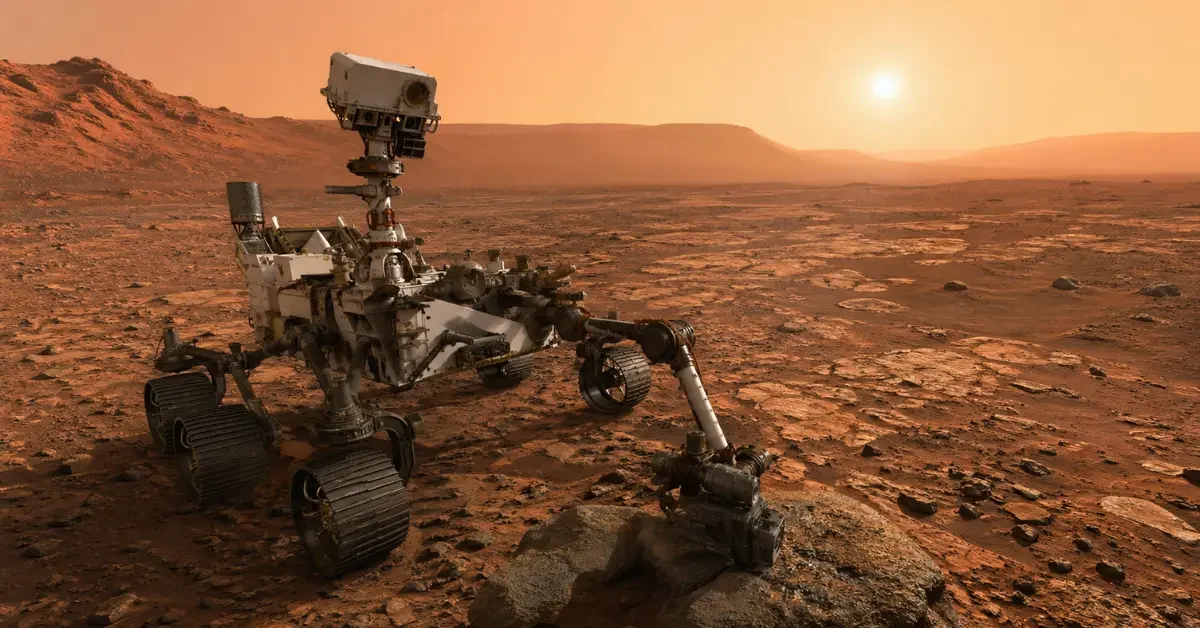
NASA’s Curiosity Mars rover has uncovered the most diverse collection of organic molecules ever detected on the Red Planet. This groundbreaking discovery provides compelling evidence that the chemical building blocks necessary for life have been preserved in the harsh Martian environment for billions of years. Researchers have identified dozens of carbon-based compounds in ancient rock samples, bringing scientists one step closer to understanding whether the neighboring planet could have once supported living organisms.
A Historic Chemical Discovery
Recent laboratory analysis of Martian rock samples has revealed a treasure trove of chemical data. Scientists have successfully identified twenty-one distinct carbon-containing molecules within the material collected by the Curiosity rover. Remarkably, seven of these organic molecules have never been recorded on the Martian surface before this mission.
The newly detected substances include nitrogen heterocycles, which are recognized as a fundamental precursor to complex genetic materials like RNA and DNA. Another significant compound found in the sample is benzothiophene. This large, double-ringed chemical containing sulfur is frequently found in meteorites, suggesting that the same space debris that rained down on Earth and delivered vital life-starting elements may have also heavily bombarded Mars.
In addition to these compounds, scientists have located exceptionally long molecular chains, including decane, undecane, and dodecane. These long-chain structures are the most substantial organic compounds ever found on the planet. On Earth, similar molecular chains act as the basic fragments of fatty acids, which are crucial for forming the cellular membranes of living organisms.
The Wet Chemistry Experiment
Extracting and identifying these ancient organic signatures required innovative analytical techniques. The Curiosity rover utilized its specialized onboard laboratory, known as the Sample Analysis at Mars instrument suite. To analyze the pulverized rock, the mobile laboratory conducted a first-of-its-kind wet chemistry experiment on the Martian surface.
By applying a specific chemical reagent known as TMAH, the rover was able to break apart the larger, more complex organic molecules trapped inside the rock. This rare extraction process allowed the onboard instruments to read the chemical makeup of the sample accurately. The success of this experiment demonstrates that complex carbon compounds can survive the harsh, radiation-heavy environment of Mars for billions of years without being destroyed.
Gale Crater and Ancient Lakebeds
The location of the discovery offers critical clues about the planet’s environmental history. The samples were collected near the Martian equator from an area known as Gale Crater. Within this massive impact basin, the rover gathered clay-filled rock samples from a specific region designated as Glen Torridon.
Geological evidence strongly indicates that this region, alongside nearby areas like Yellowknife Bay, once functioned as a vast, ancient lakebed. During a much warmer and more humid era in the planet’s past, liquid water likely flowed and pooled in these craters for millions of years. This long-standing aquatic environment would have provided the perfect conditions to concentrate organic matter and safely preserve it within fine-grained sedimentary mudstones and sandstones.
There is some slight variation in the estimated age of these preserving rocks. Certain geological assessments place the age of the Glen Torridon sandstone at approximately 3.5 billion years old, while other evaluations of samples like the “Cumberland” rock estimate an age closer to 3.7 billion years. Regardless of the exact timeframe, the consensus remains that the area possessed the right chemistry and conditions to support life-forming processes.
The Unanswered Questions Regarding Ancient Life
While the presence of these organic molecules is a monumentally important piece of the puzzle, scientists caution that it is not definitive proof of past alien life. Organic compounds are primarily defined as substances containing carbon, and they can be produced through several different non-biological pathways.
The current analysis conducted by the rover cannot definitively confirm how these specific organic compounds originated. They might indeed be the fossilized biological remnants of ancient microbial life forms that swam in the Martian lakes. However, they could also have been generated entirely through geological activities, such as interactions between water and minerals in deep hydrothermal vents. A third possibility is that these molecules were simply delivered to the barren surface by crashing meteorites over the planet’s long history.
Even though their exact origin remains a mystery, the discovery is an incredibly promising sign. It confirms that the basic ingredients for life have existed on Mars and have been successfully preserved through deep time. If microscopic life ever did emerge on the Red Planet, this finding ensures that chemical evidence of its existence could still be waiting to be found today.
