

Researchers from the University of Utah have uncovered a microscopic tool that could fundamentally transform modern medicine. The scientists have discovered an enzyme to supercharge Ozempic and similar weight loss drugs, potentially making these popular treatments far more effective and extending their duration in the human body.
The groundbreaking study, published in the journal ACS Bio & Med Chem Au, focuses on altering the inherently fragile structure of peptide-based medications. By changing how these active ingredients are physically constructed, the newly identified enzyme helps medications like Wegovy and Ozempic stay active longer. This offers a major leap forward for patients seeking stronger, more durable treatments for obesity and diabetes.
Overcoming the Fragility of Peptide Drugs
Medications such as semaglutide, which serves as the active ingredient in blockbuster drugs like Ozempic, rely on GLP-1-like peptides to effectively manage blood sugar levels and reduce appetite. However, these linear molecules are naturally fragile and susceptible to rapid degradation once they enter the human body.
The primary threat to these linear molecules comes from proteases, which are naturally occurring enzymes in the body designed specifically to break down peptides. When a patient takes a peptide-based medication, proteases immediately begin dismantling the drug. If the resulting biological response only lasts for a few minutes before the medication is destroyed, the therapeutic value of the drug is severely limited.
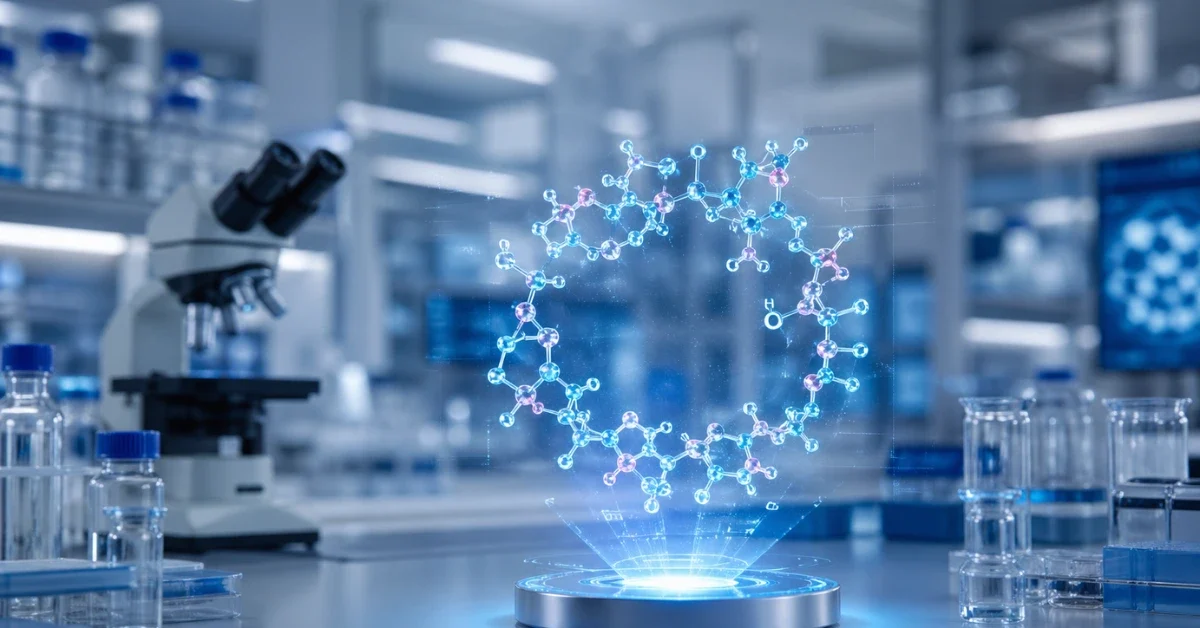
To solve this critical problem, the research team utilized a highly specialized “radical SAM” enzyme named PapB. Known scientifically as an S-adenosyl-L-methionine enzyme, this tiny molecular machine acts as a biological catalyst. The researchers successfully used PapB to convert the open, highly vulnerable chains of peptides into sturdy, closed-ring structures.
How the PapB Enzyme Transforms Medication
During comprehensive laboratory experiments, scientists tested the PapB enzyme on three distinct GLP-1-like peptides. In every single instance, the enzyme successfully connected the loose ends of the molecules. This linkage process forms a highly durable sulfur-carbon connection known as a thioether bond.
Shaping peptides into continuous rings offers incredible medical advantages. The ring formation fundamentally improves the overall stability of the drug, allowing it to survive much longer within the body. According to researchers, utilizing this enzymatic method to tie off the ends of the peptides essentially hides the medication from the body’s destructive proteases.
By effectively cloaking the drug from the enzymes that normally break it down, the medication achieves a significantly longer half-life. This means the active ingredients remain in the bloodstream longer, allowing patients to experience sustained and enhanced interactions with their biological targets without needing constant readministration.
A Precision Tool for Next-Generation Therapeutics
One of the most exciting aspects of this pharmaceutical discovery is its unparalleled simplicity and precision. Traditional laboratory methods of modifying complex drugs can be incredibly difficult, time-consuming, and imprecise. In contrast, the PapB enzyme operates as a flexible, plug-and-play tool that works in extremely controlled ways.
Laboratory tests confirmed that the protective ring structures formed perfectly even when the targeted peptides contained nonstandard building blocks. These complex components are commonly used in the creation of modern incretin drugs for advanced diabetes treatment, proving that the enzyme can handle intricate chemical formulations.
While earlier studies from the same laboratory had previously introduced the concept of this peptide-closing strategy, the latest published research provides clear, undeniable proof of its practical potential. The team successfully achieved a specific type of chemical modification on a therapeutic type already available on the market—an achievement that had previously been considered impossible using an enzymatic method.
Ultimately, this discovery signifies that pharmaceutical developers now have a highly effective way to modify peptides at much later stages of drug development. By harnessing the power of the PapB enzyme, scientists are paving the way for next-generation peptide therapeutics. This breakthrough ensures that life-changing treatments for diabetes and obesity can be manufactured to work better, last longer, and provide superior health outcomes for the patients who rely on them.
