

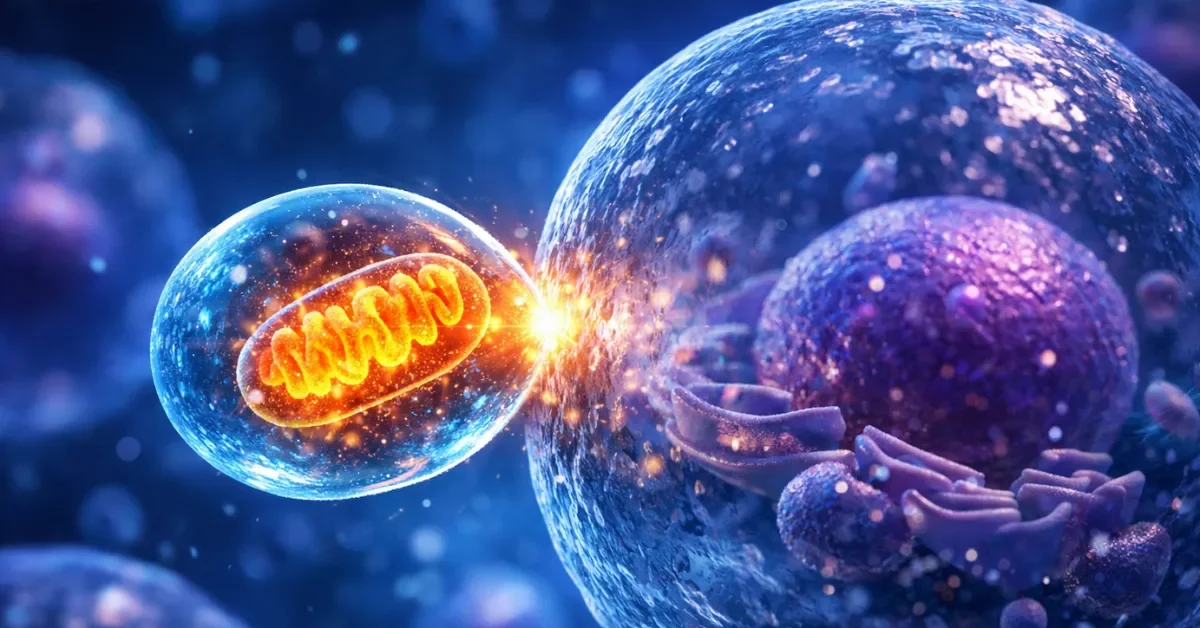
Chinese researchers have developed a groundbreaking mitochondrial capsule therapy that safely and efficiently delivers healthy mitochondria into cells and tissues. This novel treatment strategy shows significant promise in alleviating symptoms of severe conditions such as Parkinson’s disease, Alzheimer’s disease, and diabetes.
By successfully replacing defective cellular power plants, the new mitochondrial capsule therapy opens up fresh possibilities in regenerative medicine. The findings, recently published in the prestigious medical journal Cell, represent a landmark achievement in treating refractory diseases caused by mitochondrial dysfunction and offer hope for rejuvenating aging organs.
The Role of Mitochondria in Human Health
Mitochondria are specialized structures, or organelles, located within human cells. They function as miniature power stations, continuously converting nutrients into the energy required for all life activities while managing cellular metabolism. Uniquely, they are the only organelles in human cells that possess their own genetic code.
When mitochondrial genes mutate, the resulting dysfunction can severely disrupt normal cellular operations. These genetic distortions lead to severe inherited diseases that currently affect approximately one in 5,000 people worldwide. Furthermore, defective mitochondria are a major contributing factor to declining health as a person ages, driving various metabolic and neurodegenerative disorders.
For decades, medical professionals have struggled to address these underlying genetic defects. Doctors could only manage the temporary symptoms of these conditions rather than fundamentally repairing the malfunctioning organelles. While organ transplantation serves as an effective treatment for major organ failure, efficiently treating mitochondrial failure has remained a significant medical challenge.
Overcoming the Delivery Challenge
The most critical hurdle in mitochondrial transplantation has always been finding a way to efficiently deliver the fragile organelles into target cells while preserving their vitality. Naked mitochondria face severe challenges when introduced to new environments, typically yielding a delivery efficiency of less than five percent.
To solve this problem, a research team led by Liu Xingguo at the Guangzhou Institutes of Biomedicine and Health, in collaboration with Guangzhou Medical University and other institutions, engineered a microscopic delivery system. The scientists utilized parts of cell membranes derived from red blood cells to create specialized shells.
These shells encapsulate the healthy mitochondria, forming capsules with a diameter of just one-thousandth of a millimeter. This ingenious design acts as a protective suit during transplantation. It also serves as a biological pass, helping the donor mitochondria bypass the built-in defense systems of the target cell. By using this method, the delivery efficiency skyrockets to roughly 80 percent.
Once the foreign mitochondria smoothly enter the cell interior, they do not remain isolated. Instead, they actively fuse and integrate with the cell’s existing mitochondrial network. This long-term survival allows the newly introduced organelles to continuously compensate for functional deficiencies and metabolic disorders.
In laboratory tests using cells from patients with various mitochondrial DNA mutations, the introduction of healthy capsules yielded striking results. The proportion of malfunctioning mitochondria dropped significantly, cellular energy metabolism was rapidly restored, and genetic defects were effectively compensated.
Success in Animal Disease Models
The research team has already achieved numerous successes by testing the mitochondrial capsule therapy on multiple animal disease models. These models include mice suffering from Parkinson’s disease, Leigh syndrome, and mitochondrial DNA depletion syndrome.
In the Parkinson’s disease studies, researchers delivered the encapsulated mitochondria directly to the affected brain regions of the mice. The therapy effectively halted the continuous death of neurons and successfully restored normal mitochondrial function in those specific brain areas. As a result, the motor abilities of the treated mice improved significantly, nearly returning to normal healthy levels.
Similarly, in mouse models engineered to replicate mitochondrial genetic disorders, the new treatment demonstrated life-saving potential. The therapy significantly prolonged the lifespans of the diseased mice and actively rescued multiple organs from complete functional failure.
According to Liu, this research establishes a highly efficient and safe technical system for organelle therapy. The ability to use healthy organelles as a direct form of medicine could revolutionize how doctors restore the functions of diseased tissues and organs in the future.
Astrocytic Mitochondria for Ischemic Stroke
In a separate but related advancement, researchers from the Kunming University of Science and Technology have explored another avenue of mitochondrial transplantation. A study published in the Annals of Neurology evaluated the use of astrocytic mitochondria to treat acute cerebral ischemic stroke.
Cerebral ischemic strokes deprive neurons of oxygen and energy, severely disrupting mitochondrial function and exacerbating brain injuries. Because astrocytic mitochondria naturally possess a higher resistance to ischemic conditions, the researchers proposed them as optimal donors.
When transplanted into a stroke mouse model, the astrocytic mitochondria were successfully absorbed by the damaged neurons. Once inside, they flexibly regulated endogenous mitochondrial dynamics, rescuing the stroke-induced reduction in cellular energy capacity. This intervention significantly decreased neuronal death and dendritic injuries, ultimately alleviating the severe motor deficits caused by the stroke. Together, these breakthroughs highlight the immense therapeutic potential of mitochondrial transplantation across a wide range of debilitating conditions.
