

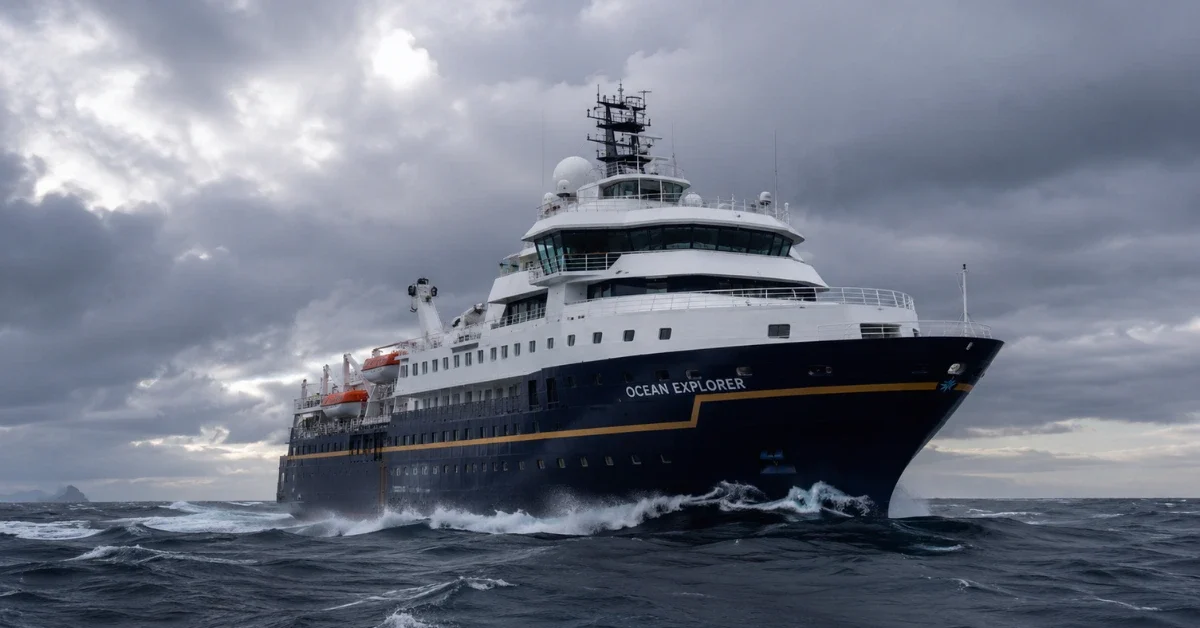
An international health response is currently underway following a deadly outbreak of the Andes hantavirus on a Dutch-flagged cruise ship. The MV Hondius, carrying over 140 passengers and crew, has become the center of a coordinated medical effort after a cluster of severe respiratory illnesses emerged on board. Global health authorities are working rapidly to manage the situation, conduct medical evacuations, and trace potential contacts around the world.
As of the latest reports, the World Health Organization has identified eight hantavirus cases linked to the cruise ship, including six laboratory-confirmed infections and two probable cases. Tragically, the outbreak has resulted in three deaths, representing a high case fatality ratio of 38 percent. The virus responsible has been identified as the Andes strain, a rare type of hantavirus known for its limited ability to spread directly from person to person.
The initial patient is believed to have contracted the virus through environmental exposure during an extended trip through Argentina and Chile before boarding the ship in early April. Authorities suspect that subsequent cases occurred through human-to-human transmission in the confined environment of the vessel. In response, passengers have been advised to practice physical distancing and remain in their cabins to prevent further spread.
International Evacuations and Quarantine Measures
To manage the medical emergency, authorities have launched complex evacuation procedures. Several critically ill patients were medically evacuated from the ship and transported to hospitals in the Netherlands, South Africa, and Switzerland, where they remain in isolation. The MV Hondius recently departed Cabo Verde and is currently navigating toward the Canary Islands. Spanish health authorities are actively preparing specialized, isolated evacuation procedures to safely handle the remaining passengers upon their arrival.
In the United States, the federal government has initiated emergency response protocols to safely repatriate American citizens. The Centers for Disease Control and Prevention deployed teams to the Canary Islands to assess the exposure risk of the American passengers. These individuals are scheduled to be evacuated on a specialized government medical flight to Offutt Air Force Base in Omaha, Nebraska. From there, they will be transferred to the National Quarantine Center at the University of Nebraska for close monitoring and observation.
Contact Tracing and Global Surveillance Efforts
Health departments worldwide are conducting extensive contact tracing to monitor anyone who may have been exposed to the virus. In the United States, officials in at least six states—including New Jersey, California, Georgia, Arizona, Texas, and Virginia—are closely monitoring residents who either traveled on the ship or shared air travel with disembarked passengers. For example, the New Jersey Department of Health is observing two individuals who flew on the same airplane as a cruise ship passenger. Public health officials emphasize that none of the monitored individuals in the U.S. have exhibited any symptoms of the virus, and the overall risk remains extremely low.
Similarly, international health agencies are tracking passengers who returned to their home countries. Two Indian nationals who were aboard the MV Hondius are currently asymptomatic and remain under careful observation according to established international health protocols. Dr. Naveen Kumar, director of the National Institute of Virology under the Indian Council of Medical Research, confirmed that India has the necessary diagnostic infrastructure to handle potential cases. He noted that the reported infections appear to be isolated and that there is no immediate public health threat to the country.
Understanding the Andes Hantavirus Strain
Hantaviruses are typically transmitted to humans through contact with the saliva, urine, or feces of infected rodents. People often contract the virus by inhaling aerosolized particles in enclosed, poorly ventilated spaces. While most hantaviruses cannot spread between people, the Andes virus—predominantly found in South America—is unique because it allows for limited human-to-human transmission, usually requiring close and prolonged contact.
The incubation period for the virus can range from one to eight weeks, making long-term monitoring essential for anyone potentially exposed. Early symptoms often mimic influenza, including fever, fatigue, muscle aches, headaches, and gastrointestinal issues like nausea and abdominal pain. As the disease progresses, patients can experience severe respiratory distress, pneumonia, and dangerously low blood pressure. Because there are no specific antiviral treatments or vaccines available for hantavirus pulmonary syndrome, early supportive care in an intensive care unit is critical for survival.
Despite the severity of the infections on the MV Hondius, global health experts are reassuring the public. The World Health Organization currently assesses the risk to the general global population as low, though the risk to those who were on the ship is considered moderate. As international contact tracing and epidemiological investigations continue, authorities remain vigilant to ensure that the hantavirus outbreak is effectively contained.
