

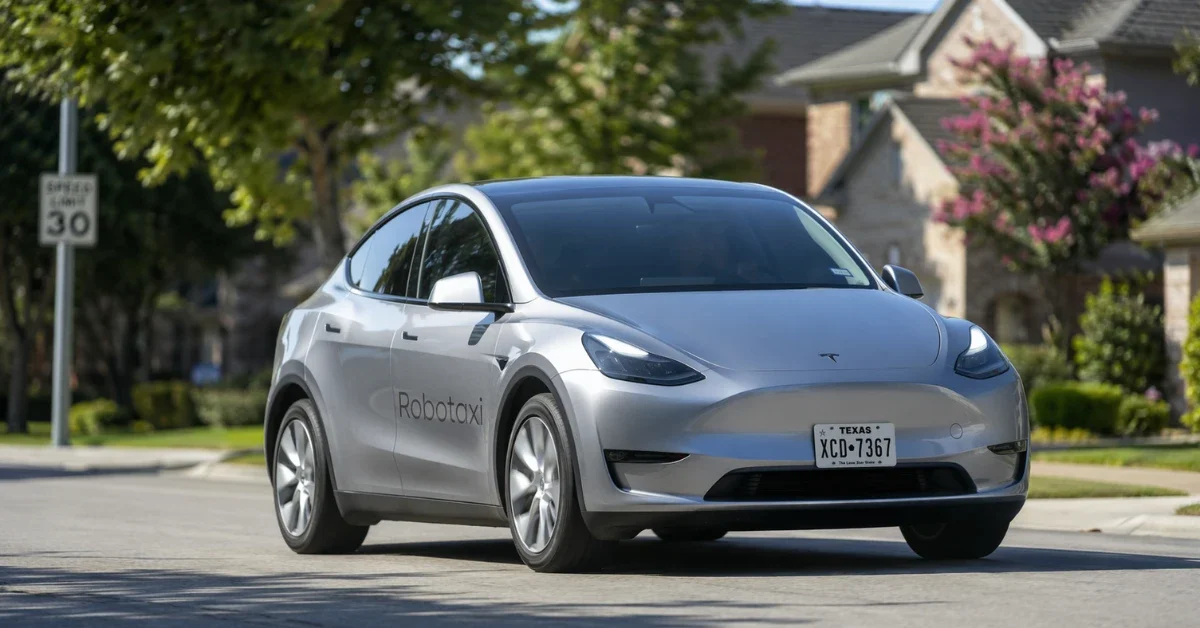
Tesla is officially bringing its autonomous ride-hailing network to new markets, as the Tesla robotaxi service expands to Dallas and Houston. On Saturday, April 18, 2026, the electric vehicle manufacturer announced the launch of its self-driving vehicles in the two major Texas cities. Chief Executive Officer Elon Musk confirmed the rollout in a social media post, encouraging the public to try the platform. This development marks the company’s first operational expansion outside of its initial testing grounds in Austin, Texas, and the San Francisco Bay Area.
The expansion of the Tesla robotaxi service represents a significant step in the automaker’s aggressive scaling strategy for autonomous driving. By activating these two new metropolitan areas, Texas now hosts three active operational hubs for the company. This swift concentration of self-driving testing effectively triples the brand’s autonomous footprint within the state in a short amount of time.
Initial Geofences and Service Areas
The initial rollout in Dallas and Houston is currently limited to highly specific geographic boundaries. The company released official maps detailing these compact service zones, which early user analysis suggests cover roughly 25 square miles in each respective city. These small slices of the metropolitan areas are designed to provide controlled environments for the autonomous fleet as the system gathers real-world navigation data.
In Houston, the active geofence focuses on a targeted zone that includes parts of Willowbrook and Jersey Village. Meanwhile, the Dallas service area appears to center predominantly around the Highland Park neighborhood and adjacent central districts. These relatively modest initial footprints currently trail the existing operations of competing autonomous ride-hailing companies in the region.
However, the company has a track record of rapidly scaling its service boundaries following an initial launch. For context, the autonomous network in Austin began with a similarly small 20-square-mile footprint. Over the course of nearly a year, that central Texas geofence gradually expanded to encompass approximately 245 square miles through a series of carefully planned geographic updates.
Fleet Supervision and Operational Details
The announcement of the new city launches was accompanied by a 14-second video published by the company’s official social media account. Captured from the passenger perspective inside a Model Y, the footage shows the vehicle navigating suburban roads without any human intervention. TechCrunch and Teslarati report that the video demonstrates the vehicles driving without human safety monitors in the front seat, signaling unsupervised rides.
Despite the visual evidence in the promotional footage, there is some disagreement among industry publications regarding the exact nature of the local operations. According to Electrek, the official company announcement provided absolutely no concrete details regarding whether the rides in Dallas and Houston will be fully unsupervised or require human safety monitors. Furthermore, Electrek notes that the company did not disclose the current size of the local fleet or outline the pricing structure for passengers.
Safety remains a focal point as the vehicles hit new public roads. According to a February regulatory filing cited by TechCrunch, the Austin fleet has been involved in 14 crashes since its initial launch last year. The Austin operations transitioned to offering rides without safety drivers earlier in January 2026, while the San Francisco Bay Area fleet continues to operate exclusively with human safety drivers present.
Upcoming Earnings and Expansion Goals
The timing of this launch appears strategically aligned with the company’s financial calendar. The Dallas and Houston operations went live just four days before the automaker is scheduled to report its first-quarter earnings on April 22, 2026. This weekend rollout provides leadership with a tangible expansion data point to present to Wall Street analysts, who are expected to press for specific updates on fleet sizes and supervision statuses during the upcoming financial call.
These new Texas markets fulfill a significant portion of a broader growth roadmap outlined earlier this year. During the fourth-quarter shareholder presentation in late January, the company committed to launching the autonomous platform in seven new United States cities during the first half of 2026.
With Dallas and Houston now officially active, the automaker continues to work toward the remainder of its ambitious first-half expansion targets. The remaining planned launch cities include Phoenix, Miami, Orlando, Tampa, and Las Vegas. As the fleet navigates complex suburban environments in these newly activated Texas zones, the company aims to prove the commercial viability and safety of its self-driving technology on a national scale.
