

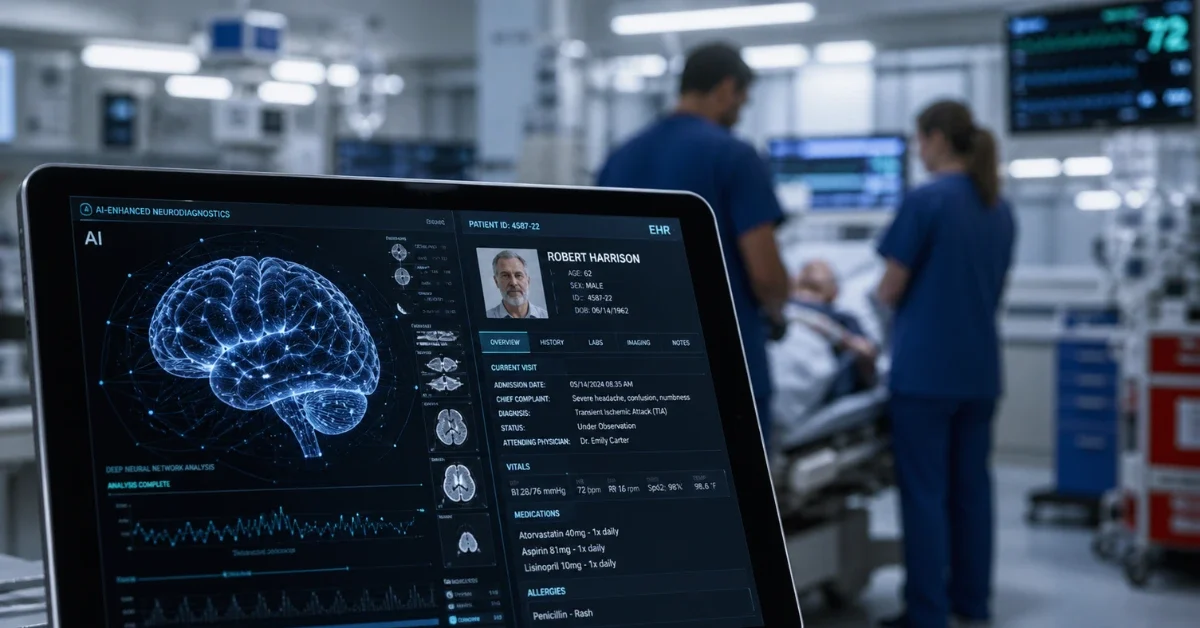
Artificial intelligence is rapidly advancing and making significant waves in the medical field. A recent study led by researchers at Harvard Medical School has found that an advanced artificial intelligence system can outperform human doctors in certain emergency diagnosis tasks.
This groundbreaking research directly compared the performance of human physicians with a specific AI model known as OpenAI o1. The findings clearly demonstrated that the AI produced correct or near-correct diagnoses more often than doctors when both were given the same written patient records.
The Harvard Triage Study
In this comprehensive clinical trial, researchers focused on real-world cases from the emergency department of a Boston hospital. They also used structured clinical scenarios to thoroughly test the technology’s limits.
One specific experiment within the study involved 76 patients who visited the hospital to seek emergency care. The study aimed to evaluate how well artificial intelligence could handle the high-pressure environment of emergency triage, where quick and accurate decisions are absolutely critical for patient safety and effective treatment.
Both the artificial intelligence model and a team consisting of a duo of human doctors received the same initial information. They reviewed standard electronic health records for each of the 76 patients. These medical records typically included basic demographic details, vital statistics, and brief notes from a triage nurse explaining the patient’s presenting condition.
Comparing AI Accuracy to Human Doctors
The results of the trial highlighted a clear advantage for the AI system in standard triage situations. The artificial intelligence accurately diagnosed or closely identified the correct medical condition in 67% of the instances. In contrast, the human doctors achieved correct diagnoses only 50% to 55% of the time when relying solely on the same electronic health records.
Furthermore, the study also tested what happens when both the AI and the physicians receive additional patient information beyond the initial triage notes. With more clinical context provided, the diagnostic accuracy rates for both groups improved significantly. The AI’s accuracy increased to approximately 82%, while the human doctors’ accuracy rose to between 70% and 79%.
Why Artificial Intelligence Shows an Edge
The advantage of AI in emergency triage diagnoses becomes most evident in high-pressure situations where information is severely limited. Emergency departments are notoriously fast-paced and stressful. Under these demanding conditions, human decision-making can easily be affected by common cognitive biases and mental fatigue.
On the other hand, the AI model has the unique ability to process large volumes of data incredibly quickly. It evaluates multiple diagnostic possibilities at once without getting overwhelmed by the environment. By analyzing the data rapidly and objectively, the AI reduces the impact of the stress and bias that typically affect human medical staff, leading to more accurate initial assessments.
Real-World Clinical Reasoning in Action
To illustrate how this technology works in practice, the researchers highlighted a specific clinical scenario from the trial. A patient arrived at the emergency department presenting with worsening lung symptoms. Initially, the human medical staff evaluated the situation and thought the patient was simply failing their current treatment plan.
The artificial intelligence, however, looked deeper into the patient’s complex medical background. It processed the data and identified a less obvious pattern. The AI suggested an alternative explanation directly connected to the patient’s personal history of lupus. This alternative diagnosis was later supported by further medical review, perfectly demonstrating the AI’s strong clinical reasoning skills and its ability to catch critical details that humans might miss under intense pressure.
The Future of AI in Medicine
Experts reviewing the Harvard study results believe this marks a truly profound change in technology that will reshape medicine. The findings reflect rapid progress in AI-driven clinical reasoning. This advancement offers tremendous potential to improve patient care and catch dangerous misdiagnoses before they cause harm.
Despite these highly impressive results, medical professionals emphasize a crucial point: artificial intelligence is not meant to take over the emergency room. The technology should support, rather than replace, human clinical judgment. By assisting with emergency triage diagnoses, AI can help doctors make faster, more informed decisions. The ultimate goal is to safely combine the speed and data-processing power of AI with the expertise of human physicians.
