

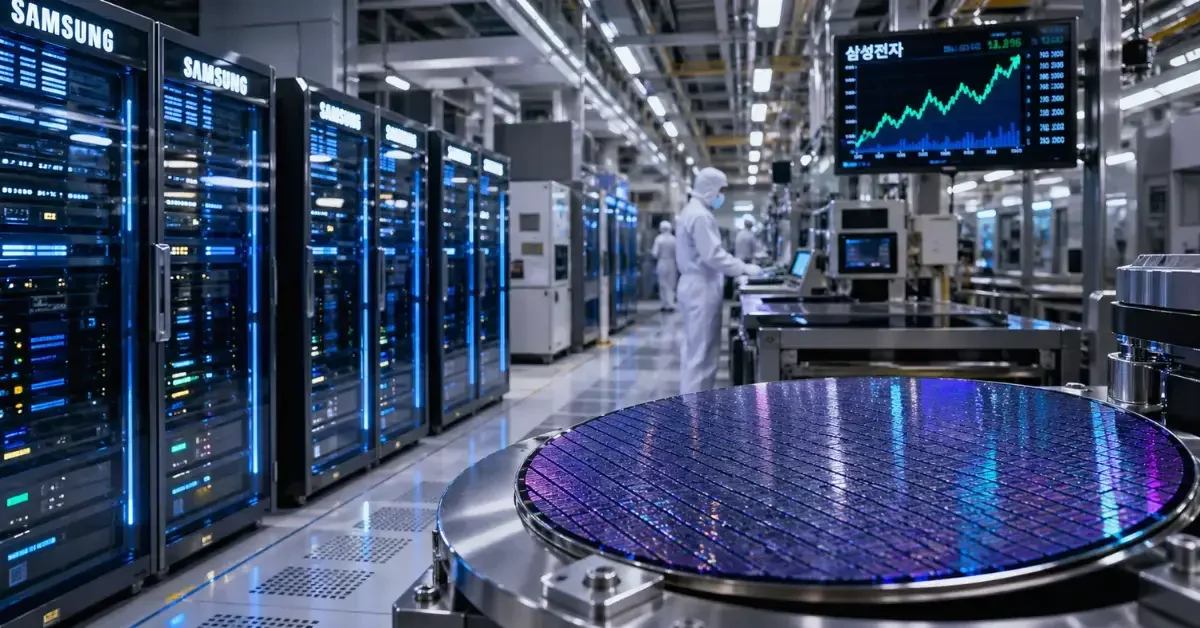
Samsung Electronics has reported a dramatic financial transformation, with its first-quarter operating profit jumping eightfold compared to the previous year. The massive earnings surge comes as soaring memory chip prices and a global artificial intelligence boom tighten supply across the entire semiconductor industry.
The technology giant’s operating profit reached a record 57.2 trillion won, equivalent to roughly $38.43 billion, for the January to March quarter. This historic financial achievement perfectly matched the company’s earlier estimates and represents a staggering increase from the 6.69 trillion won reported during the same period last year. Revenue for the quarter also rose sharply, climbing by 69 percent to hit 133.9 trillion won. These figures show that strong demand across key market segments is driving the company’s financial success.
The rapid expansion of artificial intelligence infrastructure continues to fuel unprecedented demand for advanced memory chips, serving as the primary catalyst for this record-breaking quarter.
The Impact of Artificial Intelligence Infrastructure
According to industry reports, the ongoing artificial intelligence data center boom has fundamentally altered the manufacturing priorities of global semiconductor companies. In response to the rapidly changing technological landscape, chipmakers have been forced to shift their overall production capacity toward high-end semiconductor components.
These advanced components are primarily used in artificial intelligence accelerators, including the highly sought-after hardware supplied to industry leaders like Nvidia. This deliberate manufacturing shift toward specialized artificial intelligence hardware has created a significant ripple effect throughout the broader technology supply chain.
By prioritizing the production of advanced artificial intelligence accelerators, manufacturers have consequently constrained the global supply of conventional memory chips. This tightening of available inventory has pushed the prices of traditional memory chips significantly higher, directly benefiting semiconductor manufacturers and contributing heavily to the recent financial windfall.
Semiconductor Division Dominates Total Earnings
Samsung’s semiconductor division, which has long served as the company’s primary profit driver, accounted for the absolute bulk of the recent financial gains. The chip business alone saw its operating profit surge to an unprecedented record of 53.7 trillion won during the first quarter.
To understand the sheer scale of this divisional performance, the semiconductor segment contributed approximately 94 percent of the entire company’s total overall earnings for the quarter. This dominance shows how important the division is to the company’s financial health and how profitable the current semiconductor market is.
Mobile Division Encounters Margin Pressures
In sharp contrast to the historic success of the semiconductor operations, Samsung’s mobile and networks division faced considerable margin pressures during the same three-month period. Operating profit within this specific business segment experienced a noticeable decline, falling 35 percent to settle at 2.8 trillion won.
The primary factor driving this downward trend in the mobile and networks division was the burden of rising component costs. In a complex operational dynamic, the very same higher chip prices that propelled the semiconductor division to record profits effectively acted as a financial anchor on the mobile segment, weighing heavily on its overall profitability and operational margins.
Market Outlook and Continued Growth
Looking ahead to the immediate future, Samsung expects its current financial momentum to continue uninterrupted into the second quarter of the year. This optimistic outlook is heavily supported by the expectation of sustained corporate investments in artificial intelligence infrastructure across the globe. Additionally, persistently firm pricing conditions within the broader memory market are expected to provide an ongoing foundation for the company’s revenue streams.
Following the release of the record-breaking earnings announcement, broader investor sentiment remained highly positive. Samsung’s shares experienced a modest rise in trading as the market digested the massive profit figures.
The company’s stock has delivered incredibly strong gains throughout this year, managing to significantly outperform the broader financial market. Because of this sustained market performance and the recent earnings surge, Samsung firmly maintains its prestigious position as one of Asia’s most valuable corporate entities, currently ranking just behind regional industry rival TSMC in total market capitalization.
Ultimately, these first-quarter results clearly underscore how the rapid global shift toward artificial intelligence technologies is actively reshaping the modern semiconductor landscape. As the industry continues to evolve, this technological transition is simultaneously creating massive new financial opportunities while introducing distinct cost pressures across various segments of the global technology market.
