

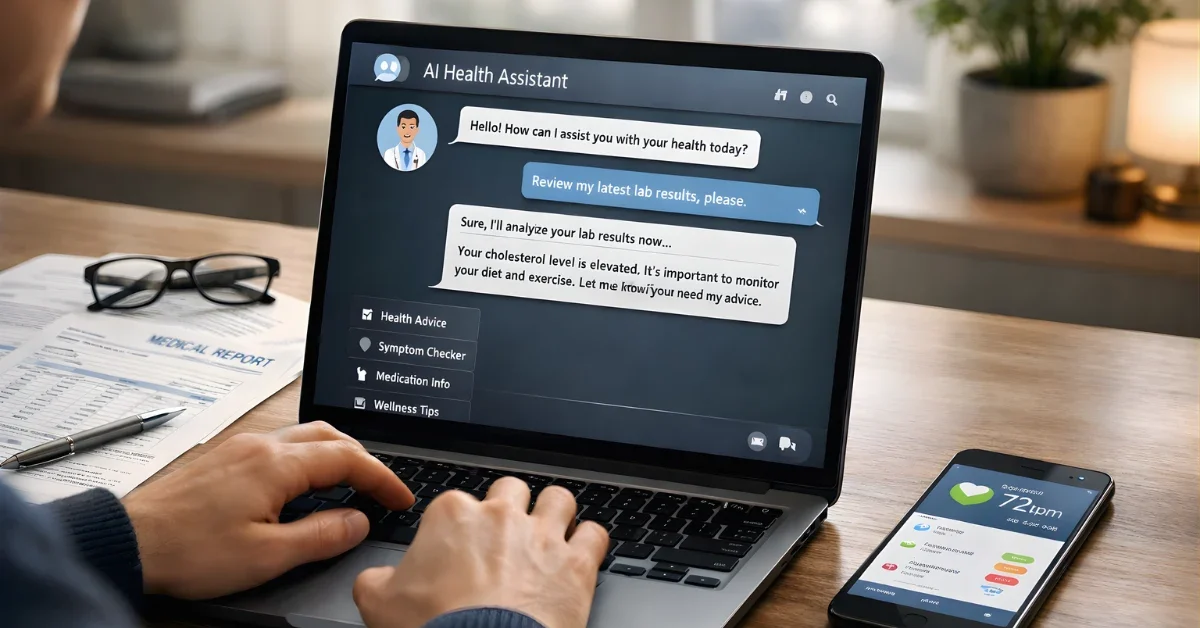
OpenAI has introduced ChatGPT Health, a dedicated experience inside ChatGPT focused on health and wellness that can securely connect medical records and wellness apps to make responses more relevant and personalized. The company says ChatGPT Health is meant to support—rather than replace—care from clinicians, and it is not intended for diagnosis or treatment.
ChatGPT Health builds on how people already use ChatGPT for health and wellness questions, with OpenAI saying more than 230 million people globally ask health- and wellness-related questions each week. The new Health space aims to bring scattered health information—such as portals, apps, wearables, PDFs, and medical notes—into one place so users can better understand patterns over time and feel more prepared for medical conversations.
What ChatGPT Health does
In ChatGPT Health, users can connect medical records and wellness apps so ChatGPT can ground conversations in the user’s own health information and context. OpenAI says this can help people understand recent test results, prepare for doctor appointments, approach diet and workout routines, and understand tradeoffs among insurance options based on healthcare patterns.
OpenAI lists wellness connections such as Apple Health, Function, and MyFitnessPal, and also names other app connections including Weight Watchers, AllTrails, Instacart, and Peloton. The Register also describes ChatGPT Health as supporting uploads of medical records and Apple Health data, generating suggested questions to ask healthcare providers based on lab results, and offering nutrition and exercise recommendations.
Privacy and data controls
OpenAI says ChatGPT Health adds health-specific protections on top of ChatGPT’s existing privacy and security controls, including “purpose-built encryption and isolation” designed to compartmentalize health conversations. The company says Health runs as a separate space with separate “memories,” and it says Health information and memories do not flow back into non-Health chats.
OpenAI also states that conversations in Health are not used to train its foundation models. The Register reports OpenAI also said, by default, ChatGPT Health data is not used for training, and that third-party apps can access health data only when a user chooses to connect them.
For connecting medical records in the U.S., OpenAI says it partners with b.well, which it describes as the largest and most secure network of live, connected health data for U.S. consumers. OpenAI says users can remove access to medical records in Settings, and it also encourages stronger account protection such as multi-factor authentication.
Access and availability
OpenAI says it is starting with a small group of early users to refine the experience, and people can join a waitlist for access. OpenAI says eligible users include those on ChatGPT Free, Go, Plus, and Pro plans who are outside the European Economic Area, Switzerland, and the United Kingdom.
OpenAI says it plans to expand access and make Health available to all users on web and iOS in the coming weeks. It also notes that medical record integrations and some apps are available only in the U.S., and connecting Apple Health requires iOS.
Questions and concerns raised
The Register notes ChatGPT Health is invitation-only at launch and says users in the European Economic Area, Switzerland, and the United Kingdom are currently ineligible. The Register also reports OpenAI said it has no plans to offer ads in ChatGPT Health, while also stating the company is looking at how it might integrate advertising into ChatGPT more broadly.
The Register raises concerns tied to sensitive health information, noting that OpenAI holds the private encryption keys and describing a federal judge’s order requiring OpenAI to turn over a sample of anonymized ChatGPT logs in a consolidated copyright case. The article also points to broader ethical concerns academics have raised about AI in healthcare—such as fairness, bias, transparency, and privacy—and it cites a case study describing delayed care after a patient relied on an erroneous ChatGPT diagnosis.
