

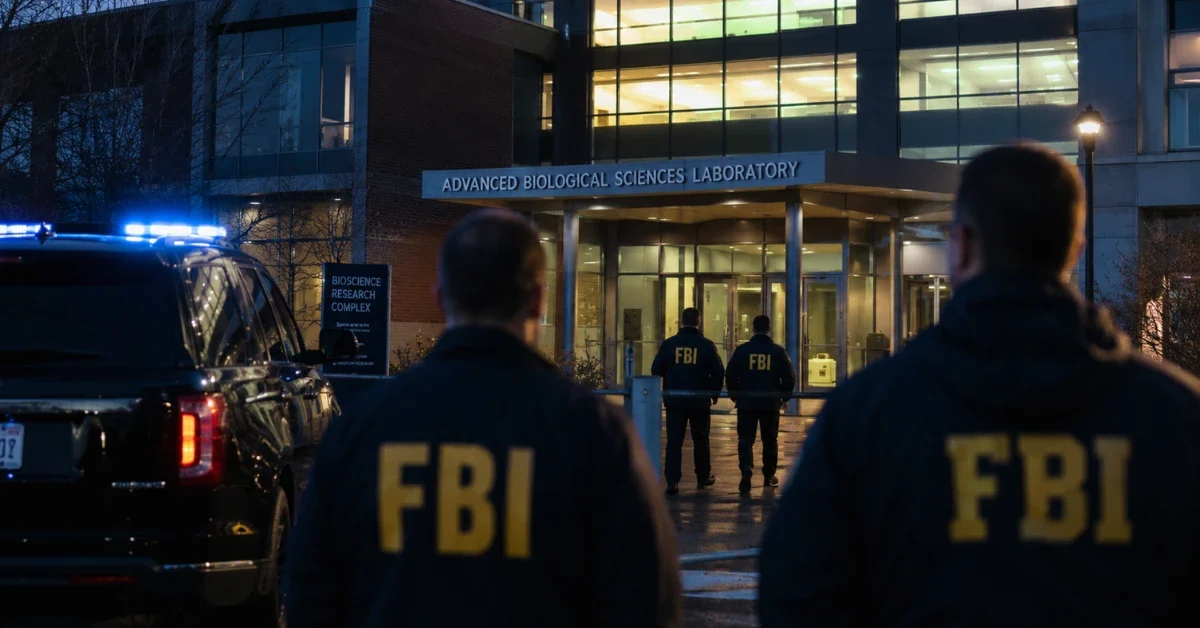
Federal authorities have launched a widespread crackdown on unauthorized biological research, resulting in multiple arrests of foreign scholars. In recent months, law enforcement agencies have charged several Chinese scientists with smuggling dangerous biological materials into the United States. These investigations have primarily centered on research facilities at the University of Michigan and Indiana University, leading to federal lab lockdowns, deportations, and felony convictions.
The smuggled items include parasitic roundworms, agricultural fungi, and bacterial DNA. Officials state that these scholars transported the restricted materials under the guise of academic research, bypassing strict government permitting processes. As the investigations deepen, the cases are raising significant national security concerns regarding international research programs and visa fraud.
Smuggling Fungi and Roundworms at the University of Michigan
The University of Michigan has been a central focus of the federal investigations. In June 2025, the FBI arrested Yunqing Jian, a 33-year-old temporary scientist at a university laboratory, and her 34-year-old boyfriend, Zunyong Liu. The couple was charged with conspiracy, smuggling goods, false statements, and visa fraud.
Prosecutors revealed that Jian and Liu conspired to illegally import Fusarium graminearum, a hazardous plant pathogen. This toxic fungus causes a disease known as head blight in crops like wheat, barley, maize, and rice, resulting in billions of dollars in global agricultural losses each year. Scientific literature classifies the pathogen as a potential agroterrorism weapon. Following her arrest, Jian pleaded guilty to smuggling and providing false information. In November 2025, a federal judge sentenced her to five months of time served, and she was subsequently deported back to China.
During the same period, authorities apprehended another Chinese researcher connected to the University of Michigan. Chengxuan Han, a doctoral candidate from Wuhan, was taken into custody at the Detroit Metropolitan Airport in June 2025. Federal prosecutors allege that Han sent four packages containing parasitic roundworm materials to university lab personnel.
Investigators discovered that Han concealed the biological materials inside the pages of books. Upon her arrival in the United States, she reportedly provided misleading information to federal agents regarding the shipments. Transporting these specific roundworms requires specialized government permits, which Han did not possess.
The scrutiny at the University of Michigan continued into the fall. In early November 2025, the Department of Justice announced charges against three additional Chinese scholars: 28-year-old Xu Bai, 27-year-old Fengfan Zhang, and 30-year-old Zhiyong Zhang. All three individuals were in the United States on J-1 academic exchange visas. They are accused of conspiring to smuggle roundworm-related materials and making false statements to Customs and Border Protection officers.
Federal Raids and Lab Lockdowns at Indiana University
The federal crackdown has also expanded to Indiana University in Bloomington. In December 2025, the FBI conducted unannounced searches of two biology laboratories on the university campus. According to federal reports, one of the targeted labs employed a Chinese researcher who faces smuggling charges for bringing plasmid DNA from E. coli bacteria into the country.
Months later, federal intervention at the university escalated. In May 2026, the U.S. Department of Agriculture abruptly shut down access to several laboratories and offices within the Indiana University biology department. Students and faculty were restricted from entering the facilities without any immediate explanation.
Russ Mumper, the Vice President for Research at Indiana University, addressed the sudden closures in a letter to the campus community. Mumper confirmed that the U.S. Department of Agriculture notified the university about engaging in active operations within the biology department. As a result, six specific rooms in Myers Hall were locked down while the federal activity remained underway.
Rising National Security and International Treaty Concerns
The systematic smuggling of biological pathogens has triggered broader national security alarms. Legal and military experts have publicly questioned whether these clandestine imports violate the Biological Weapons Convention, an international treaty prohibiting the development and stockpiling of biological agents for offensive purposes.
While the treaty permits peaceful research, such as vaccine development, the unauthorized movement of materials like Fusarium graminearum has drawn intense scrutiny. The State Department has previously expressed ongoing concerns regarding China’s compliance with the Biological Weapons Convention, citing the country’s engagement in activities with potential civilian and military dual-use applications.
According to earlier State Department assessments, China operated a biological weapons program from the 1950s to the late 1980s that reportedly weaponized agents like ricin, botulinum toxins, anthrax, and cholera. International monitors note that Beijing has not fully acknowledged the historical existence or disposal of those offensive programs, compounding modern suspicions surrounding unauthorized laboratory imports.
Federal law enforcement agencies maintain that circumventing import regulations poses a direct threat to public safety and agricultural stability. As investigations continue at major universities, government officials are strictly enforcing permit requirements to prevent unvetted pathogens from entering American laboratories.
