

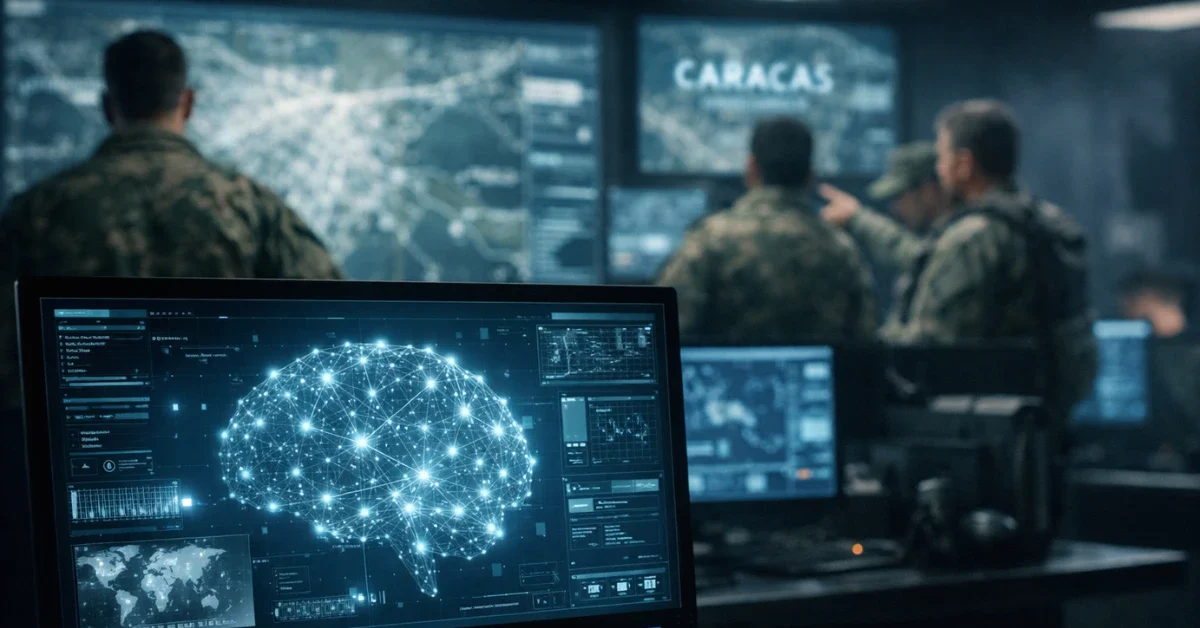
The U.S. military utilized artificial intelligence technology from Anthropic during the recent operation to capture Venezuelan leader Nicolas Maduro, according to new reports. The operation, which took place in Caracas, involved the use of Anthropic’s “Claude” AI model to assist American forces in processing large amounts of data in real-time. This revelation has sparked significant controversy regarding the use of commercial AI in combat zones and has led to immediate friction between the tech company and the Department of Defense.
Anthropic, an AI safety startup based in San Francisco, has expressed alarm over the use of its technology in the raid. The company stated that it was not informed about the specific nature of the mission and has since moved to suspend the Pentagon’s access to its systems. The incident highlights the growing and often opaque relationship between Silicon Valley tech firms and national security operations, raising questions about how AI tools are deployed in sensitive military engagements.
AI’s Role in the Caracas Operation
According to officials familiar with the matter, the Pentagon deployed a custom version of Anthropic’s Claude model to support the complex logistics of the raid. The AI was reportedly used to synthesize diverse streams of intelligence, including satellite imagery, intercepted communications, and local data, to provide commanders with a clearer picture of the operational environment. Sources indicate that the tool helped U.S. forces navigate the urban terrain of Caracas more effectively and anticipate potential security threats during the extraction of Maduro.
The integration of Claude into the operation was part of a broader push by the U.S. military to leverage advanced commercial technology for tactical advantages. While specific details of how the AI influenced decision-making on the ground remain classified, reports suggest it played a role in accelerating the analysis of incoming information. This allowed military planners to make faster adjustments during the high-stakes mission, which ultimately resulted in Maduro’s capture and transport to the United States.
Anthropic Reacts to Military Use
The revelation that its safety-focused AI was used in a direct military action has caused internal turmoil at Anthropic. The company, which markets itself on building “helpful, honest, and harmless” AI, reportedly learned of the tool’s specific application in the Venezuela raid only after the fact. In response, Anthropic has initiated a review of its government contracts and suspended the specific access points used by the military for this operation.
An Anthropic spokesperson emphasized that the company’s terms of service generally prohibit the use of its AI for weapons development or direct combat operations. However, the interpretation of “combat support” versus “logistical analysis” often occupies a gray area in defense contracting. The company is now facing pressure to clarify its stance on military collaboration, especially given its $200 million contract with the U.S. government. Executives at the firm are reportedly concerned that this incident could damage their reputation for prioritizing AI safety and ethical development.
Contractual Friction and Future Implications
The conflict between Anthropic and the Pentagon underscores the difficulties tech companies face when working with defense agencies. The Department of Defense has increasingly sought partnerships with leading AI labs to maintain a strategic edge, but these collaborations often clash with the ethical guidelines of private firms. Anthropic’s contract, which was intended to provide secure data analysis capabilities, is now under scrutiny. There are discussions within the company about whether to modify or potentially void the agreement if it cannot guarantee that its tools will be excluded from kinetic operations.
Legal and ethics experts suggest that this incident could set a precedent for future government-tech contracts. If companies like Anthropic cannot control how their models are deployed in the field, they may be less willing to engage with national security clients. Conversely, the military argues that access to the best available technology is essential for modern warfare and protecting the lives of service members. The dispute over the Venezuela raid brings these competing priorities into sharp focus.
Broader Industry Impact
This event is not an isolated case but part of a larger trend involving major tech players and the defense sector. Other companies have faced similar internal and external backlash over military contracts. However, Anthropic’s specific branding as an ethical alternative to competitors makes this situation particularly sensitive. The company’s employees have previously voiced concerns about the potential misuse of their technology, and the use of Claude in a headline-grabbing raid confirms some of those fears.
The fallout from the operation is likely to prompt a re-evaluation of acceptable use policies across the AI industry. Competitors and regulators are watching closely to see how Anthropic navigates the fallout. The incident may lead to stricter guardrails in future contracts, requiring more transparency from government agencies about how they intend to utilize commercial AI tools. For now, the suspension of services serves as a temporary halt while both sides negotiate the boundaries of their partnership.
As the dust settles on the Caracas operation, the conversation has shifted from the raid itself to the digital tools that enabled it. The successful capture of Maduro is a major geopolitical event, but the silent role of an AI chatbot in that success has opened a new chapter in the debate over the weaponization of artificial intelligence.
