

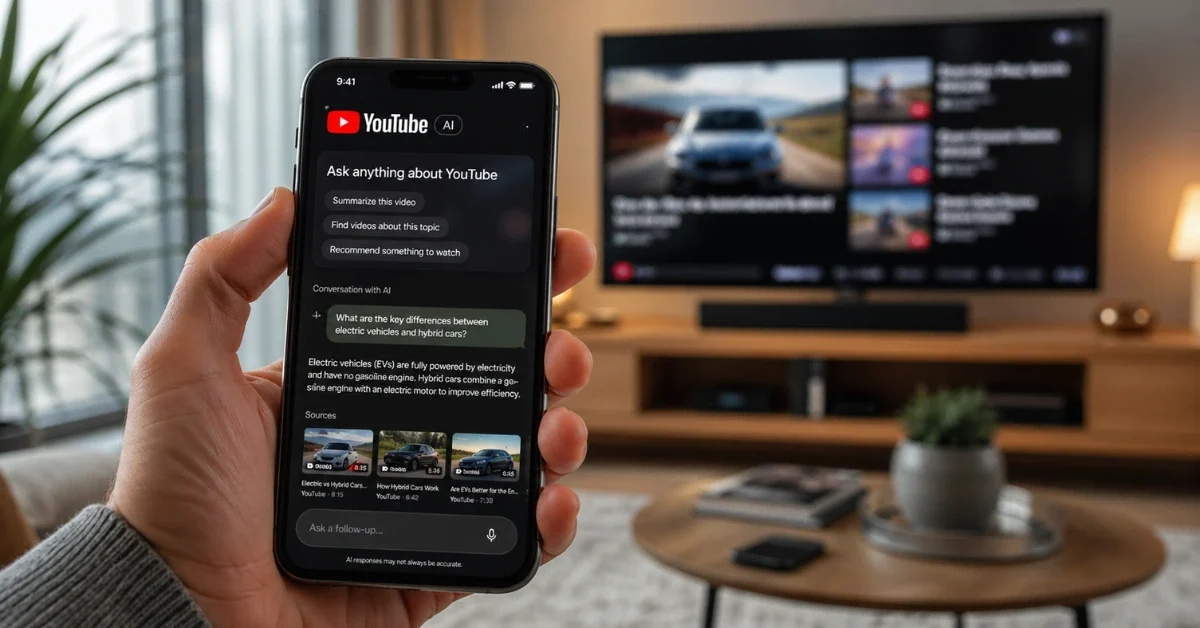
Google is expanding its artificial intelligence capabilities with a new experimental conversational search tool for its video platform. The new feature, called “Ask YouTube,” allows users to bypass traditional keyword searches in favor of natural language queries. Instead of simply returning a standard list of videos, the tool delivers comprehensive, structured results that combine AI-generated text summaries, short clips, and long-form videos.
This interactive search mode is currently available in an early testing phase through the YouTube Labs experimental program. Access is restricted to YouTube Premium subscribers residing in the United States who are 18 years of age or older. Eligible users must manually opt into the experiment via the Labs website. The testing period is scheduled to run until June 8, 2026, providing the platform with time to gather user feedback before evaluating a potential wider release.
How the Conversational Search Experience Works
When activated, an Ask YouTube button appears in the platform’s search bar. Clicking this button presents users with prompt suggestions or allows them to type custom inquiries. The feature is designed to make searching feel more like a natural conversation rather than a rigid data retrieval process.
For instance, a user could ask the tool to plan a 3-day road trip from San Francisco to Santa Barbara. In response, Ask YouTube generates a step-by-step itinerary that blends informative text—such as local tips and must-see stops—with relevant long-form videos and YouTube Shorts. The AI highlights specific video segments, providing timestamps, titles, and channel details to help viewers efficiently discover new creators.
Other sample prompts shared by the company demonstrate the tool’s utility for lifestyle planning, do-it-yourself projects, and instructional content. Examples include asking for unique ideas for a backyard water feature, requesting to plan a living room redesign using thrifted items, or searching for how to make a traditional French omelet. In another test, searching for a short history of the Apollo moon landing yielded a structured response featuring bullet points alongside relevant timestamped videos.
Seamless Follow-Up Queries
A core advantage of the Ask YouTube tool is its contextual understanding. A floating search box remains on the results page, enabling users to ask follow-up questions or refine their results without needing to start a completely new search. Following the road trip example, a user could subsequently ask where to get good coffee or inquire about good coffee shops nearby. The AI remembers the context of the previous responses and provides tailored recommendations that fit the ongoing conversation.
While the current test is limited to paying subscribers, the development team intends to eventually make Ask YouTube available to non-Premium users. However, an official estimated time of arrival for a broader rollout has not been announced. Because the conversational search experience remains in an experimental stage, the company acknowledges that the artificial intelligence may occasionally provide incorrect information.
Expansion to Smart Displays and Other AI Experiments
Beyond mobile and desktop search, the conversational AI tool is also expanding to the living room. YouTube is bringing the Ask feature to smart televisions, gaming consoles, and streaming devices. This adaptation allows eligible viewers to ask questions about a video while they are actively watching it. Instead of pausing the content and manually searching for context on another device, users can open the Ask interface directly on their screens. Supported remote controls allow for voice input via built-in microphones, providing an alternative to tedious on-screen typing. The tool can surface explanations, prompt suggestions, and related content ideas without forcing the viewer to leave the current video.
The introduction of Ask YouTube is part of a larger initiative to integrate advanced search capabilities across Google’s ecosystem. The tool builds upon the AI Mode and AI Overviews previously introduced in Google Search. The technology giant has been consistently pushing its interactive search features, recently introducing side-by-side web browsing, product price exploration, and Gemini’s Canvas to help users manage ongoing projects.
Industry observers view these expanded search capabilities as foundational stepping stones toward more advanced automation. Future iterations of these technologies could eventually incorporate agentic elements, meaning the artificial intelligence might eventually be able to interact with travel providers to book tickets based on individual user preferences.
Meanwhile, Ask YouTube is not the only artificial intelligence project currently undergoing testing within the YouTube Labs program. The platform is also experimenting with a feature called Beyond the Beat for YouTube Music, which adds AI-generated insights while users listen to radio stations or music mixes. Additionally, a tool named VibeCheck is being tested for YouTube Shorts, providing creators with AI-powered coaching tips before they publish their short-form videos.
