

Amazon Chief Executive Officer Andy Jassy is fiercely defending the company’s colossal investments in artificial intelligence and cloud infrastructure. In his annual shareholder letter released in April 2026, Jassy addressed mounting Wall Street anxieties regarding Amazon’s estimated $200 billion capital expenditure plan. Despite recent stock volatility and widespread concerns over spiraling infrastructure costs, the technology giant remains resolute in its aggressive expansion strategy. Jassy signaled that the company will not adopt a conservative approach to emerging technologies, prioritizing long-term market dominance over short-term profitability.
The sweeping defense comes on the heels of significant market turbulence for the e-commerce titan. Amazon recently experienced its worst single-day stock performance since 2022, largely driven by investor apprehension over the sheer scale of its capital expenditures. However, Jassy used the shareholder letter to assuage these fears, comparing the current artificial intelligence investment cycle to the early, foundational days of Amazon Web Services. He firmly dismissed growing murmurs that the sector is experiencing a massive financial bubble. Instead, he emphasized that these substantial commitments are absolutely essential for securing sustainable growth.
Custom Chips and Cloud Dominance
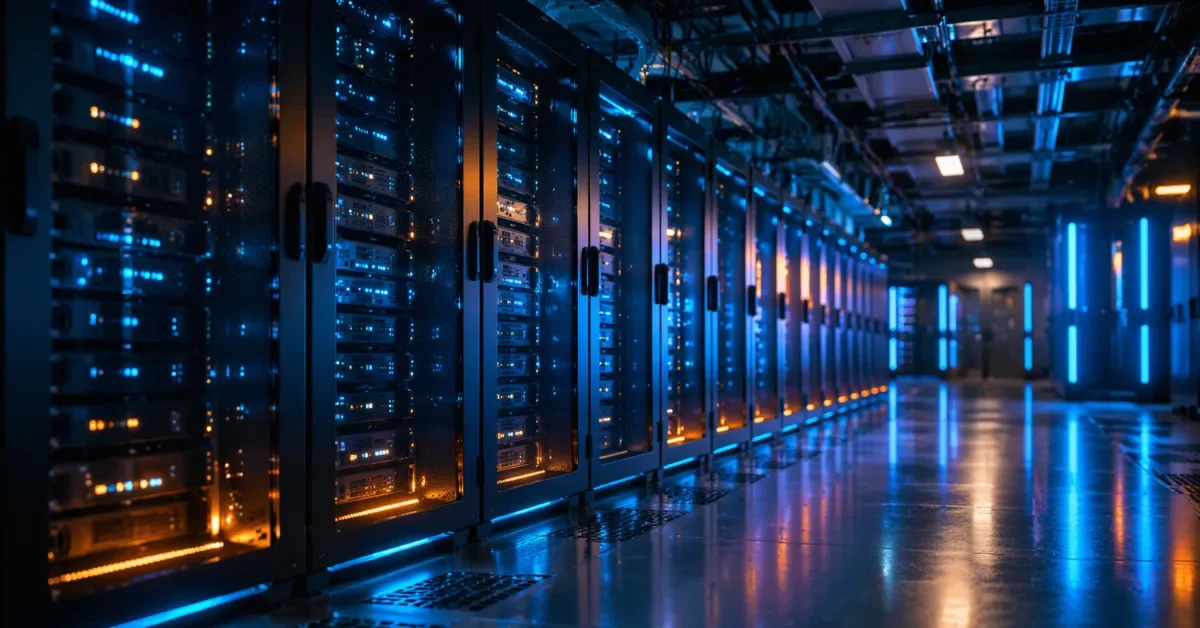
A central pillar of Amazon’s ambitious expenditure is the rapid expansion of its custom semiconductor business. Jassy revealed that the company’s proprietary chips, such as the Graviton and Trainium processors, are experiencing explosive demand. He described the custom silicon segment as being completely “on fire” due to overwhelming interest from enterprise clients. This surging demand has propelled the Amazon Web Services custom chip business to an impressive annual revenue run rate exceeding $20 billion. By aggressively developing its own internal silicon capabilities, Amazon aims to compete much more directly with hardware leaders like Nvidia.
Furthermore, the expansive capital expenditure plan extends far beyond generative models and traditional data centers. The massive budget also encompasses strategic investments in advanced robotics and the expansion of rural delivery networks. Additionally, Jassy confirmed that the company’s Low Earth Orbit satellite internet constellation, known as Amazon Leo, is officially on track for a commercial launch in mid-2026. These diverse capital allocations highlight a comprehensive corporate strategy aimed at fortifying Amazon’s underlying logistical capabilities while dominating the next generation of global digital services.
BNP Paribas Issues ‘Outperform’ Rating
While some financial analysts have expressed trepidation regarding the heavy spending, prominent voices on Wall Street are throwing their full weight behind Amazon’s strategic vision. Analyst firm BNP Paribas recently reiterated a strong “Outperform” rating for Amazon stock. In a detailed research note released in early April, the firm advised anxious investors that the panic over the company’s capital expenditures is largely “overdone.” BNP Paribas analyst Nick Jones argued that heavy investments in cloud infrastructure and artificial intelligence are both appropriate and entirely necessary.
Rather than fixating solely on the raw dollar amounts being spent, Jones urged market watchers to closely examine Amazon’s backlog-to-capex ratio. This highly specific financial metric compares contracted customer demand against ongoing infrastructure spending. According to BNP Paribas, Amazon currently possesses a remarkably strong commercial backlog. This pipeline indicates that the company is highly capable of rapidly translating newly built data center capacity into tangible revenue. This rapid monetization of new computing capacity was previously echoed by Amazon Chief Financial Officer Brian Olsavsky, who confirmed that freshly deployed infrastructure is being utilized almost immediately.
Unlocking Operational Efficiency
Beyond the promise of massive future revenue streams, Amazon is already demonstrating very tangible improvements in overall workplace productivity. According to official company filings highlighted by BNP Paribas, Amazon’s total revenue per employee has experienced a dramatic upward trajectory. In 2022, the company generated approximately $319,600 in revenue per individual employee. By the beginning of 2025, that specific productivity figure had skyrocketed to nearly $455,000. Financial analysts view this statistical leap as clear evidence of massive operational efficiency gains, driven by the company’s deliberate shift toward highly automated digital operations.
Despite recent market headwinds and lingering financial jitters surrounding the exorbitant costs of technological innovation, the underlying business fundamentals appear remarkably robust. BNP Paribas maintains a highly positive outlook on the tech behemoth’s financial future, officially projecting a potential upside of approximately 50 percent from current stock price levels. By ignoring the vocal skeptics and doubling down heavily on custom computer chips, advanced logistics robotics, and next-generation cloud infrastructure, Amazon is aggressively betting that its bold approach will yield unprecedented technological dominance in the coming years.
