

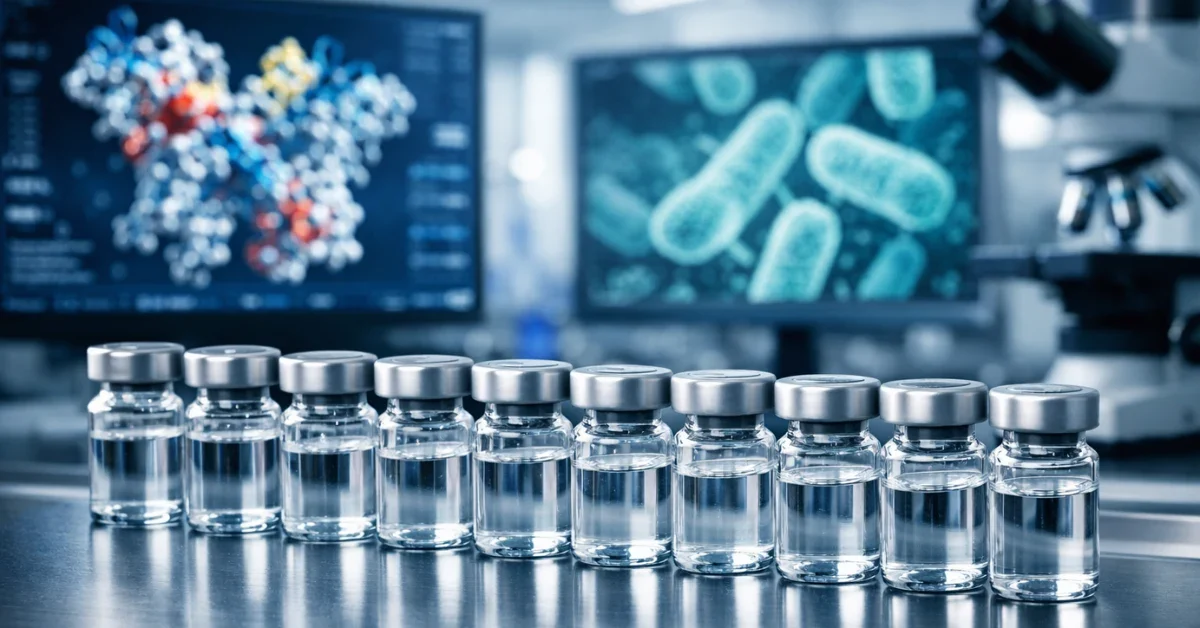
An international team of researchers has achieved a historic milestone by breaking a 50-year bottleneck in doxorubicin chemotherapy drug production. For over five decades, the pharmaceutical industry has struggled with the inefficient natural production of this vital medication. By resolving specific molecular constraints, scientists have engineered a new bacterial strain that increases the drug’s biosynthetic yield by an impressive 180 percent.
This groundbreaking study stems from an extensive collaboration involving six research laboratories. The effort united scientists from the University of Turku in Finland, three laboratories in the United States, and two facilities in Leiden, the Netherlands. Together, these experts unlocked a transformative solution that paves the way for a more reliable, cost-effective, and environmentally friendly supply of life-saving medicines.
Overcoming Decades of Manufacturing Inefficiencies
Doxorubicin is a cornerstone therapeutic agent in oncology, first approved for medical use in the 1970s. It remains a critical treatment for a wide spectrum of malignancies, including breast cancer, bladder cancer, lymphomas, and various carcinomas. Globally, more than one million patients receive this vital chemotherapy treatment annually.
Despite its clinical importance, the natural microbial factories responsible for producing doxorubicin generate the compound in meager quantities. These natural factories are primarily specific strains of actinomycetes. Because these bacteria are naturally inefficient at producing the drug, pharmaceutical companies rely heavily on expensive, multi-step, semi-synthetic manufacturing processes.
These complex semi-synthetic routes elevate manufacturing costs and carry a significant environmental burden. The newly engineered bacterial strain offers a fully biotechnological alternative that surpasses current industrial benchmarks. By shifting away from chemical syntheses, the updated process minimizes waste and simplifies purification pipelines while producing the drug with unprecedented purity.
Three Key Discoveries That Boosted Doxorubicin Output
The international consortium achieved this breakthrough by performing an exhaustive molecular dissection of the drug’s biosynthetic pathway. Their research hinged on identifying three primary constraints that have historically throttled the enzymatic production rate. Addressing these specific bottlenecks allowed the team to dramatically enhance the overall yield.
Empowering the Biological Power Supply
The first major constraint involved a cytochrome P450 enzyme known as DoxA, responsible for critical oxidation steps in the production pathway. Researchers discovered that this enzyme operated inefficiently due to suboptimal electron transfer. To resolve this, the team characterized two redox protein partners named ferredoxin Fdx4 and ferredoxin reductase FdR3.
These proteins function as an essential biological power supply, conveying electrons vital for the DoxA enzyme’s catalytic activity. By optimizing the expression and interaction of these redox components, the scientists sustained a high electron flux. This continuous power supply allows the enzymatic reaction to drive forward much more efficiently.
The DnrV Protein as a Molecular Sponge
The second breakthrough involved the discovery of a novel role for a protein called DnrV. Researchers found that DnrV acts essentially as a molecular sponge within the biological machinery. As new doxorubicin molecules are synthesized, the DnrV protein binds and holds them, sequestering the finished drug away from the active site.
This sequestering action serves as a vital protective mechanism against product inhibition. Product inhibition occurs when accumulating drug molecules impede enzyme activity, effectively clogging the biosynthetic machinery and shutting down production. By capturing the doxorubicin, the DnrV protein ensures the natural production process remains unobstructed.
Reconfiguring Enzyme-Substrate Geometry
The third constraint was identified using advanced X-ray crystallography, allowing the team to visualize the three-dimensional structure of the DoxA enzyme at an atomic resolution for the first time. This unprecedented structural insight revealed a critical flaw: the doxorubicin substrate occupies an unfavorable position within the enzyme’s catalytic pocket.
This poor positioning explained the historically slow reaction rate observed in natural bacteria. Armed with this visual data, the research team introduced strategic molecular engineering to reposition the substrate. Reconfiguring the enzyme-substrate geometry allowed for much more efficient catalysis, directly contributing to the massive increase in production capacity.
Sustainable Biosynthesis and the Future of Oncology
To translate these laboratory discoveries into real-world applications, the research leaders spun out a startup company named Meta-Cells Oy. Headquartered at the University of Turku, the company aims to commercialize these advanced technologies. Their goal is the sustainable manufacturing of essential antibiotics and anti-cancer agents to meet escalating global demand.
Lead scientist Keith Yamada noted that uncovering these independent limiting factors has allowed the team to pave the way for cost-effective manufacturing. This optimized biosynthetic factory demonstrates the immense power of rational metabolic design and sets a strong precedent for metabolic pathway engineering in other medical applications.
Ultimately, this breakthrough redefines the limits of microbial drug production. As the engineered bacterial strain transitions toward commercial realization, it promises to expand global accessibility to life-saving medications. Patients worldwide stand to benefit from these affordable, reliable, and environmentally sustainable chemotherapy options.
