

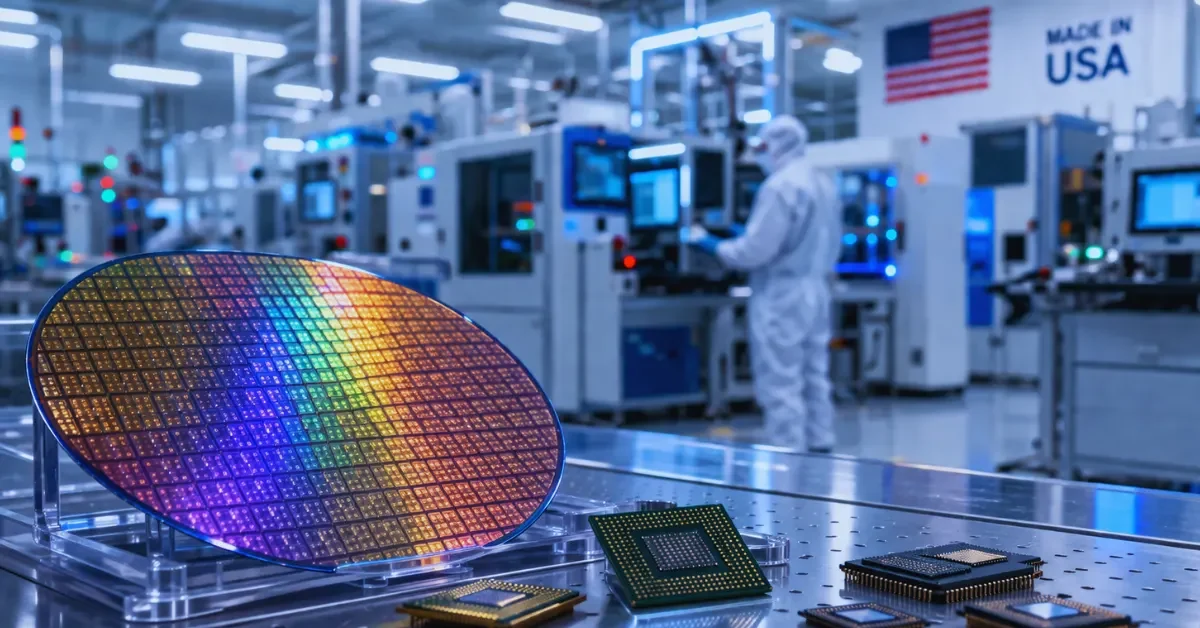
Apple is holding preliminary discussions with Intel Corporation and Samsung Electronics to build its main device processors in the United States. This potential shift marks a significant move to secure secondary options beyond its long-standing and exclusive partnership with Taiwan Semiconductor Manufacturing Company (TSMC).
The exploration of new partners for Apple chip manufacturing highlights the tech giant’s effort to navigate ongoing supply chain constraints. With the increasing demand for artificial intelligence data centres, access to advanced semiconductor nodes has become highly competitive. By evaluating Intel and Samsung, Apple aims to diversify its production and protect its product pipeline.
Early Talks with Alternative Foundry Partners
Apple executives have engaged in early-stage conversations about utilising Intel’s foundry services. Simultaneously, representatives from the iPhone maker have visited a new Samsung semiconductor facility currently under development in Texas. Both efforts remain in the preliminary phases, and no official orders have been placed with either company.
According to individuals familiar with the matter, Apple harbours some concerns regarding the adoption of technology outside of TSMC’s ecosystem. The company may ultimately decide not to proceed with alternative manufacturers. Spokespeople representing Apple, Intel, Samsung, and TSMC have all declined to provide official comments on the private negotiations.
Securing Apple as a client would represent a major victory for Intel’s chief executive, Lip-Bu Tan, who is leading a strategic turnaround to attract external foundry customers. Meanwhile, Samsung currently holds the position as the second-largest made-to-order chip manufacturer globally. Securing an endorsement from Apple would significantly bolster Samsung’s standing in the highly competitive semiconductor market.
Disruptions and the Shift Away from TSMC
For over a decade, Apple has relied entirely on TSMC to produce the sophisticated systems-on-a-chip that power its devices. Reports conflict slightly on the exact timeline of this exclusivity, with some sources tracing the partnership back to the iPhone 6 launch in 2014, while others cite 2016 as the beginning of TSMC’s exclusive supplier status. Regardless of the exact start date, the relationship has been a cornerstone of Apple’s hardware strategy.
Recently, the landscape has shifted. NVIDIA has reportedly surpassed Apple as TSMC’s largest customer. Driven by the massive expansion of artificial intelligence infrastructure, TSMC’s high-performance computing segment now accounts for a significant majority of its total revenue. This surge in AI processor production has claimed a larger share of the advanced manufacturing capacity that Apple previously dominated.
During a recent quarterly earnings call, Apple Chief Executive Officer Tim Cook addressed the resulting challenges. He confirmed that a lack of available processors is actively constraining the company’s growth. Despite reporting strong revenue figures, Cook described Apple as operating in a “supply chase mode” with unusually lean inventory levels across multiple product categories.
Supply Chain Constraints Impacting Devices
The primary bottleneck centres on the availability of cutting-edge 3-nanometer fabrication nodes, rather than a shortage of memory components. “We’re seeing less flexibility in the supply chain than normal,” Cook stated during the financial briefing. He projected that it would take several months for the company to achieve a stable balance between supply and demand.
These processor shortages have made it particularly difficult for Apple to meet consumer demand for computers capable of running local artificial intelligence models, such as the Mac mini and Mac Studio. Furthermore, supply chain disruptions have also impacted production for the iPhone 17 Pro lineup. In response, internal operations teams are working aggressively to prevent these constraints from spreading to other hardware segments, including the Apple Watch and AirPods.
Strategic Benefits of United States Production
Expanding Apple chip manufacturing to Intel and Samsung offers strategic advantages beyond simply addressing current shortages. Maintaining multiple suppliers for critical components is a standard industry practice that provides leverage during pricing negotiations and shields companies from unexpected disruptions.
Geopolitics also plays a crucial role in these exploratory discussions. Cook has historically warned against concentrating critical production within a single geographical area. With a vast majority of its current semiconductor output based in Taiwan, the company faces inherent risks associated with regional tensions and the possibility of conflict involving China.
To mitigate these vulnerabilities, Apple has already partnered with TSMC to expand operations in Phoenix, Arizona. The tech company expects to receive 100 million processors from this American facility in 2026. However, executives acknowledge that this volume represents only a small fraction of the total chips required for Apple’s annual global shipments.
Partnering with Intel could also yield political benefits within the United States. Observers suggest that collaborating with an American semiconductor pioneer might strengthen Apple’s relationship with the Donald Trump administration. The current White House previously brokered an investment deal with Intel and reportedly views the corporation as a vital national asset. Some reports also suggest that Apple might leverage Intel’s future 14A manufacturing process for lower-end processors by 2028.
Apple shares a complex history with both potential new partners. Intel previously supplied processors for Mac computers from 2006 until 2020, when Apple transitioned to its own custom-designed silicon. Similarly, Samsung manufactured chip designs for early iPhone models over a decade ago. As the technology landscape continues to evolve, a return to these historical partnerships could reshape how future consumer electronics are built.
