

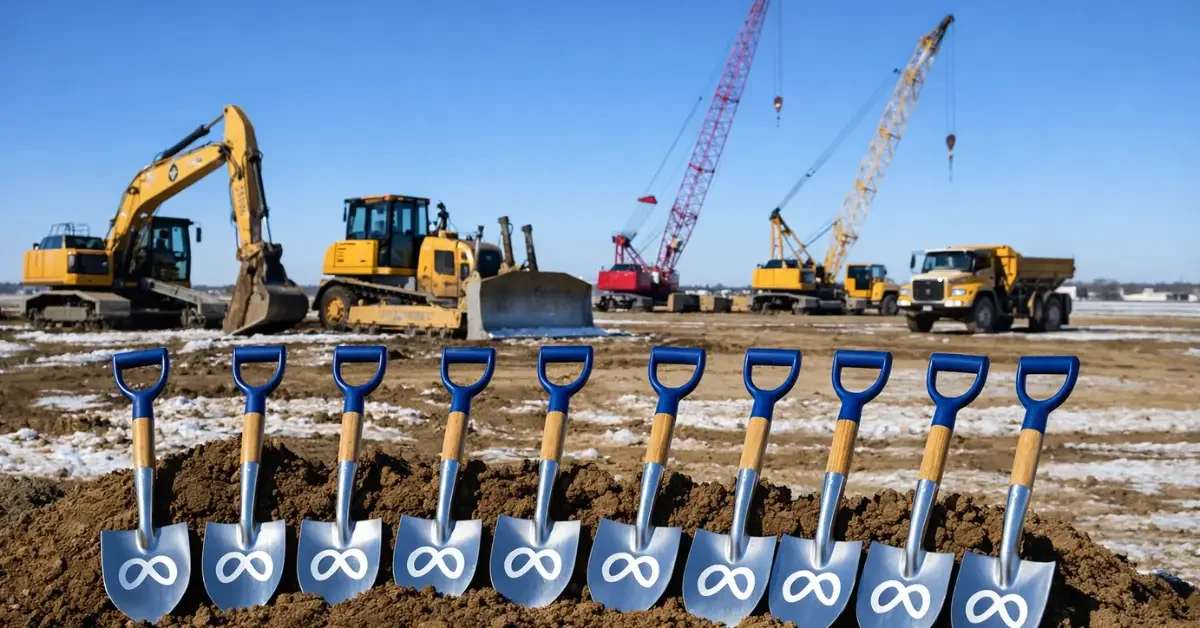
Meta has officially begun construction on a colossal new data center campus in Lebanon, Indiana, marking a significant milestone in the tech giant’s aggressive expansion of its artificial intelligence capabilities. The project, which represents an investment of more than $10 billion, is set to become a cornerstone of the company’s future infrastructure. The groundbreaking ceremony featured key officials, including Governor Braun, highlighting the state-level importance of this massive development within the LEAP Research and Innovation District.
A Historic Investment in AI Infrastructure
The new facility is not just another standard server farm; it is designed to support the next generation of technology. Reports indicate that the campus will have a capacity of 1 gigawatt (GW), a staggering amount of power that underscores the sheer scale of the operation. This 1 GW capacity is directly aimed at boosting Meta’s AI capabilities, providing the necessary computing power to train and deploy complex artificial intelligence models.
This $10 billion commitment is one of the largest single investments in the region’s history. By dedicating such substantial financial resources to this Indiana-based site, Meta is signaling its long-term intent to lead in the competitive AI sector. The focus on AI suggests that the facility will likely house high-performance hardware specifically optimized for the intense workloads required by modern machine learning algorithms.
Strategic Location in the LEAP District
The choice of Lebanon, Indiana, specifically within the LEAP Research and Innovation District, places Meta’s new campus in a strategic development hub. The LEAP district is designed to attract high-tech investment, and the arrival of a major hyperscale data center validates the area’s appeal to global tech corporations.
Governor Braun’s participation in the groundbreaking event underscores the partnership between the state and the tech company. For Indiana, landing a project of this magnitude—often referred to as a “megaproject”—is a major economic victory. The state government has been actively promoting the LEAP district as a prime destination for future-facing industries, and the commencement of this project serves as a tangible result of those efforts.
Construction Partners and Timeline
To bring this vision to life, Meta has engaged major construction industry players. Mortenson and Turner Construction have won the contracts to build the facility. These firms are well-known for managing complex, large-scale industrial projects, ensuring that the critical infrastructure is delivered to the high standards required for a 1 GW data center.
The construction phase itself is a massive undertaking. Moving from the groundbreaking stage to a fully operational campus will require significant coordination and labor. The involvement of experienced general contractors like Mortenson and Turner suggests a rigorous build schedule to bring the capacity online as quickly as possible to meet the growing demands of the AI market.
Focus on Jobs, Water, and Energy
Beyond the steel and concrete, the project has significant implications for the local community and environment. Key aspects of the development plan include detailed strategies for jobs, water usage, and energy consumption.
The influx of capital is expected to generate employment opportunities, ranging from the immediate construction roles needed to build the campus to the long-term operational positions required to keep the facility running. Managing a 1 GW campus requires a dedicated team of technicians, security personnel, and facilities managers.
Sustainability remains a central topic for data centers of this size. The project includes specific plans regarding water and energy, addressing two of the most critical resource challenges in the industry. With a power requirement of 1 GW, energy sourcing is a major logistical component. Additionally, cooling the vast arrays of servers required for AI processing demands substantial water resources, making the facility’s water management plans a crucial element of its environmental impact profile.
As construction moves forward, the Lebanon campus stands as a testament to the rapid growth of the AI economy and Indiana’s rising role in the national tech landscape.
