

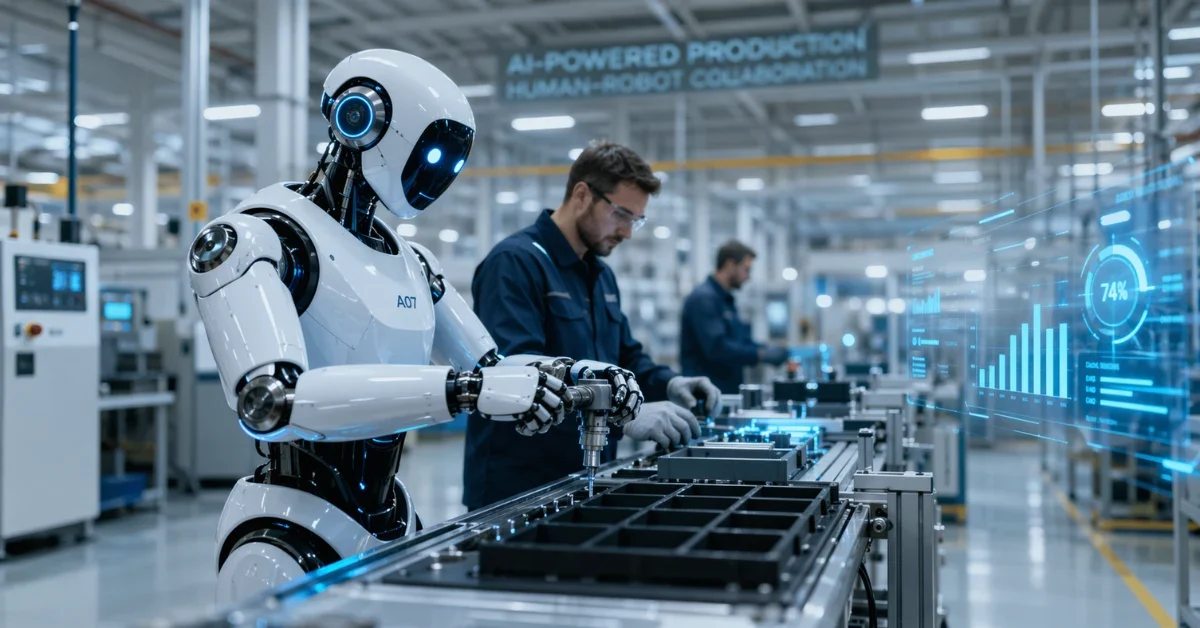
Physical AI adoption is rapidly accelerating in 2026, marking a shift from software that generates text to intelligent machines operating in the real world. Across factories, warehouses, and farms, businesses are integrating artificial intelligence directly into physical systems. This transformation turns traditional robots into adaptable machines capable of perceiving environments, making real-time decisions, and handling complex physical tasks.
Explosive Growth in Robot Shipments
Demand for intelligent robotic systems is surging as supply chains mature. According to Smart Analytics Global, global shipments of humanoid and quadruped robots reached nearly 53,000 units in 2025, a 250 percent year-over-year increase. The firm projects these shipments will scale to 810,000 units by 2030, reflecting a 73 percent compound annual growth rate.
Quadruped robots lead real-world deployment, making up 69 percent of shipments due to clearer commercialization paths. Humanoids account for the remaining 31 percent. While humanoids are in early deployment stages, they continue attracting significant policy and financial support for their long-term potential.
Diverging Market Valuations and Projections
As the industry expands, research organizations offer varying projections regarding the future financial scale of the market. According to Smart Analytics Global, the combined humanoid and quadruped robot market is expected to reach $8 billion by 2030.
In contrast, DataM Intelligence provides a broader assessment, reporting that the humanoid and embodied AI robotics market reached $3.76 billion in 2025. This organization projects the market will grow to $34.37 billion by 2033.
Meanwhile, Grand View Research estimates the wider AI-in-robotics market was valued at approximately $12.7 billion in 2023 and projects it will expand to over $120 billion by 2030.
Moving AI from Thinking to Doing
The true value of this technological shift lies in the intelligence layer rather than just the hardware. For decades, industrial automation relied on rigid machines designed to repeat the same tasks endlessly. These traditional systems struggled with unstructured environments or slight variations.
Physical AI changes this dynamic by embedding advanced perception models, vision, and tactile sensors into the hardware. Machines are no longer executing pre-programmed commands; they are actively learning and responding to what they see and feel. For example, robots can learn to handle a new object in seconds without requiring months of costly retraining. This allows factories to adjust quickly to new product designs. By combining vision, force, and tactile sensing, modern robots can handle variability on the shop floor, bringing error rates close to zero.
Expanding Beyond the Factory Floor
While industrial manufacturing remains a primary driver, physical AI adoption is expanding into unexpected domains. In the logistics sector, companies like Amazon and Tesla are deploying AI systems to manage warehouse operations and inventory.
In agriculture, ventures like Panama Hydro X embed AI into controlled cultivation environments. These systems use sensors and imaging to monitor plant health and micro-climates. Unlike traditional automation, these systems adapt by learning from live biological responses, detecting plant stress before visible symptoms appear.
The technology is also making strides in healthcare. Companies such as Toyota and SoftBank Robotics are developing platforms with bipedal mobility and tactile skin sensors to assist with patient handling and daily chores.
Regional Leadership and Strategic Ecosystems
The global landscape for physical AI is currently fragmented but highly complementary. According to DataM Intelligence, North America leads the embodied AI robotics market with a 42.56 percent share. This dominance is driven by a strong research ecosystem and early enterprise adoption. The Asia-Pacific region follows closely with a 41.97 percent share, fueled by strong industrial demand.
Hardware manufacturing scale is dominated by Chinese vendors, who absorbed over 60 percent of global demand in 2025. Conversely, Western companies lead the charge in software, AI, and advanced research. At the same time, South Korea is increasing its investments, and Europe maintains a competitive edge in certification and safety standards.
Navigating Challenges and the Road Ahead
Despite rapid growth, the industry faces several hurdles. High capital costs make deployment expensive, particularly for smaller manufacturers who rely on human labor. Additionally, fragmented hardware-software stacks and a lack of task-specific training data slow down broader commercialization.
Safety concerns and strict workplace regulations demand robust governance frameworks before these systems can scale fully in sensitive environments like healthcare and food handling. There is also a persistent talent gap in AI-robotics integration that companies must overcome.
Ultimately, enterprise adoption will determine the next phase of industry growth. Organizations that embed physical AI as operational infrastructure will gain a significant competitive advantage.
