

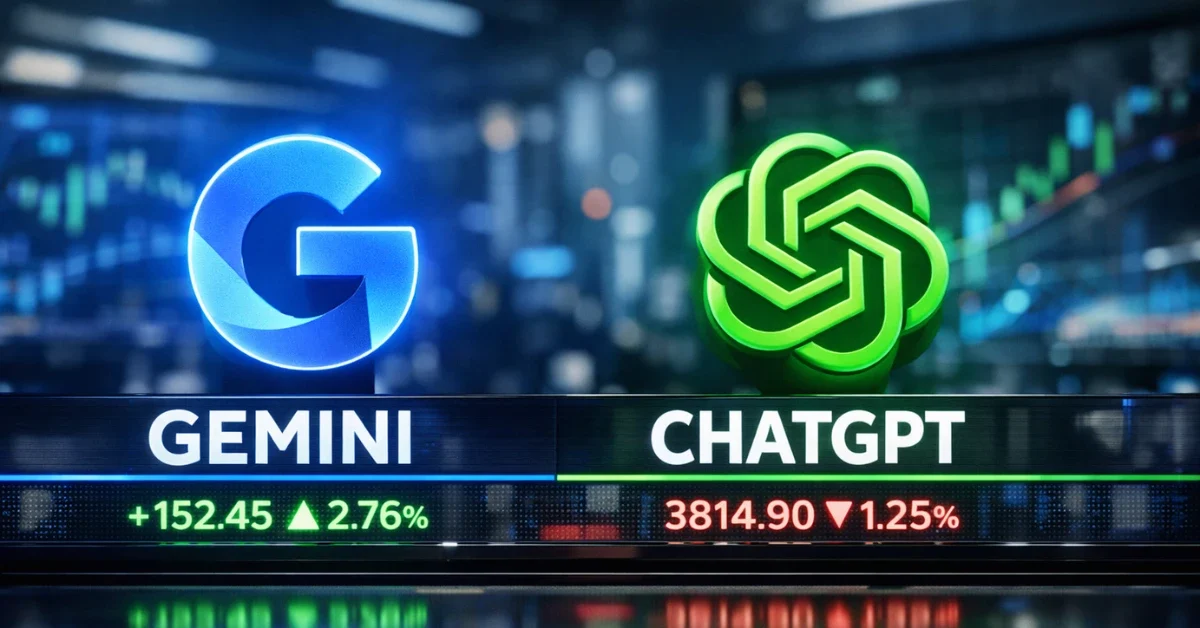
The generative artificial intelligence landscape is experiencing a dramatic shift. Driven by Google Gemini growth, the tech giant’s flagship chatbot is rapidly closing the market share gap on OpenAI’s ChatGPT. While ChatGPT remains the dominant player in the AI chatbot space, recent web traffic and app download data reveal that its once-unshakeable lead is beginning to erode as competition intensifies.
According to web analytics data, Google Gemini recorded a staggering 643.58% year-over-year increase in web traffic in February 2026. In contrast, ChatGPT saw a more modest 37.04% growth during the same period. This surge in Google Gemini growth has allowed the platform to capture over 21% of the worldwide generative AI traffic share, up from roughly 5% last year. Meanwhile, ChatGPT’s global traffic share dropped from 86% in early 2025 to 64% by January 2026.
App Downloads Versus Daily Engagement
Gemini is not just gaining ground on the web; it is also winning the race for new mobile users. In February 2026, the Gemini app surpassed ChatGPT with over 101 million downloads compared to ChatGPT’s 65 million. This reversal in momentum reflects Google’s aggressive strategy to integrate its artificial intelligence across its vast ecosystem, including Android devices, Search, and Workspace applications.
However, OpenAI continues to hold a massive advantage in consistent user engagement. Despite trailing in new downloads, mobile intelligence data indicates ChatGPT maintains nearly four times the number of monthly active mobile app users as Gemini. Data shows ChatGPT commands over 591 million app monthly active users, whereas Gemini sits at approximately 111 million.
Differing metrics paint a complex picture of total usage. While app-specific trackers report lower numbers for Google, Alphabet Chief Executive Officer Sundar Pichai stated during a recent earnings call that Gemini had actually surpassed 750 million monthly active users globally. Regardless of the exact total, data consistently shows that ChatGPT users demonstrate higher daily stickiness, returning to the platform more habitually than those using Google’s alternative.
Drivers Behind the AI Market Shift
The acceleration in adoption is fueled by a series of high-profile product updates. The rollout of the Gemini 3 model and the viral Nano Banana image generation tool helped propel Google’s platform to over 2 billion monthly web visits by January 2026. Google has also supported these launches with heavy television advertising in key international markets, such as India.
Unlike ChatGPT, which largely requires users to visit a specific website or download a standalone app, Gemini benefits from built-in distribution. By embedding automated summaries directly into search results, emails, and everyday productivity tools, Google allows users to interact with its technology without altering their daily routines.
The pressure from these competitive strides has been felt at OpenAI. In late 2025, CEO Sam Altman reportedly declared a code red, urging employees to pause planned advertising campaigns and refocus entirely on core product improvements. The declining consumer market share could also introduce complications for OpenAI’s reported plans for an initial public offering later this year.
The Rise of Other Industry Competitors
While the battle between Google and OpenAI dominates the market, other challengers are carving out significant niches. Elon Musk’s Grok experienced a massive 480% year-over-year traffic increase in February 2026, growing its app market share to 15.2%. Anthropic’s Claude also posted nearly 300% traffic growth and currently leads the industry in user engagement, with individuals spending an average of nearly 35 minutes per day on the application.
In the enterprise sector, Anthropic is showing formidable strength. Recent investor surveys indicate that Claude holds about a third of the enterprise market, outpacing both OpenAI at 25% and Google Gemini at 20%. Conversely, early standout DeepSeek saw a 55% year-over-year decline in web traffic, highlighting the difficulty of maintaining viral momentum without continuous product differentiation.
Google Considers Advertising Integrations
As these platforms scale, the focus is inevitably shifting toward monetization. While Google previously denied plans to introduce advertising into its generative interface, the company is now adjusting its strategy. Senior Vice President Nick Fox recently noted that Google is not ruling out placing ads within the Gemini application, reversing earlier statements made by Google DeepMind leadership.
Currently, Google is utilizing its AI-powered Search environment as a testing ground for these formats. The company is experimenting with clearly labeled advertisements that only appear when contextually relevant. Industry experts suggest that the lessons learned from these search-based tests will eventually carry over to the dedicated Gemini platform. Armed with massive revenue from traditional search, Google has the financial flexibility to refine these ad experiences slowly, whereas competitors face mounting pressure to multiply their revenue streams.
