

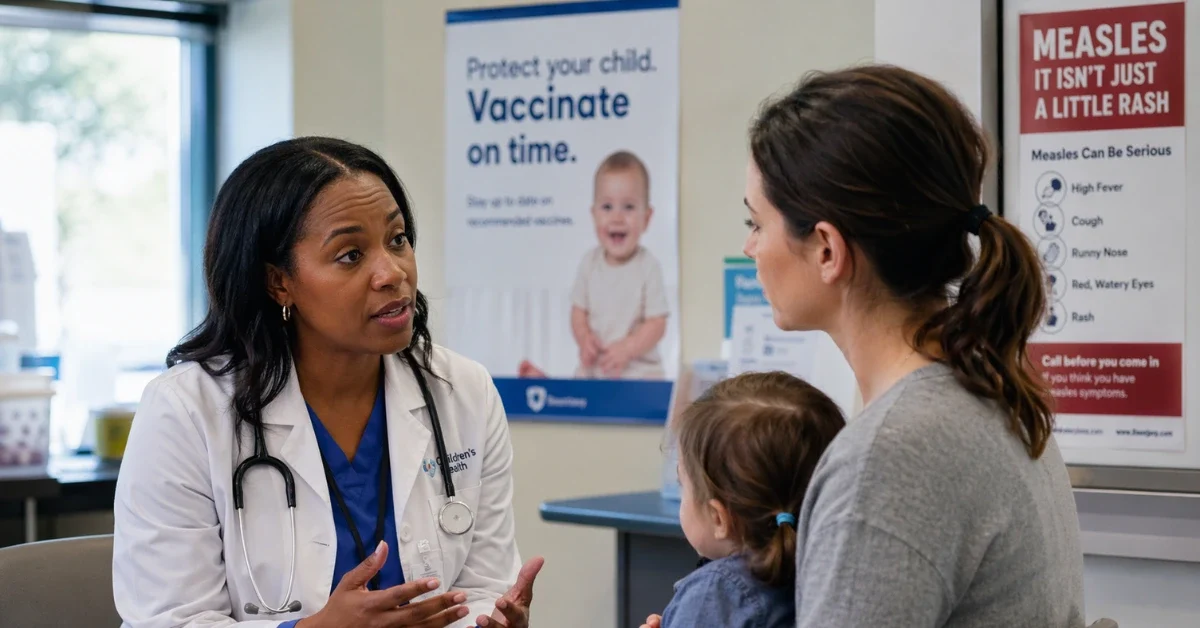
Vaccine skepticism is rising in the United States and many other countries, and health experts say the shift is unfolding as measles cases climb and misinformation spreads across digital platforms. The Council on Foreign Relations says trust in vaccine safety has fallen in most countries surveyed by the Vaccine Confidence Project since 2015, and that the decline deepened during the COVID-19 pandemic as debates over mandates spilled into routine vaccines. In the U.S., the CDC says 1,748 measles cases have been confirmed in 2026 to date on its latest update, with 92 percent of cases in people who were unvaccinated or whose vaccination status was unknown.
Measles Numbers Sharpen Concern
The CDC’s figures show that children and teens account for most reported measles infections this year, with 21 percent of cases in children under 5 and 51 percent in people ages 5 to 19. Adults ages 20 and older made up 27 percent of cases, while age was unknown in a small share of reports. The same CDC update says 4 percent of reported 2026 cases were in people with one MMR dose.
CFR says national averages can hide weak spots in vaccine coverage, pointing to Mexico, where a recent measles outbreak began in largely unvaccinated Mennonite communities. That example, the group says, shows how pockets of hesitancy can remain even when broader national trends look stable or improving. Its warning is that those gaps can keep transmission going even when overall confidence appears less volatile.
Misinformation and Policy
CFR says vaccine skepticism is increasingly shaped by fragmented media ecosystems and the spread of misinformation. The organization also says skepticism is becoming more closely aligned with political ideology and is often amplified by far-right movements and leaders in parts of Europe and Latin America. In the United States, it says confidence in childhood vaccines is sharply divided by party, citing Pew Research findings that 48 percent of Republicans report high confidence in childhood vaccines compared with 80 percent of Democrats.
CFR further argues that skepticism now reaches federal health policy through Health and Human Services Secretary Robert F. Kennedy Jr. According to CFR, Kennedy previously claimed that no vaccine is safe and effective, and he later instructed the CDC to reverse its longstanding position that vaccines do not cause autism. The group warns that misinformation that once lived mainly online is now moving into official U.S. policy sources and vaccine recommendations.
Parents and Physicians Face the Same Fears
A University of Nebraska Medical Center article says vaccine conversations are often presented as a fight between hesitant parents and pro-vaccine clinicians, but that both sides are trying to protect children’s health. The piece says the strain comes less from opposition than from the emotional weight of responsibility and uncertainty. It also argues that parents are navigating uncertainty without the systems physicians use every day to interpret evidence and weigh risk.
That framing matters because public trust is shaped not only by data, but also by how people process risk and who they believe during uncertain moments. The UNMC article suggests a less combative approach may better reflect the shared goals in vaccine discussions. At the same time, CFR says internal inequalities and local hesitancy can still have broad public health effects when vaccination gaps line up with outbreaks.
What Performs Better Online
A CIDRAP report on a JAMA Network Open study says social media posts about vaccination are more likely to engage U.S. audiences when they are factual, feature health care professionals, and come from public health organizations. The study included 243 adults in California who generally held favorable views of vaccines and asked them to choose which posts they would be more likely to like, share, or comment on. Researchers found factual posts were significantly more likely to be preferred than humorous ones, while humorous posts were linked to substantially lower odds of engagement.
CIDRAP also reports that posts about COVID or influenza were preferred over general vaccination posts, suggesting more specific topics may feel more relevant to audiences. Most participants said they preferred visual content such as photos or short videos, though the type of imagery itself was not significantly associated with engagement. Taken together, the findings point to a growing challenge for public health officials: rebuild trust with credible, clear messages while outbreaks continue to test confidence in vaccines.
