

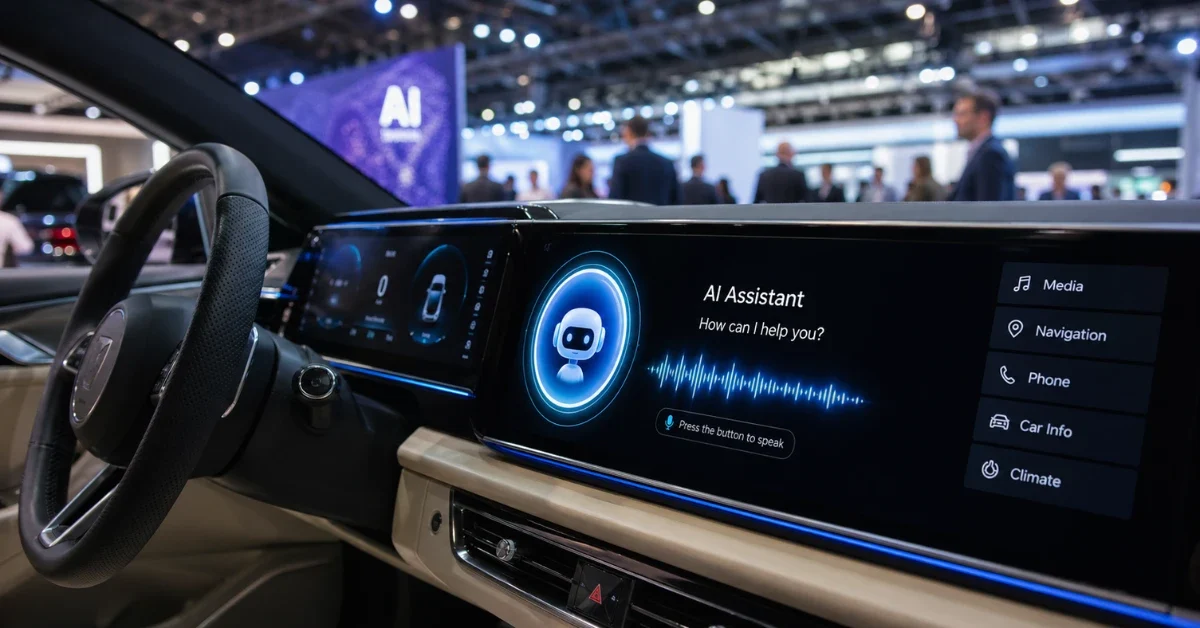
Alibaba Qwen AI is officially expanding into the automotive sector, transforming the way drivers interact with their vehicles. At the Beijing Auto Show 2026, the technology giant announced a massive rollout of its advanced large language model across a broad coalition of major automakers. The system will power in-car digital assistants for leading brands, including BYD, Geely, Li Auto, Changan Automobile, Dongfeng Motor, BAIC Group, Great Wall Motor, SAIC Motor’s joint venture with Volkswagen, and SAIC’s IM Motors unit.
This significant deployment highlights a major shift in the electric vehicle industry. By integrating the Alibaba Qwen AI model directly into vehicle dashboards, manufacturers are aiming to enhance the overall digital experience for consumers. With the electric vehicle market currently experiencing a slowdown in growth, brands are heavily relying on advanced in-car software and intelligent services to attract new buyers and maintain market competitiveness.
Voice-Activated Ecosystem Integration
The introduction of this artificial intelligence model brings a diverse range of new functionalities to the driving experience. Drivers will be able to manage daily tasks using simple voice commands, completely removing the need to interact with a physical screen or a mobile phone while driving.
Because the technology leverages the existing consumer ecosystem built by its parent company, the in-car assistant offers unique advantages that standalone automotive software struggles to replicate. Through natural voice inputs, passengers can order meals directly from the Ele.me delivery platform. Furthermore, the system allows users to book hotels and purchase attraction tickets through the Fliggy travel service.
In addition to food and travel logistics, the digital assistant provides real-time e-commerce support. Drivers can use voice prompts to track package deliveries in real time through the Cainiao logistics arm. This seamless connection between the vehicle and a massive commercial network creates an unmatched, highly integrated user experience.
Nvidia Chip Support and Offline Capabilities
A sophisticated technical foundation allows these advanced features to operate smoothly inside a moving vehicle. The artificial intelligence system will run entirely on the automotive chip platform provided by Nvidia. This hardware choice ensures that the digital assistant has the processing power necessary to handle complex, multi-step tasks efficiently.
One of the most critical features of the integration is its ability to remain highly functional even when the vehicle enters areas with limited or poor network connectivity. The software achieves this by combining local, on-device processing with powerful cloud-based computing. This hybrid approach guarantees that voice inputs can be interpreted accurately, and navigation or payment services can operate without interruption, regardless of cellular signal strength.
While the Beijing Auto Show served as the platform for this massive coalition announcement, the technology has already seen real-world application. Earlier this year, FAW Group integrated the artificial intelligence model into the smart system of its Hongqi brand. Debuting specifically in the Hongqi HS6 plug-in hybrid model, it became one of the first production vehicles to feature these advanced capabilities.
Shifting Strategies in the Automotive Market
The aggressive push toward smarter dashboards comes at a crucial time for the automotive industry. Automakers are currently navigating a period of moderating growth in the electric vehicle sector. To stand out in an increasingly crowded marketplace, companies are shifting their focus away from pure mechanical performance and toward highly differentiated digital services.
Volkswagen, for example, announced plans to roll out intelligent voice command features in its vehicles starting in the second half of the year. To accomplish this, the German automaker is leveraging technological collaborations with major Chinese firms, including Tencent, Baidu, and Alibaba.
Meanwhile, foreign automakers are aggressively updating their line-ups and technological offerings to catch up with local rivals. General Motors recently unveiled the VISTIQ, its first luxury electric SUV equipped with driver-assist technology developed in collaboration with local startup Momenta. Simultaneously, Hyundai officially launched its all-electric IONIQ brand in the region to revitalize its market share, while Beijing Hyundai committed to introducing twenty new models over the next five years.
Competing Artificial Intelligence Platforms
The recent auto exhibition also highlighted that other major technology companies are actively deploying their own models into passenger vehicles. A regional version of Audi announced that its second electric SUV model, the E7X, will begin presales on May 8. This new model will incorporate artificial intelligence features sourced from ByteDance’s Doubao model, as well as technology from iFlyTek.
Similarly, Cadillac showcased a new vehicle featuring voice assistant capabilities that are also connected to the Doubao system. These simultaneous reveals indicate a highly competitive environment where automakers are testing different digital partnerships to find the most effective in-car solutions.
At this stage, industry observers note that it remains unclear whether the smart features embedded in any of these newly announced vehicles will be made available in models exported to international markets. For now, the rapid integration of intelligent digital assistants is reshaping the domestic driving experience, turning everyday vehicles into highly connected mobile hubs.
