
By using this site, you agree to our Privacy Policy and Terms of Use.
Accept
VellaTimesVellaTimesVellaTimes
  • News
    NewsShow More
    Close-up of a silver espresso machine extracting a fresh shot of coffee into a glass cup in a softly lit cafe setting.
    Espresso Extraction Science: The Finer Grind Flaw
    May 18, 2026
    A smartphone resting on a wooden desk displaying an AI-powered Amazon search bar in a modern home office setting.
    Amazon Alexa for Shopping Replaces Rufus AI Assistant
    May 18, 2026
    Wide news-style image showing an OpenAI office scene with screens displaying audio waveforms and voice technology graphics
    OpenAI acquires Weights.gg to boost voice AI tools
    May 18, 2026
    Federal agents standing outside a modern university biology laboratory building at dusk during an active investigation.
    US Arrests Chinese Scientists for Smuggling Biological Materials
    May 18, 2026
    A dramatically lit modern corporate courtroom with futuristic technology elements, representing a high-stakes artificial intelligence legal trial.
    Elon Musk OpenAI Lawsuit Exposes Clashes Over AI Safety
    May 18, 2026
  • Technology
    TechnologyShow More
    Wide news-style image showing an OpenAI office scene with screens displaying audio waveforms and voice technology graphics
    OpenAI acquires Weights.gg to boost voice AI tools
    May 18, 2026
    A polished silicon wafer rests on a surface inside a modern semiconductor manufacturing facility.
    Samsung Strike Threatens Global AI Chip Production
    May 18, 2026
    A glowing computer screen displaying the text GPT-5.5 Instant in a modern, high-tech office environment with soft blue and purple lighting.
    GPT-5.5 Instant: OpenAI’s New Default ChatGPT Model
    May 10, 2026
    Wide view of a modern AI data center with server racks, glowing fiber-optic cables, and semiconductor hardware in the foreground.
    AI Infrastructure Spending Drives Nvidia, AMD Shares
    May 10, 2026
    A glowing computer monitor displaying lines of code and digital network graphics in a modern tech office setting.
    Airbnb AI Coding: 60% of New Software Now Generated by AI
    May 9, 2026
  • AI
    AIShow More
    A smartphone resting on a wooden desk displaying an AI-powered Amazon search bar in a modern home office setting.
    Amazon Alexa for Shopping Replaces Rufus AI Assistant
    May 18, 2026
    A dramatically lit modern corporate courtroom with futuristic technology elements, representing a high-stakes artificial intelligence legal trial.
    Elon Musk OpenAI Lawsuit Exposes Clashes Over AI Safety
    May 18, 2026
    A high-tech global map visualization showing glowing digital connections across different continents, representing the worldwide adoption of artificial intelligence.
    Global AI Adoption in 2026: Trends and Growing Divide
    May 10, 2026
    A modern smartphone displaying an artificial intelligence chat interface used for online shopping and product comparison.
    Alibaba Qwen AI Taobao Integration Launches Agentic Shopping
    May 10, 2026
    A split-screen illustration showing a high-tech modern office using advanced AI tools contrasted against an older, dimly lit workspace.
    Global AI Adoption Surges But Rich-Poor Divide Widens
    May 9, 2026
  • Science
    ScienceShow More
    Close-up of a silver espresso machine extracting a fresh shot of coffee into a glass cup in a softly lit cafe setting.
    Espresso Extraction Science: The Finer Grind Flaw
    May 18, 2026
    Federal agents standing outside a modern university biology laboratory building at dusk during an active investigation.
    US Arrests Chinese Scientists for Smuggling Biological Materials
    May 18, 2026
    Header image of a quantum communication lab setup with fiber-optic equipment, a telecom quantum dot device, and interferometer components used for long-distance quantum key distribution.
    Quantum Key Distribution Reaches 120 km With Quantum Dots
    May 10, 2026
    Abstract geometric representation of glowing quantum paraparticles interacting within a three-dimensional mathematical grid in deep blue and gold tones.
    Quantum Paraparticles Exist: New Math Challenges Physics
    May 10, 2026
    A large expedition cruise ship is navigating rough ocean waters under a cloudy sky.
    Global Authorities Respond to Andes Hantavirus Outbreak on MV Hondius Cruise Ship
    May 9, 2026
  • World
    WorldShow More
    Allu Arjun Commitment to Ethical Brand Partnerships
    Exploring Allu Arjun’s Commitment to Ethical Brand Partnerships
    December 18, 2023
    Orry aka Orhan Awatramani
    Orhan Awatramani ‘Orry’ Biography, Lifestyle and Rise to Fame
    December 8, 2023
    Alia Bhatt Latest Deepake Video Victim
    Alia Bhatt becomes latest victim of Deepfake Videos, Obscene Video goes Viral
    November 28, 2023
    Napoleon Movie Review
    Napoleon Movie Review: A Historical Epic by Ridley Scott Reviewed
    November 25, 2023
  • Bookmarks
Search
Category
  • News
  • Technology
  • AI
  • Science
  • World
Company
  • About Us
  • Contact Us
  • Fact Checking Policy
  • Terms & Conditions
  • Privacy Policy
  • Copyright Policy
Resources
  • Home
  • Web Stories
  • Bookmarks
  • Interests
  • Disclaimer
  • Sitemap
© 2022 VellaTimes • All Rights Reserved.
Reading: AI Uncovers Alzheimer’s Gene Control Networks in Groundbreaking Study
Share
Notification Show More
Font ResizerAa
VellaTimesVellaTimes
Font ResizerAa
  • News
  • Technology
  • AI
  • Science
  • World
Search
  • Explore
    • News
    • Technology
    • AI
    • Science
    • World
  • Useful Links
    • About Us
    • Contact Us
    • Fact Checking Policy
    • Terms & Conditions
    • Privacy Policy
    • Copyright Policy
  • Home
  • Web Stories
  • Bookmarks
  • Interests
  • Disclaimer
  • Sitemap
© 2022 VellaTimes • All Rights Reserved.
News

AI Uncovers Alzheimer’s Gene Control Networks in Groundbreaking Study

Nisha Pradhan
Last updated: 17/02/2026
Nisha Pradhan
Share
5 Min Read
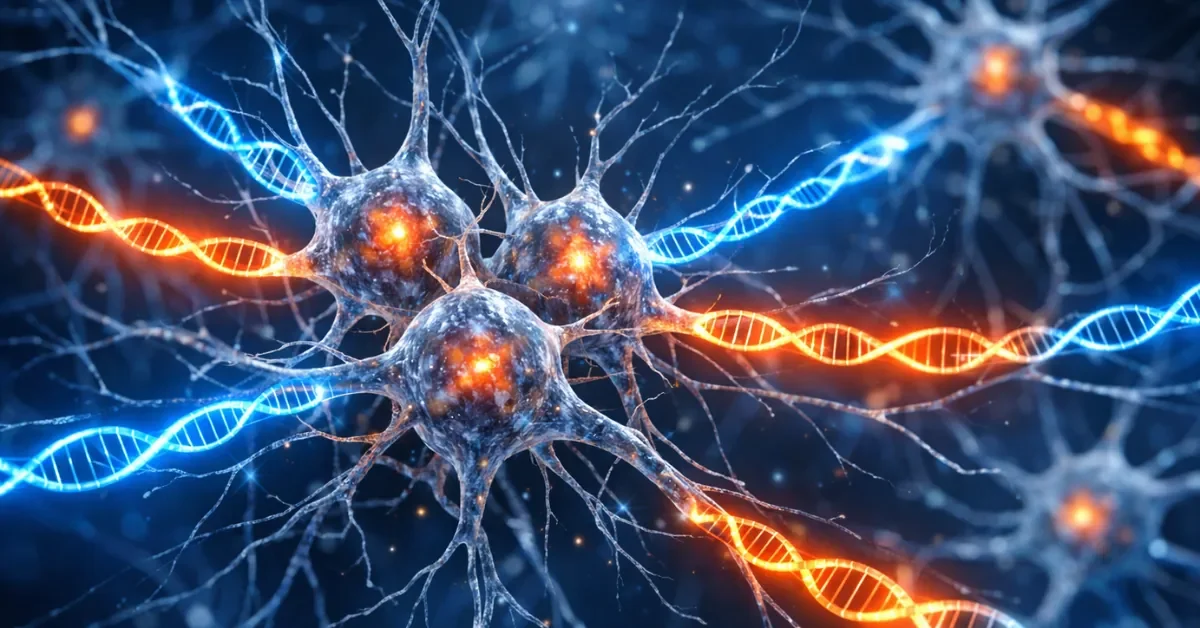
3D visualization of interconnected brain neurons with glowing genetic network pathways illustrating Alzheimer's disease gene regulation research

Researchers at the University of California, Irvine have created the most detailed genetic maps ever produced for Alzheimer’s disease, revealing how genes control each other inside brain cells affected by the condition. The breakthrough study identifies hundreds of influential genes that could become targets for new treatments aimed at slowing or preventing memory loss and brain degeneration.

Contents
Major Brain Cell Disruption FoundHub Genes Identified as Control CentersHow SIGNET Works DifferentlyValidation Strengthens FindingsBroader Applications Beyond Alzheimer’s

Using a newly developed artificial intelligence system called SIGNET, the research team examined brain tissue from 272 people who participated in long-term aging studies. The machine learning platform goes beyond traditional genetic research by uncovering true cause-and-effect relationships between genes, rather than simply identifying patterns where genes appear connected.

Major Brain Cell Disruption Found

The study found that excitatory neurons experience the most severe genetic disruption in Alzheimer’s disease. These nerve cells, which send activating signals throughout the brain, showed nearly 6,000 cause-and-effect interactions that indicate extensive rewiring as the disease advances. Excitatory neurons play essential roles in memory and cognition, both of which decline significantly in people with Alzheimer’s.

The researchers examined six major types of brain cells: excitatory neurons, inhibitory neurons, astrocytes, microglia, oligodendrocytes, and oligodendrocyte progenitor cells. Each cell type showed distinct patterns of genetic activity, but excitatory neurons displayed the most dramatic changes.

Hub Genes Identified as Control Centers

The team identified hundreds of hub genes that function as major control centers in the brain. These genes influence many other genes and likely drive harmful changes associated with Alzheimer’s. Hub genes could serve as valuable targets for earlier diagnosis and future therapeutic interventions.

The research also uncovered new regulatory roles for well-known genes previously linked to Alzheimer’s. The amyloid precursor protein gene, commonly known as APP, was shown to strongly control other genes specifically in inhibitory neurons. This finding provides fresh insight into how familiar genetic players contribute to the disease through previously unknown pathways.

How SIGNET Works Differently

SIGNET stands for Statistical Inference on Gene Regulatory Networks. The platform integrates single-cell RNA sequencing with whole-genome sequencing data, allowing researchers to detect cause-and-effect relationships among genes across the entire genome. Traditional gene-mapping tools can only show which genes appear to move together, but cannot determine which genes actively drive changes in other genes.

The research team designed SIGNET to overcome limitations found in conventional methods. Many existing approaches make unrealistic assumptions, such as ignoring feedback loops between genes. SIGNET takes advantage of information encoded in DNA to identify true causal relationships between genes in the brain.

Validation Strengthens Findings

To confirm their results, the researchers tested their findings using an independent set of human brain samples. This additional validation strengthens confidence that the observed gene relationships represent genuine biological mechanisms involved in Alzheimer’s disease, rather than statistical artifacts.

The research team plans to conduct deeper investigations into networks involved in Alzheimer’s-specific pathologies across different cell types. Future work will compare brain tissue affected by Alzheimer’s with healthy samples to distinguish regulatory changes caused by the disease from normal cellular activities during aging.

Broader Applications Beyond Alzheimer’s

SIGNET’s analytical capabilities extend beyond Alzheimer’s research. The platform can be applied to study other complex diseases, including cancer, autoimmune disorders, and mental health conditions. The method enables integration of multi-omics data for constructing cell-type-specific causal gene regulatory networks across diverse biological contexts.

Alzheimer’s disease is the leading cause of dementia and is projected to affect nearly 14 million Americans over age 65 by 2060. Scientists have linked genes such as apolipoprotein E and amyloid precursor protein to the disease, but have not fully understood how these genes disrupt healthy brain function until now.

The study represents a shift in Alzheimer’s research from observing correlations to uncovering causal mechanisms that actively drive disease progression. The findings were published in Alzheimer’s & Dementia: The Journal of the Alzheimer’s Association, with funding support from the National Institute on Aging and the National Cancer Institute.

TAGGED: Alzheimer's disease, Artificial Intelligence, brain research, dementia, excitatory neurons, gene regulation, hub genes, neuroscience, SIGNET, UC Irvine
Share This Article
Facebook Twitter Whatsapp Whatsapp Telegram Copy Link
By Nisha Pradhan
I am a passionate content creator with a deep love for travel, music, and food. Using my unique blend of these interests, I genuinely enjoy crafting high-quality travel, lifestyle, and entertainment-related news content.
Leave a comment

Leave a Reply Cancel reply

Your email address will not be published. Required fields are marked *


Most Read

Nvidia Eyes OpenAI Investment in IPO and Funding Round

February 4, 2026

Amazon Alexa for Shopping Replaces Rufus AI Assistant

May 18, 2026

Study Finds Most Statin Side Effects Are Not Caused by the Drug

February 16, 2026

Google Launches Project Genie: AI Tool Creates Interactive Worlds

February 1, 2026

OpenAI Smartphone Chip Report Lifts Qualcomm Stock

April 28, 2026

ChatGPT outage disrupts users worldwide in Feb. 2025

January 28, 2026

Related News

Close-up of a silver espresso machine extracting a fresh shot of coffee into a glass cup in a softly lit cafe setting.
News

Espresso Extraction Science: The Finer Grind Flaw

Nisha Pradhan Nisha Pradhan May 18, 2026
A smartphone resting on a wooden desk displaying an AI-powered Amazon search bar in a modern home office setting.
News

Amazon Alexa for Shopping Replaces Rufus AI Assistant

Sameer Katoch Sameer Katoch May 18, 2026
Wide news-style image showing an OpenAI office scene with screens displaying audio waveforms and voice technology graphics
News

OpenAI acquires Weights.gg to boost voice AI tools

Rakesh Paul Rakesh Paul May 18, 2026

About Us

VellaTimesVellaTimesVellaTimes

VellaTimes is a leading news portal that covers the latest trending news in technology, lifestyle, entertainment, automobiles, travel, and sports.

Explore

  • News
  • Technology
  • AI
  • Science
  • World

Useful Links

  • About Us
  • Contact Us
  • Fact Checking Policy
  • Terms & Conditions
  • Privacy Policy
  • Copyright Policy

Subscribe Us

Subscribe to our newsletter for the Latest News and Top Stories!

© 2022 VellaTimes • All Rights Reserved.
  • Home
  • Web Stories
  • Bookmarks
  • Interests
  • Disclaimer
  • Sitemap
adbanner
AdBlocker Detected
Our site is an advertising supported site. Please whitelist us to support our work.
Okay, I'll Whitelist